
Concrete vs Masonry: Choosing the Best Fit
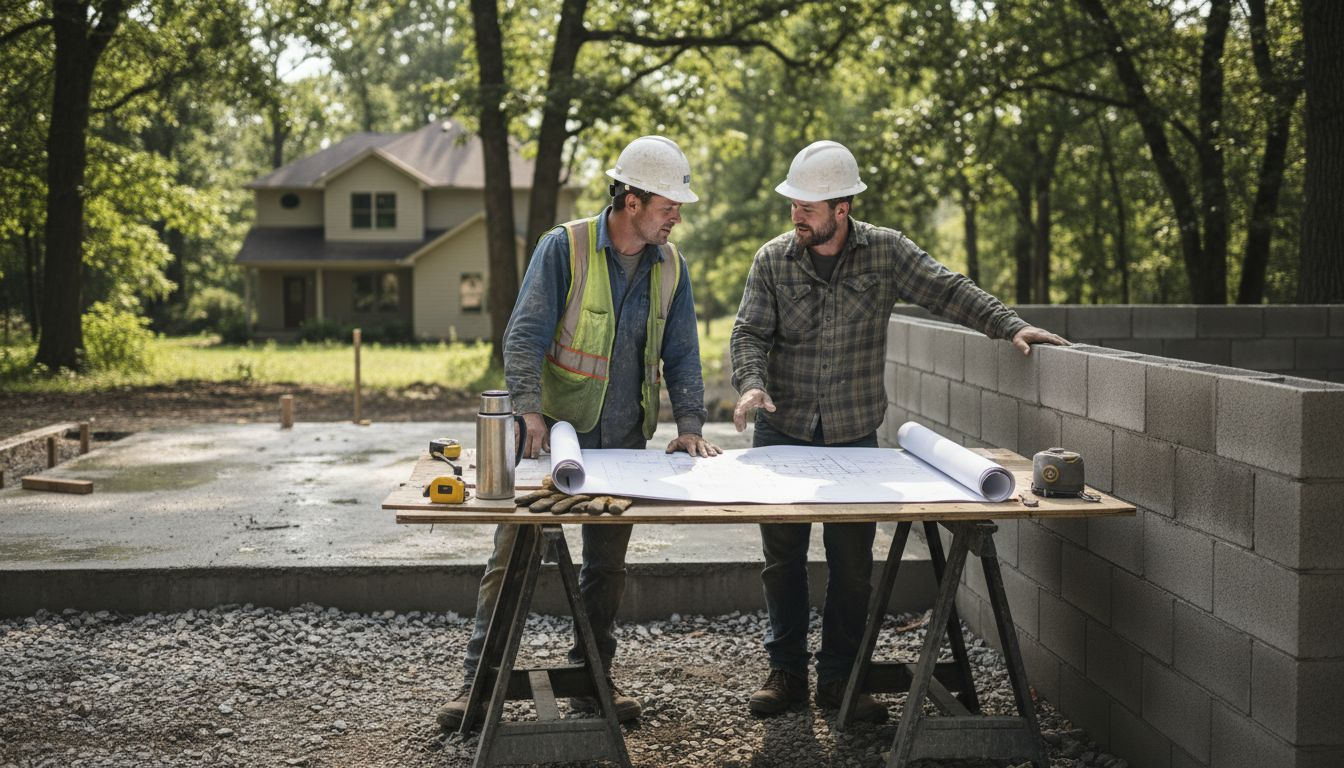
Choosing the right material for outdoor projects in Northern Virginia can shape both the look and durability of your space. Homeowners often hear about concrete and masonry but may not know how their differences impact design and long-term maintenance. Knowing how concrete delivers seamless strength while masonry offers decorative flexibility helps you make decisions that reflect your style and meet your project needs.
Table of Contents
Key Takeaways
Point | Details |
Concrete vs. Masonry | Concrete is ideal for structural applications, while masonry offers aesthetic versatility. |
Installation Differences | Concrete installations are faster and require less skilled labor than masonry installations. |
Durability and Maintenance | Concrete generally requires less frequent maintenance compared to masonry. |
Outdoor Project Applications | Use concrete for strong, load-bearing structures and masonry for decorative features outdoors. |
Defining Concrete and Masonry Basics
Concrete and masonry represent foundational construction techniques with unique characteristics that make them essential in modern building projects. While often used interchangeably by homeowners, these materials have distinct structural properties and applications that significantly impact construction outcomes.
At its core, concrete is a composite material composed of cement, water, and aggregates like sand and gravel. These components chemically bond to create a hard, durable substance that can be molded into virtually any shape. Unlike other building materials, concrete provides exceptional strength and versatility, allowing contractors to create seamless structures with minimal joints.
Masonry, by contrast, involves constructing structures by stacking individual units such as:
Bricks
Natural stones
Concrete blocks
Clay tiles
These discrete elements are carefully arranged and bonded together using mortar, a specialized binding material that provides structural integrity and stability. Concrete masonry units (CMUs) represent a modern evolution that combines traditional masonry techniques with contemporary concrete technology, enabling more complex and resilient construction methods.
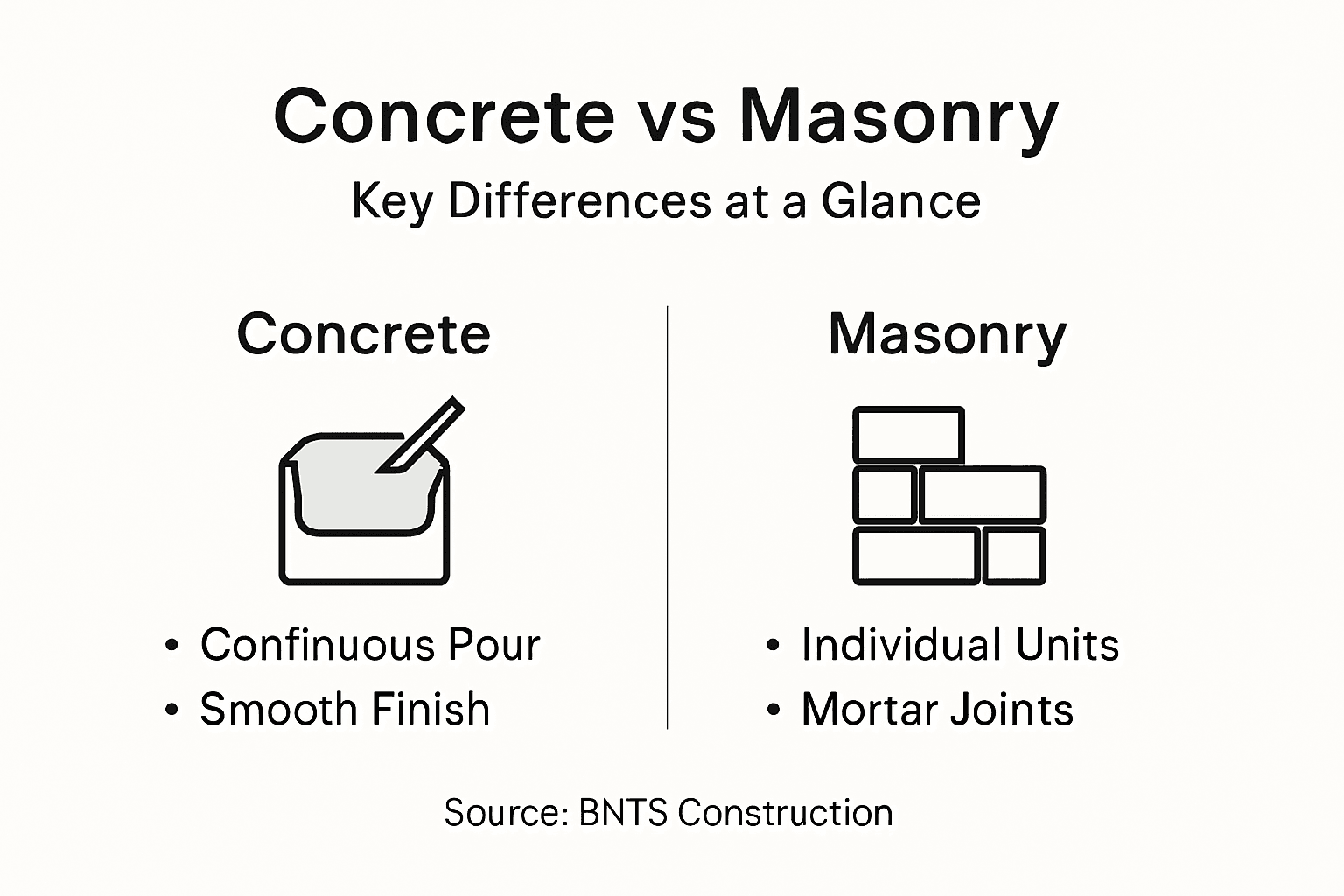
Each material offers unique advantages depending on the specific project requirements. Concrete excels in creating continuous, monolithic structures with high compressive strength, while masonry provides excellent thermal insulation, aesthetic variety, and the ability to create intricate architectural designs.
Here is a concise comparison of concrete and masonry to help clarify their best uses:
Factor | Concrete | Masonry |
Ideal Use Case | Foundations, driveways, large slabs | Feature walls, facades, fireplaces |
Customization | Shape and pattern options | Texture, color, and visual effects |
Speed of Installation | Faster due to monolithic pouring | Slower, requires skilled stacking |
Typical Longevity | 50-100 years with maintenance | 40-100 years with proper upkeep |
Pro tip: Always consult with a professional contractor who can assess your specific project needs and recommend the most appropriate material for your construction goals.
Types and Variations of Each Material
Concrete and masonry offer remarkable diversity, with multiple specialized types designed to meet specific construction requirements. Understanding these variations helps homeowners and contractors select the most appropriate material for their unique project needs.
Concrete Variations encompass several distinct categories that provide different performance characteristics. Concrete types range from plain to specialized formulations, including:
Plain concrete: Standard mix used for general construction
Reinforced concrete: Contains steel bars or mesh for increased tensile strength
High-strength concrete: Enhanced compressive capabilities for demanding structural applications
Lightweight concrete: Reduced weight for specific architectural and engineering purposes
Decorative concrete: Designed with aesthetic finishes like stamping, coloring, or textural variations
Masonry materials similarly offer extensive options. Masonry units can be categorized by material composition and aesthetic qualities:
Clay bricks
Natural stone blocks
Concrete masonry units (CMUs)
Architectural blocks with specialized finishes
Insulated masonry blocks
Modern masonry innovations have expanded design possibilities. Manufacturers now produce blocks with integrated insulation, varied textures like splitface and honed finishes, and multiple color options. These advancements allow architects and contractors to create structures that are not just structurally sound but also visually distinctive.
Selecting the right concrete or masonry type requires careful consideration of project-specific requirements, including load-bearing capacity, aesthetic goals, and environmental conditions.
Pro tip: Consult with a professional who can help you navigate the complex landscape of concrete and masonry variations to find the perfect match for your specific construction project.
How Installation and Performance Differ
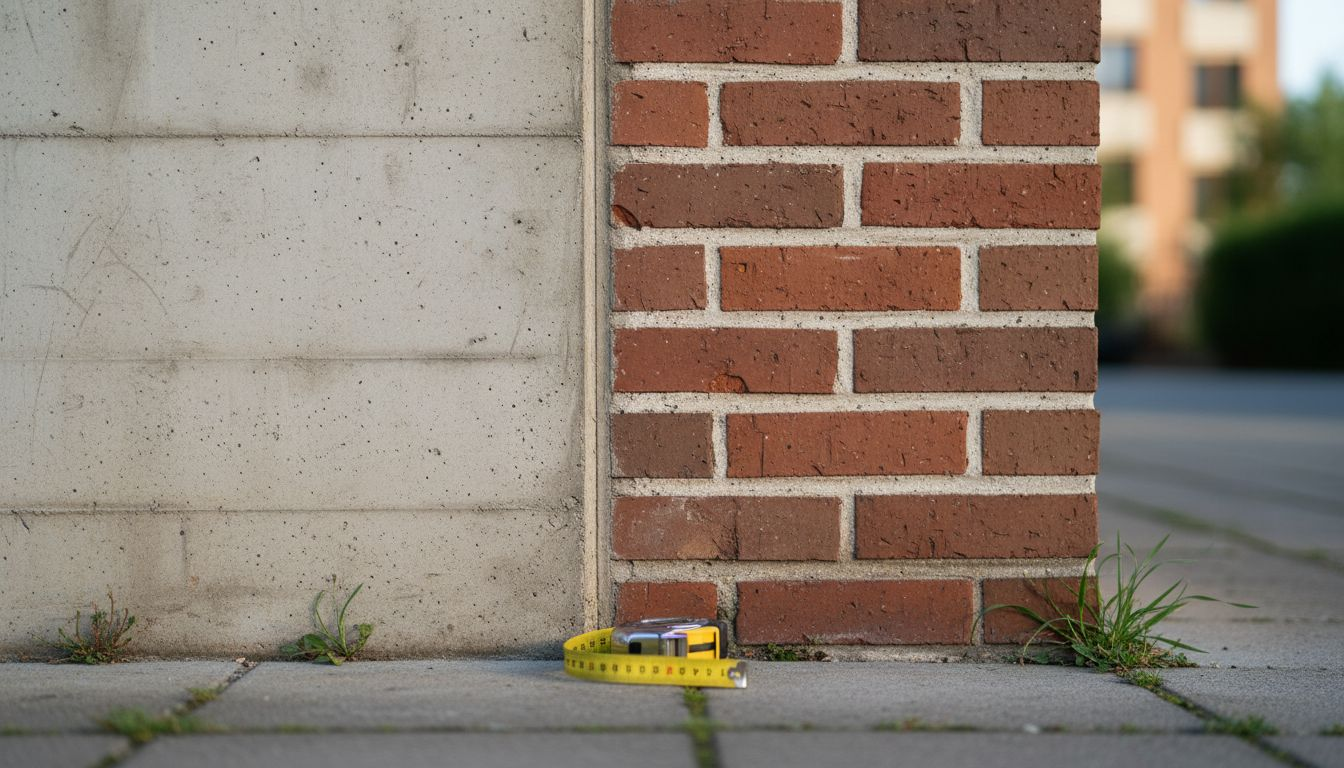
Concrete and masonry represent two distinct construction approaches with unique installation processes and performance characteristics. Structural installation techniques vary significantly between these materials, impacting project timelines, labor requirements, and overall building performance.
Installation Methods reveal fundamental differences in how these materials are applied:
Concrete Installation:
Poured as a single liquid mixture
Requires precise formwork and leveling
Faster overall installation process
Allows creation of complex, continuous shapes
Masonry Installation:
Assembled unit by unit
Requires skilled craftsmanship
More time-consuming and labor-intensive
Allows for more intricate design details
Performance Characteristics demonstrate each material’s unique strengths. Concrete typically provides superior structural integrity, creating a homogeneous surface ideal for foundational and load-bearing applications. Masonry, by contrast, excels in thermal insulation and aesthetic versatility, offering architects and homeowners greater design flexibility.
Proper installation is critical for both materials to prevent structural issues like cracking, moisture penetration, and long-term degradation.
Environmental factors play a significant role in material performance. Concrete’s uniform composition makes it more resistant to environmental stresses, while masonry’s modular nature allows for better thermal regulation and potential easier repair of localized damage.
Pro tip: Always consult professional contractors who understand the nuanced installation requirements and performance characteristics of concrete and masonry for your specific project conditions.
Durability, Maintenance, and Longevity Factors
Understanding the durability and maintenance requirements of concrete and masonry is crucial for long-term structural performance. Durability depends on multiple critical factors, including material quality, environmental exposure, and proactive maintenance strategies.
Concrete Durability Characteristics:
Resistance to environmental stress
Can sustain service lives of 50-100 years
Requires specific mix design and curing processes
Vulnerable to chemical attacks and moisture penetration
Performance improves with proper maintenance
Masonry Durability Factors:
Dependent on material quality and mortar composition
Requires periodic maintenance like repointing
Better thermal regulation capabilities
More susceptible to environmental degradation
Structural health monitoring recommended
Concrete structure longevity primarily depends on protective strategies. Regular inspections, appropriate curing techniques, and adherence to construction standards can significantly extend service life. Moisture management and protection against freeze-thaw cycles are particularly critical for maintaining structural integrity.
Environmental exposure remains the most significant challenge for both concrete and masonry structures, necessitating proactive maintenance and periodic professional assessments.
Masonry structures require more frequent interventions, including sealing, repointing, and detailed inspections to prevent moisture infiltration and structural compromises. Concrete, while more uniform, still demands careful monitoring to prevent potential cracking or degradation.
Pro tip: Schedule annual professional inspections to catch and address potential durability issues before they become costly structural problems.
Cost, Design Impact, and Common Mistakes
Navigating construction projects requires understanding potential pitfalls and strategic decision-making. Construction defects can dramatically impact project sustainability, affecting both budget and long-term performance.
Common Construction Mistakes in concrete and masonry projects include:
Poor site analysis
Ignoring load-bearing requirements
Using substandard materials
Hiring unskilled labor
Inadequate waterproofing
Improper concrete mixing and curing
Cost Implications of these mistakes can be substantial. Rework, increased waste, and project overruns often stem from initial design errors and poor planning. Preventing construction errors requires rigorous project management and proactive quality control.
Effective construction demands clear communication, adherence to specifications, and continuous professional oversight to minimize costly mistakes.
Design impact extends beyond immediate construction costs. Choosing between concrete and masonry involves evaluating long-term performance, maintenance requirements, and aesthetic goals. Material selection influences not just initial expenses but ongoing maintenance and potential repair costs.
Pro tip: Invest in thorough site testing and consult structural engineering professionals before finalizing material choices to prevent expensive retrofitting and repair work.
Best Applications for Outdoor Home Projects
Outdoor home improvement projects demand careful material selection to achieve both functional and aesthetic goals. Concrete and masonry offer unique advantages for transforming exterior spaces, with each material excelling in specific applications.
Concrete Applications for outdoor spaces include:
Driveways
Patios
Walkways
Pool decks
Outdoor kitchen foundations
Structural slabs
Load-bearing surfaces
Masonry Applications that enhance outdoor environments:
Retaining walls
Garden walls
Outdoor fireplaces
Decorative border elements
Landscape feature walls
Decorative facade elements
Architectural accent structures
Outdoor project selection depends on multiple factors including climate conditions, budget constraints, and specific design requirements. Concrete provides superior strength and durability for structural elements, while masonry offers unparalleled aesthetic versatility and natural visual appeal.
Material selection should balance functional performance, aesthetic goals, maintenance requirements, and long-term durability for optimal outdoor project success.
Both materials can be customized with various colors, textures, and finishes, allowing homeowners to create unique outdoor spaces that reflect personal style and complement existing architectural designs.
To help guide material selection, consider how each option addresses outdoor project needs:
Project Goal | Choose Concrete When | Choose Masonry When |
Maximize structural strength | Supporting vehicles or heavy loads | Building garden or retaining walls |
Enhance outdoor aesthetics | Seeking sleek, modern surfaces | Adding visual interest or textures |
Minimize routine maintenance | For fewer joints and easier cleaning | Willing to perform repointing |
Pro tip: Consider combining concrete and masonry techniques to maximize both functional performance and visual interest in your outdoor home projects.
Find the Perfect Concrete or Masonry Solution for Your Project
Choosing between concrete and masonry can feel overwhelming when facing challenges like durability concerns, aesthetic goals, and installation complexities discussed in the article. You want a material that delivers strength, visual appeal, and longevity without costly maintenance or mistakes. Understanding terms like reinforced concrete, mortar, and repointing is just the start.
At BNTS Construction, we specialize in expert stamped concrete, regular concrete, and custom masonry work including patios, foundations, and additions. Our craftsmanship ensures your outdoor projects not only meet but exceed performance expectations while reflecting your unique style.
Explore how our services can bring your vision to life with lasting quality and striking design. Don’t settle for uncertainty when you can partner with seasoned professionals who understand the differences between concrete and masonry and tailor solutions perfectly suited to your needs. Visit https://bntsconstruction.com to learn more and get started today. Discover the benefits of our Stamped Concrete services and custom masonry offerings that safeguard your investment and enhance your home’s outdoor spaces.
Frequently Asked Questions
What is the main difference between concrete and masonry?
Concrete is a composite material made from cement, water, and aggregates, while masonry involves constructing structures by stacking individual units such as bricks or stones bonded with mortar.
When should I use concrete over masonry for my construction project?
Use concrete for structural applications like foundations, driveways, and slabs when you need strength and durability. Opt for masonry for feature walls, fireplaces, and decorative structures when aesthetics and thermal insulation are priorities.
What are the maintenance requirements for concrete and masonry?
Concrete generally requires periodic inspections and moisture management, while masonry may need more frequent upkeep, including repointing and sealing to prevent moisture infiltration and degradation.
How do installation methods differ between concrete and masonry?
Concrete is poured as a single mixture, allowing faster installation, while masonry is built unit by unit, requiring skilled craftsmanship and resulting in a slower, more labor-intensive process.
Recommended
Comments