
Advantages of Driveway Concrete for Curb Appeal
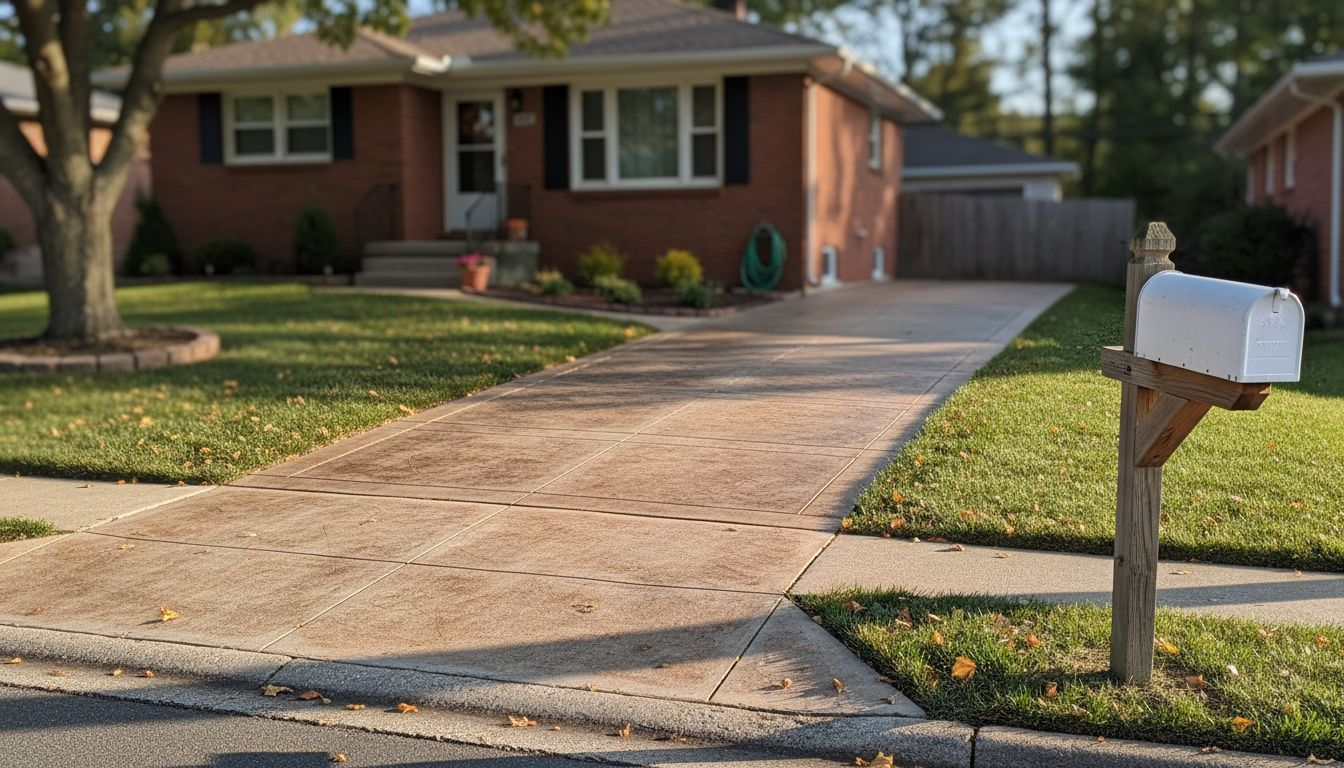
Choosing the right driveway material can feel confusing when you want lasting durability and eye-catching curb appeal for your Northern Virginia home. The driveway is more than just a path; it serves as your property’s critical access point and a signature feature. Discover how decorative concrete driveways offer both strength and customization with options that resist harsh weather, simplify maintenance, and elevate outdoor spaces.
Table of Contents
Key Takeaways
Point | Details |
Driveway Concrete Strength | Driveway concrete is engineered for durability, typically featuring compressive strength ratings of 4000-5000 PSI and a thickness of 4-6 inches for residential use. |
Installation Importance | Proper installation is crucial for longevity, requiring site preparation, precise grading, and professional techniques to extend the driveway’s lifespan. |
Long-Term Value | While initial costs may be higher than alternatives, concrete driveways offer significantly lower maintenance expenses and can last 30-40 years with minimal interventions. |
Customization Options | Homeowners can enhance aesthetics through various decorative techniques, allowing for personalized designs without sacrificing durability. |
What Is Driveway Concrete? Key Facts
Driveway concrete represents a specialized concrete installation designed specifically for residential and commercial property access points. Unlike standard concrete surfaces, driveway concrete must withstand significant vehicular weight, environmental challenges, and provide aesthetic value to enhance property appearance. Concrete driveways serve as critical infrastructure connecting public streets to private properties.
At its core, driveway concrete involves carefully engineered material designed to support safe vehicle access while maintaining structural integrity. These surfaces are typically constructed using high-strength concrete mixtures that can endure substantial pressure from vehicles, weather variations, and consistent usage. The composition often includes specific aggregate ratios and reinforcement techniques to maximize durability.
Key characteristics of quality driveway concrete include:
Compressive strength rating of 4000-5000 PSI
Minimum thickness of 4-6 inches for residential applications
Reinforcement with steel mesh or rebar for structural stability
Proper slope and drainage considerations
Resistance to freeze-thaw cycles
Customizable decorative finish options
Professional installation involves multiple critical steps beyond simply pouring concrete. Proper site preparation, precise grading, comprehensive soil compaction, and strategic joint placement determine the long-term performance of the driveway. Homeowners must consider factors like local climate, soil composition, expected vehicle traffic, and aesthetic preferences when planning their concrete driveway project.
Pro tip: Always consult with local concrete professionals who understand regional environmental conditions and can recommend the most suitable concrete mix for your specific property requirements.
Types of Concrete Driveways Explained
Concrete driveways offer homeowners multiple sophisticated design options, each with unique structural characteristics and aesthetic potential. Concrete pavement types range from traditional designs to innovative modern solutions that enhance both functionality and visual appeal.
The primary concrete driveway types include:
Jointed Plain Concrete Pavement (JPCP): Uses strategic joint placement to control potential cracking without additional reinforcement
Jointed Reinforced Concrete Pavement (JRCP): Incorporates steel mesh to stabilize and hold potential crack formations
Continuously Reinforced Concrete Pavement (CRCP): Utilizes continuous steel reinforcement to eliminate transverse joints entirely
Pervious Concrete Driveway: Allows water drainage through the surface, reducing runoff and supporting environmental sustainability
Roller-Compacted Concrete Driveway: Offers high-density surface ideal for heavy traffic areas
Each concrete driveway type presents distinct advantages depending on specific environmental conditions, traffic expectations, and aesthetic preferences. Professional installers evaluate factors like soil composition, local climate patterns, expected vehicular load, and drainage requirements to recommend the most suitable concrete pavement solution.
Design considerations for selecting the right concrete driveway include load-bearing capacity, maintenance requirements, visual texture, and long-term durability. Some homeowners prefer decorative options like stamped or colored concrete finishes that transform a functional surface into an artistic landscape element.
Pro tip: Consult local concrete professionals who can assess your specific property characteristics and recommend the most appropriate concrete driveway type for your unique needs.
Durability and Lifespan Compared to Alternatives
Concrete driveways stand out as an exceptional long-term investment for homeowners, offering unparalleled durability compared to alternative surfacing materials. Concrete’s exceptional performance demonstrates remarkable resistance to environmental challenges and structural degradation.
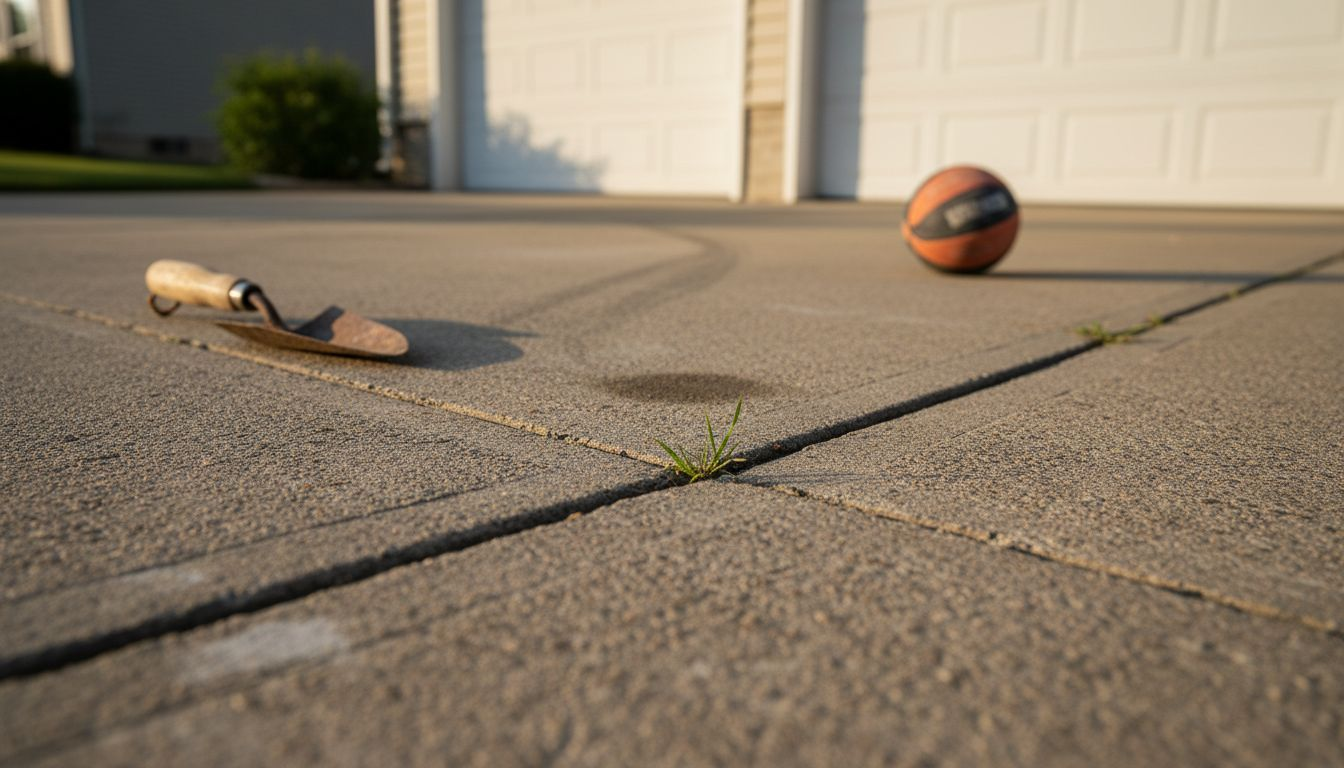
When comparing driveway materials, concrete presents significant advantages:
Here’s a concise comparison of common driveway surface materials and their performance characteristics:
Material | Estimated Lifespan | Maintenance Level | Notable Strength |
Concrete | 30-40 years | Minimal | Long-term durability |
Asphalt | 10-15 years | Frequent sealing | Quick installation |
Brick Pavers | 20-25 years | Periodic resetting | Decorative appearance |
Gravel | 5-10 years | Regular replenishing | Low initial cost |
Recycled Plastic | Data limited | Emerging tech | Sustainability focus |
Asphalt Driveways: Typically last 10-15 years, require frequent sealing and repairs
Gravel Driveways: Demand continuous maintenance, prone to erosion and uneven surfaces
Concrete Driveways: Sustain 30-40 years of continuous use with minimal intervention
Brick Pavers: Susceptible to shifting, require periodic resetting and replacement
Recycled Plastic Driveways: Emerging technology with limited long-term performance data
The longevity of concrete driveways stems from their unique material composition and engineering principles. Advanced concrete mixes incorporate specialized aggregates and reinforcement techniques that enhance structural integrity, preventing common issues like cracking, rutting, and surface degradation. Professional installation plays a crucial role in maximizing the driveway’s potential lifespan, with proper joint placement and curing techniques extending durability.
Environmental resistance makes concrete an exceptionally sustainable choice. The material withstands extreme temperature variations, resists chemical deterioration, and maintains structural performance under significant vehicular stress. Homeowners investing in concrete driveways benefit from reduced long-term maintenance costs and enhanced property value.
Pro tip: Schedule professional concrete driveway inspections every 5-7 years to identify and address potential minor issues before they develop into significant structural challenges.
Aesthetic Options and Customization Features
Concrete driveways have evolved far beyond traditional gray surfaces, offering homeowners unprecedented design flexibility and visual appeal. Diverse decorative concrete techniques enable property owners to transform functional surfaces into stunning landscape features that reflect personal style and architectural aesthetics.
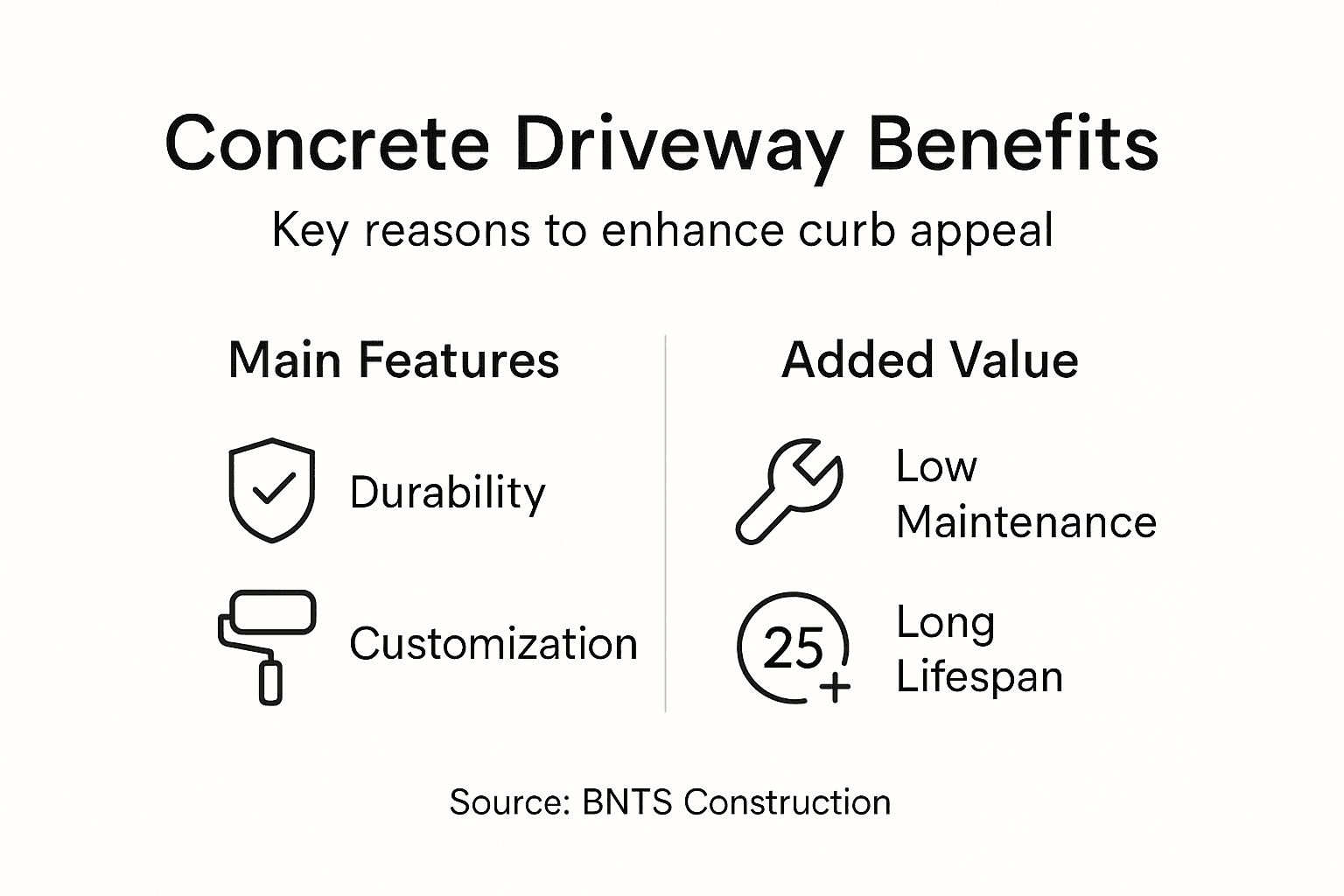
Customization options for concrete driveways include:
The following summary highlights key decorative options for concrete driveways and their design impact:
Decorative Option | Visual Effect | Customization Potential |
Stamped Patterns | Mimics stone or brick | High—varietal patterns available |
Color Integration | Wide color selection | Matches home or landscape theme |
Exposed Aggregate | Textured, pebble finish | Blend with local stone choices |
Stamped Patterns: Mimicking natural stone, brick, or intricate tile designs
Color Integration: Ranging from subtle earth tones to vibrant custom hues
Exposed Aggregate Finishes: Creating textured surfaces with embedded decorative stones
Geometric Border Designs: Adding sophisticated architectural accents
Integrated Landscape Elements: Incorporating turf or planting zones within concrete surfaces
Professional concrete artisans can employ advanced techniques to create truly unique driveway experiences. Staining methods allow for deep, rich color penetration that goes beyond surface-level pigmentation, while specialized stamping tools can replicate everything from intricate cobblestone patterns to modern geometric layouts. These techniques enable homeowners to craft driveways that complement their home’s architectural style and personal aesthetic preferences.
Beyond visual appeal, these customization options maintain concrete’s inherent durability and performance characteristics. Design versatility means homeowners need not compromise between aesthetic beauty and functional strength. Whether seeking a rustic, natural appearance or a sleek, contemporary design, concrete provides an adaptable canvas for creative expression.
Pro tip: Request design samples and color swatches from professionals to visualize how different concrete finishes will interact with your specific home exterior and landscape.
Cost, Maintenance, and Long-Term Value
Homeowners considering concrete driveways often focus initially on upfront installation expenses, but the financial narrative extends far beyond initial costs. Concrete pavement maintenance strategies reveal a compelling economic advantage that becomes increasingly apparent over time.
Cost considerations for concrete driveways break down into several key components:
Initial Installation: Higher upfront costs compared to asphalt
Maintenance Expenses: Significantly lower over 30-year lifecycle
Repair Frequency: Minimal intervention required
Property Value Impact: Positive long-term investment
Energy Efficiency: Lighter color reduces heat absorption
The economic argument for concrete driveways becomes strongest when analyzing long-term financial implications. While initial installation costs are typically 10-30% higher than alternatives like asphalt, concrete’s exceptional durability translates into dramatically reduced maintenance expenses. Professional concrete installations can last 30-40 years with minimal rehabilitation, compared to 10-15 years for many alternative materials.
Maintenance requirements are remarkably straightforward for concrete driveways. Routine care involves periodic joint sealing, occasional crack repair, and standard cleaning. These interventions are far less frequent and costly compared to more demanding surface materials. The inherent strength of concrete means homeowners avoid recurring resurfacing or complete replacement expenses that plague alternative driveway materials.
Pro tip: Budget for professional concrete sealing every 5-7 years to maximize your driveway’s lifespan and protect your initial investment.
Elevate Your Curb Appeal with Expert Driveway Concrete Solutions
Are you ready to transform your driveway into a stunning and durable entryway that enhances your home’s curb appeal? This article highlights the importance of driveway concrete that not only supports heavy vehicle traffic but also offers customization options like stamped patterns and color integration to match your style. If cracking, drainage, or aesthetic concerns have held you back, our team at BNTS Construction understands the critical balance between durability and beauty.
Discover how our expertise in Stamped Concrete and Custom Concrete solutions can solve these common challenges. We specialize in creating strong foundations, patios, additions, and decorative concrete that will make your driveway a lasting investment and a standout feature in your neighborhood. Don’t wait to boost your property’s value and impress visitors.
Visit BNTS Construction today to explore your concrete driveway options and schedule a free consultation with our professionals committed to quality craftsmanship and personalized service.
Frequently Asked Questions
What are the benefits of using concrete for driveways?
Concrete driveways offer durability, low maintenance, and significant aesthetic appeal, enhancing property value and curb appeal compared to other materials.
How long can I expect a concrete driveway to last?
Concrete driveways have a lifespan of 30-40 years with minimal maintenance, making them a long-lasting investment for homeowners.
What maintenance is required for concrete driveways?
Routine maintenance includes periodic sealing, occasional crack repairs, and standard cleaning. This is less frequent compared to alternative driveway materials like asphalt.
Can I customize the appearance of my concrete driveway?
Yes, concrete driveways can be customized with decorative options such as stamped patterns, color integration, and exposed aggregate finishes, allowing homeowners to enhance curb appeal uniquely.
Recommended
Comments