
Decorative Concrete Explained: Transforming Outdoor Spaces

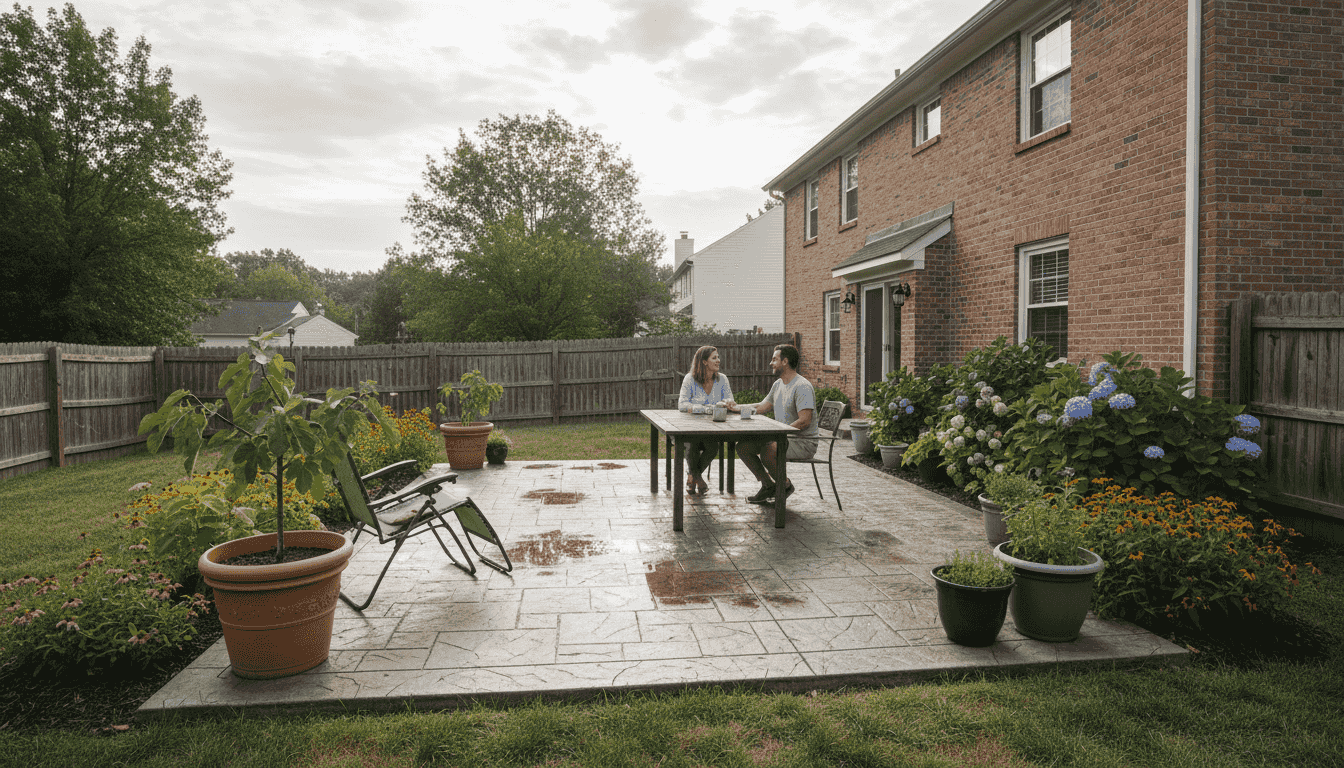
Choosing patio or walkway materials can feel overwhelming when you want your Northern Virginia home to stand out without constant upkeep. Decorative concrete offers more than curb appeal—it blends style and strength, holding up to local weather while mimicking natural stone or brick. Highlighting its resilience and flexible design, this guide helps you discover how stamped concrete delivers both beauty and durability for outdoor spaces ready for gatherings and everyday life.
Table of Contents
Key Takeaways
Point | Details |
Decorative Concrete Enhances Aesthetics | Transform ordinary concrete surfaces into visually striking elements that resemble premium materials at a fraction of the cost. |
Durability in Tough Climates | Decorative concrete withstands harsh conditions, such as freeze-thaw cycles in Northern Virginia, maintaining its integrity for decades. |
Cost-Effective Installation | Stamped concrete can be 30-50% cheaper than authentic natural stone while providing similar visual appeal and longevity. |
Minimal Maintenance Requirements | Regular sealing every 2-3 years ensures durability, with maintenance needs lower than those of paver installations. |
What Is Decorative Concrete and Its Uses
Decorative concrete transforms ordinary concrete surfaces into visually striking elements while maintaining full structural integrity. Unlike standard concrete, decorative concrete applies aesthetic techniques during or after curing to create surfaces that look and feel premium.
This isn’t just about appearance. Decorative concrete serves both form and function, making it ideal for homeowners in Northern Virginia looking to upgrade patios, walkways, and driveways without sacrificing durability.
Common Decorative Concrete Methods
Several proven techniques bring decorative concrete to life:
Stamped concrete creates patterns mimicking natural materials like stone, brick, or wood
Acid staining produces rich, earthy colors with unique variegation
Polished surfaces achieve a sleek, modern look ranging from matte to high-gloss finishes
Overlays add textured or decorative layers over existing concrete
Exposed aggregate reveals colorful stones and pebbles for a natural appearance
Why Homeowners Choose Decorative Concrete
Decorative concrete offers practical advantages beyond aesthetics. It’s more affordable than natural stone or brick while delivering comparable visual appeal. The techniques transform concrete to resemble natural materials like slate or flagstone, giving you premium looks at reasonable costs.
Durability matters in Northern Virginia’s climate. Decorative concrete withstands freeze-thaw cycles, UV exposure, and heavy use better than many alternatives. A well-maintained stamped patio lasts 25-30 years with minimal upkeep.
Popular Residential Applications
Decorative concrete shines in several outdoor settings:
Patios - Create entertaining spaces with pattern and color
Walkways - Guide visitors through your yard with style
Driveways - Make a strong first impression entering your home
Pool decks - Combine safety with sophisticated aesthetics
Entryways - Set the tone before guests reach your door
Decorative concrete delivers the look of premium materials at a fraction of the cost, making it the smart choice for Northern Virginia homeowners wanting curb appeal without breaking the bank.
You can explore specific decorative concrete methods for stunning outdoor spaces to see how different techniques work for various projects.
Pro tip: Start with a small area like an entryway or walkway to test your chosen pattern and color before committing to a full patio installation.
Popular Types of Decorative Concrete Finishes
Decorative concrete finishes transform standard concrete into custom surfaces that match your style. Each finish offers distinct visual appeal and practical benefits suited to different environments and budgets.
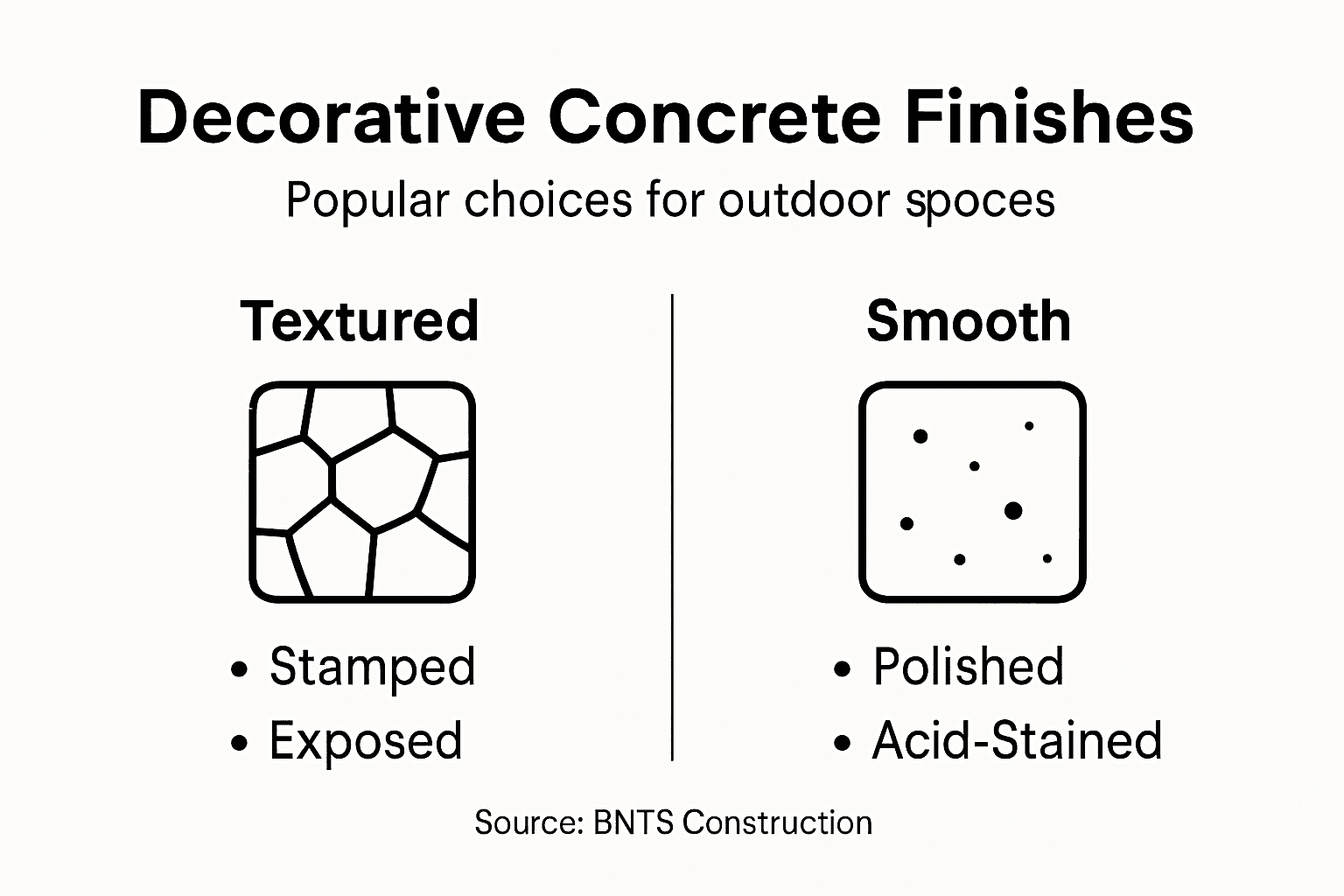
Understanding your options helps you choose the right finish for your Northern Virginia patio, walkway, or driveway.
Stamped Concrete
Stamped concrete uses molds pressed into wet concrete to create patterns mimicking natural materials. You get the look of expensive stone, brick, or tile at a fraction of the cost.
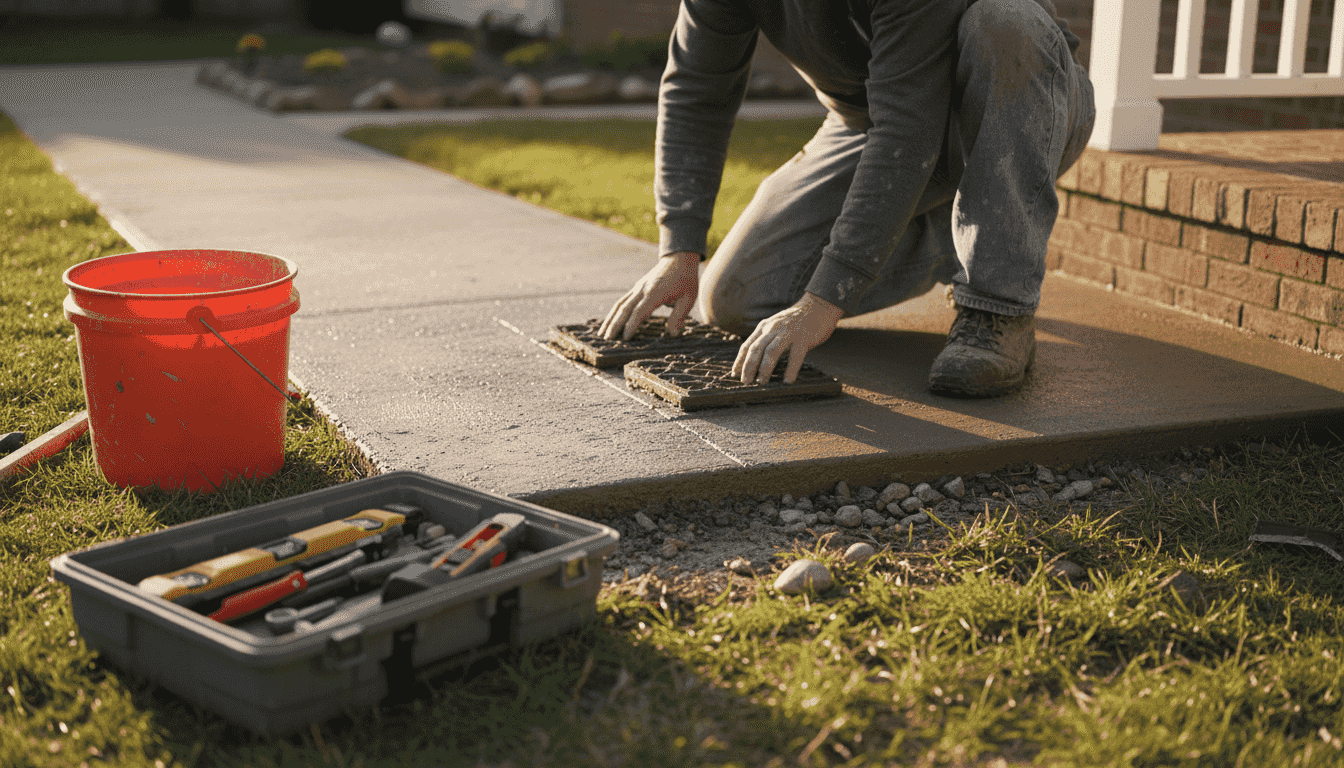
This finish works exceptionally well for patios and entryways where visual impact matters. The stamped concrete patterns range from classic to contemporary designs that elevate curb appeal instantly.
Stamped concrete typically costs 30-50% less than authentic stone while delivering comparable aesthetics.
Polished Concrete
Polished concrete creates smooth, glossy surfaces ranging from matte to mirror finishes. Modern homeowners love this look for its sleek, contemporary appearance and easy maintenance.
The process uses progressively finer grits to grind and seal the surface. High-gloss polished concrete reflects light beautifully and hides dirt better than other finishes.
Exposed Aggregate
Exposed aggregate reveals colorful stones and pebbles embedded in concrete. This finish combines aesthetics with function—the texture provides natural slip resistance for pool decks and walkways.
You choose the stone colors and sizes, creating completely customized surfaces. The exposed aggregate finish shows natural stones for slip resistance and decorative texture, making it ideal for wet areas.
Acid-Stained Concrete
Acid staining produces rich, earthy colors with natural variegation unique to each project. Colors range from warm browns and reds to cool blues and greens.
Staining enhances the concrete’s natural characteristics rather than covering it. The finish works indoors and outdoors, aging beautifully over time.
Concrete Overlays
Overlays apply decorative layers over existing concrete, perfect for resurfacing old or damaged surfaces. They’re cost-effective alternatives to complete removal and replacement.
Overlays accept stamps, stains, and polishing, giving you maximum design flexibility.
Smooth Finish
Smooth concrete offers clean, minimalist aesthetics ideal for contemporary homes. The troweled surface appears uniform and refined.
While less decorative than other options, smooth finish provides excellent functionality and pairs well with accent landscaping.
Each finish serves different needs—stamped for classic elegance, polished for modern sophistication, exposed aggregate for safety, and stain for natural beauty.
Key considerations when choosing:
Climate - Northern Virginia’s freeze-thaw cycles affect durability differently per finish
Maintenance - Polished surfaces require regular sealing; stamped needs periodic resealing
Slip resistance - Exposed aggregate and textured finishes provide better traction
Cost - Stamped offers premium looks affordably; polishing requires skilled labor
Pro tip: Request samples or visit completed projects showing your chosen finish in natural sunlight to see how it looks at different times of day before committing.
Here’s a look at how popular decorative concrete finishes differ in key areas:
Finish Type | Best Outdoor Use | Maintenance Level | Notable Benefit |
Stamped Concrete | Patios, entryways | Moderate (reseal) | Realistic stone appearance |
Polished Concrete | Covered patios, walkways | High (regular seal) | Sleek, modern aesthetic |
Exposed Aggregate | Pool decks, walkways | Low (simple cleaning) | Superior slip resistance |
Acid-Stained | Indoor/outdoor surfaces | Moderate (reseal) | Deep, unique color variation |
Concrete Overlays | Old concrete areas | Moderate | Resurfaces without removal |
Smooth Finish | Contemporary patios | Low | Clean, minimalist look |
How Stamped Concrete Enhances Patios and Walkways
Stamped concrete transforms ordinary outdoor surfaces into visually striking spaces that rival expensive natural materials. By imprinting patterns directly into fresh concrete, you create patios and walkways that look like custom stonework without the premium price tag.
This technique gives Northern Virginia homeowners the ability to customize outdoor living areas with lasting beauty and durability.
Visual Transformation
Stamped concrete mimics authentic materials like slate, flagstone, brick, and wood grain. The pressed patterns create realistic depth and texture that fool even experienced eyes.
You choose from dozens of stamp designs, allowing complete personalization. Whether you prefer rustic charm or contemporary sophistication, there’s a pattern matching your home’s style.
The versatility means stamped concrete patterns complement both traditional and modern landscaping effortlessly.
Durability and Performance
Stamped concrete resists wear better than you might expect. With proper installation and sealing, stamped patios last 25-30 years without major repairs.
The imprinted patterns and textures resist weather damage while maintaining their appearance through freeze-thaw cycles common in Northern Virginia winters.
Unlike pavers that shift and settle, stamped concrete stays perfectly level. No tripping hazards develop over time.
Cost Advantages
Stamped concrete typically costs 30-50% less than authentic stone or brick pavers. You get premium aesthetics at mid-range pricing.
Initial installation is straightforward, requiring no complex preparation compared to traditional masonry. Long-term maintenance costs stay minimal with occasional resealing.
Customization Options
Beyond pattern selection, you control:
Colors - Base concrete color plus stain tones for depth
Texture depth - Subtle embossing or bold dimensional patterns
Layout - Borders, accents, or full coverage designs
Finishes - Matte, satin, or glossy seals
Each stamped concrete project becomes one-of-a-kind, reflecting your personal taste and home architecture.
Practical Applications
Stamped concrete excels in specific outdoor areas:
Patios - Large gathering spaces benefit most from pattern impact
Walkways - Guide visitors through your yard with visual interest
Entryways - Make strong first impressions with elegant patterning
Pool decks - Combine aesthetics with safety through texture
Stamped concrete delivers natural material beauty with modern durability, making it the ideal choice for transforming Northern Virginia outdoor spaces affordably.
Pro tip: Choose neutral colors and classic patterns that will remain timeless; trendy designs dated quickly, while slate or brick patterns maintain appeal for decades.
Costs, Maintenance, and Common Pitfalls
Decorative concrete requires upfront investment and ongoing care to maximize its lifespan. Understanding realistic costs, maintenance demands, and common mistakes helps Northern Virginia homeowners make informed decisions before installing patios or walkways.
Proper planning prevents expensive problems down the road.
Initial Installation Costs
Decorative concrete costs vary based on finish type and complexity. Stamped concrete typically ranges from $8-15 per square foot installed, compared to $10-20 for natural stone pavers.
Polished concrete runs $3-12 per square foot depending on grind depth. Exposed aggregate and acid staining add $2-5 per square foot to standard concrete pricing.
Labor makes up 50-60% of total costs. Quality workmanship during installation directly impacts durability and appearance.
Essential Maintenance Requirements
Sealing is non-negotiable. Regular sealing and cleaning help prevent costly deterioration of decorative concrete surfaces exposed to Northern Virginia weather.
Maintenance tasks include:
Sealing - Every 2-3 years to protect from moisture and UV damage
Cleaning - Annual pressure washing to remove dirt and debris
Inspections - Quarterly checks for cracks, discoloration, or damage
Repairs - Prompt patching of small cracks before they worsen
Skipping maintenance accelerates fading, staining, and structural failure.
Common Installation Mistakes
Improper installation causes cracking, fading, and performance issues that compromise your investment. Avoid these pitfalls:
Poor base preparation - Inadequate grading or subbase causes settlement and cracks
Wrong weather conditions - Pouring in freezing temperatures ruins concrete integrity
Improper joint spacing - Missing or incorrectly placed joints allow stress cracking
Cheap sealer application - Low-quality sealers fail within months
Skipping professional installation - DIY attempts rarely achieve professional results
Long-Term Performance
Skilled workmanship during installation determines durability. Quality materials combined with proper installation technique extends service life to 25-30 years.
Northern Virginia’s freeze-thaw cycles test concrete severely. Improper air entrainment or insufficient concrete strength causes spalling and deterioration within years.
Budget Planning Tips
Account for lifecycle costs, not just installation:
Budget $200-400 annually for sealing and maintenance
Plan for potential crack repairs every 5-10 years
Consider professional resealing as preventive maintenance
Quality installation and consistent maintenance transform decorative concrete into a durable investment lasting decades, while neglect turns it into a liability within years.
Pro tip: Request a detailed maintenance schedule from your contractor before installation; knowing exactly when sealing is due prevents costly damage and keeps your warranty valid.
Comparing Decorative Concrete to Pavers and Alternatives
Choosing between decorative concrete, pavers, and other patio materials involves weighing cost, durability, maintenance, and aesthetics. Each option has distinct advantages and limitations for Northern Virginia homeowners.
Understanding these differences helps you select the right material for your specific outdoor project.
Decorative Concrete Advantages
Decorative concrete offers seamless, versatile surfaces at competitive pricing. A single continuous surface eliminates joints where dirt and weeds accumulate, making cleaning easier and faster.
Design flexibility is unmatched—you can mimic natural stone, brick, or wood grain exactly as you want. Customization extends to colors, patterns, textures, and finishes that pavers cannot match.
Lifetime costs favor decorative concrete. Typical maintenance involves periodic sealing and occasional crack repairs, costing significantly less than paver replacement.
Interlocking Pavers: The Alternative
Interlocking pavers present different tradeoffs. Pavers offer replaceability benefits where individual damaged units can be easily replaced without affecting the entire surface.
Paver advantages include:
Easier drainage through gaps between units
Faster installation timeline
Simple repairs by replacing single pavers
Flexibility for future redesign
However, pavers typically cost 40-60% more upfront. Weeds grow between joints, requiring regular maintenance. Shifting and settling over time create uneven surfaces.
Cost Comparison
Decorative concrete wins on budget. Stamped concrete averages $8-15 per square foot installed. Quality pavers run $15-25 per square foot, nearly double the cost.
Over 20 years, decorative concrete provides superior value through lower maintenance and durability. Paver replacement and ongoing weed control add hidden expenses.
Compare top patio material options for cost and longevity:
Material Type | Installed Cost (per sq. ft.) | Typical Lifespan | Maintenance Frequency |
Stamped Concrete | $8 - $15 | 25-30 years | Every 2-3 years reseal |
Interlocking Pavers | $15 - $25 | 20-30 years | Annual joint care |
Natural Stone/Tile | $20 - $40 | 10-20 years | Annual sealing, repairs |
Polished Concrete | $3 - $12 | 20-25 years | Annual polishing |
Natural Stone and Tile
Natural stone looks premium but comes with premium prices. Flagstone and slate run $20-40 per square foot installed, with greater maintenance demands.
Stone requires professional installation, more frequent sealing, and specialized repairs. Freezing cycles in Northern Virginia cause spalling and deterioration faster than sealed concrete.
Performance in Northern Virginia Climate
Freeze-thaw cycles test all materials severely. Properly installed and sealed decorative concrete handles this exceptionally well. Quality paver base preparation also resists frost heave.
Natural stone without proper maintenance fails within 5-10 years in this climate.
Decision Matrix
Choose decorative concrete if you prioritize:
Budget efficiency
Design customization
Low long-term maintenance
Seamless aesthetics
Choose pavers if you need:
Easy individual unit replacement
Superior drainage
Maximum flexibility for changes
Decorative concrete delivers premium aesthetics at practical prices with minimal maintenance, making it the smart choice for most Northern Virginia homeowners weighing patio options carefully.
Pro tip: Request life-cycle cost comparisons from contractors showing 20-year expenses for both decorative concrete and pavers; total cost of ownership typically favors sealed decorative concrete significantly.
Elevate Your Outdoor Space with Expert Decorative Concrete Solutions
Transforming your patios, walkways, or driveways with decorative concrete is about more than just beauty. It solves challenges like durability against Northern Virginia winters, lasting curb appeal, and achieving premium looks without overspending. If you are seeking tailored solutions featuring stamped concrete, acid staining, or polished finishes that resist wear and bring your vision to life, you need trusted professionals who understand every detail from proper installation to ongoing maintenance.
At BNTS Construction, we specialize in Stamped Concrete, regular concrete, masonry work, and custom patios designed specifically for homeowners who want reliable, stunning results. Our expertise ensures your decorative concrete surfaces withstand freeze-thaw cycles and maintain their elegance for decades. Ready to upgrade your outdoor living areas now It is the perfect time to explore our decorative concrete services and discover how we turn concepts into beautiful, durable realities. Contact us today and start your journey toward an outdoor space that combines form and lasting function.
Frequently Asked Questions
What is decorative concrete?
Decorative concrete is a treatment applied to standard concrete to enhance its aesthetic appeal. It includes techniques like stamping, staining, and polishing to create visually striking surfaces that retain the durability of traditional concrete.
How does stamped concrete differ from other decorative concrete methods?
Stamped concrete uses molds to create patterns that mimic natural materials like stone or brick, while other methods like acid staining create rich colors without altering the surface structure. Stamped concrete is popular for its realistic look and affordability compared to real materials.
What are the benefits of using decorative concrete for outdoor spaces?
Decorative concrete provides several benefits, including cost-effectiveness, durability against weather elements, and a variety of design options. It can mimic high-end materials while maintaining a robust structure suitable for patios, walkways, and driveways.
How should I maintain decorative concrete?
To maintain decorative concrete, regular sealing every 2-3 years is essential to protect against moisture and UV damage. Additionally, annual pressure washing and inspections for cracks will help prolong its lifespan and appearance.
Recommended
Reinventing Home from the Ground Down - Henley Contracting Ltd.
Comments