
Types of Masonry Materials: Enhancing Outdoor Spaces

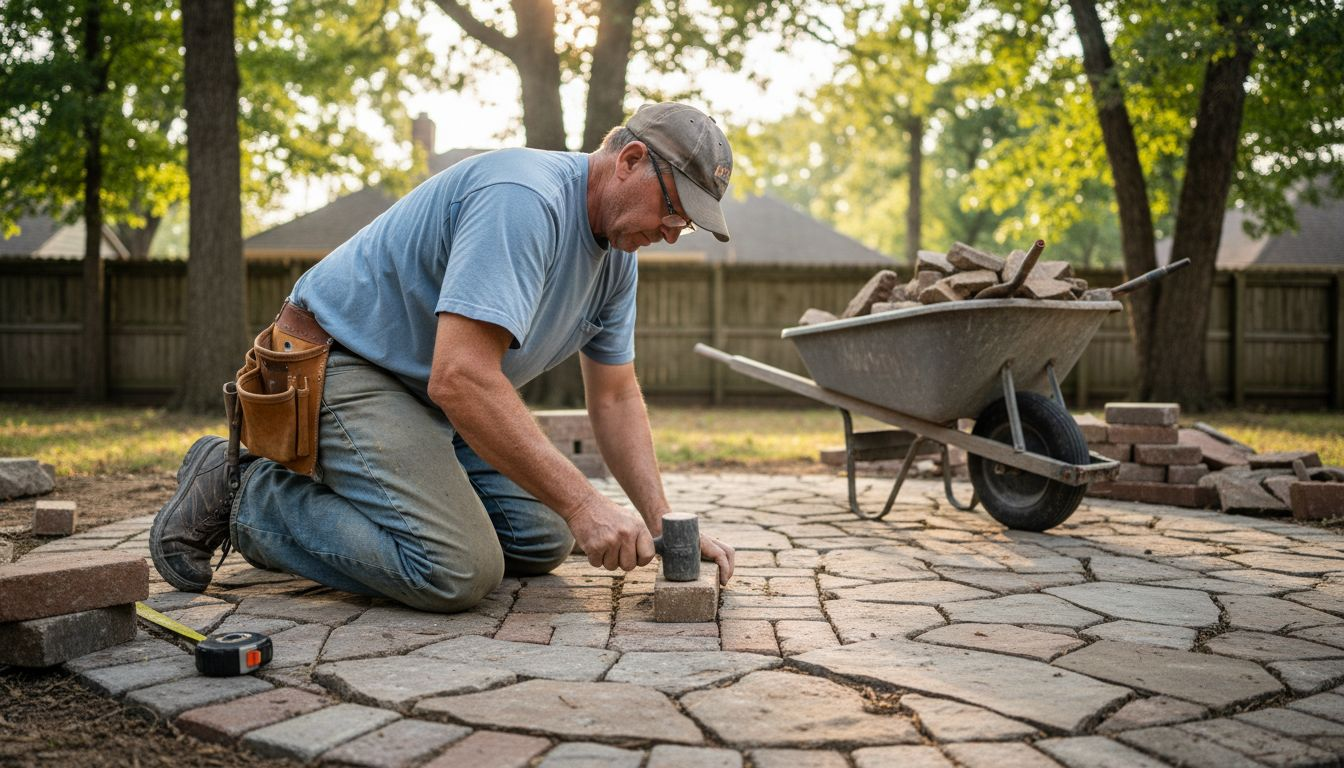
Finding the perfect material for your Northern Virginia outdoor remodel can be confusing when brick, stone, and concrete each offer a unique blend of beauty and sturdiness. For homeowners, these choices are important because durable masonry can handle heavy loads and will not lose integrity to fire. Understanding the features of decorative masonry lets you create patios and walls that truly fit your style, while avoiding expensive mistakes in the unpredictable climate of Virginia. Discover how choosing the right material ensures lasting value and standout curb appeal.
Table of Contents
Key Takeaways
Point | Details |
Understand Material Choices | Selecting the right masonry material aligns with your project’s aesthetic and functional needs, so evaluate your goals carefully. |
Consider Local Climate | Northern Virginia’s weather can impact material performance; local examples can help guide your choice. |
Evaluate Long-term Costs | Factor in maintenance and longevity when selecting materials; cheaper options may require more upkeep. |
Match Aesthetics with Architecture | Ensure the chosen materials complement your home’s style to create a cohesive appearance in your outdoor spaces. |
Defining Masonry Materials and Their Uses
Masonry is the craft of building structures using individual units like stone, bricks, or concrete blocks, held together with mortar. When you’re planning outdoor improvements for your Northern Virginia home, understanding what masonry actually is helps you make informed decisions about which materials work best for your specific project. Whether you’re thinking about a backyard patio, a decorative wall, or a foundation enhancement, masonry sits at the intersection of durability and design.
The materials used in masonry are remarkably diverse. Natural stone offers timeless appeal and exceptional longevity, while bricks provide classic aesthetics with reliable structural performance. Concrete blocks deliver efficiency and flexibility in design, and masonry craftsmanship combines these elements strategically. What makes masonry valuable for homeowners is twofold: it handles heavy loads without complaint, and fire won’t compromise its integrity. This matters when you’re investing in outdoor spaces that need to withstand Virginia’s weather cycles and occasional temperature swings.
Masonry serves both functional and decorative purposes. You might use it structurally for retaining walls that prevent soil erosion on sloped properties, or you could choose masonry purely for aesthetic reasons with decorative veneers that transform plain surfaces into focal points. Fireplaces, columns, planters, and even decorative exterior accents all fall under masonry applications. When working with contractors on stamped concrete or custom patios, understanding these material options ensures you’re selecting solutions that align with your vision and budget.
The choice between materials depends on your specific goals. A homeowner seeking to create a rustic charm might gravitate toward natural stone, while someone wanting consistent appearance and predictable maintenance could prefer concrete blocks or quality bricks. When you’re beginning a masonry project or home improvement, knowing these distinctions prevents costly mistakes and ensures the finished result matches your expectations for both performance and appearance.
Pro tip: Before selecting your masonry material, check how similar installations have weathered in your Northern Virginia neighborhood—local climate impacts material performance more than general recommendations, and seeing real-world examples helps you choose materials that will thrive in your specific conditions.
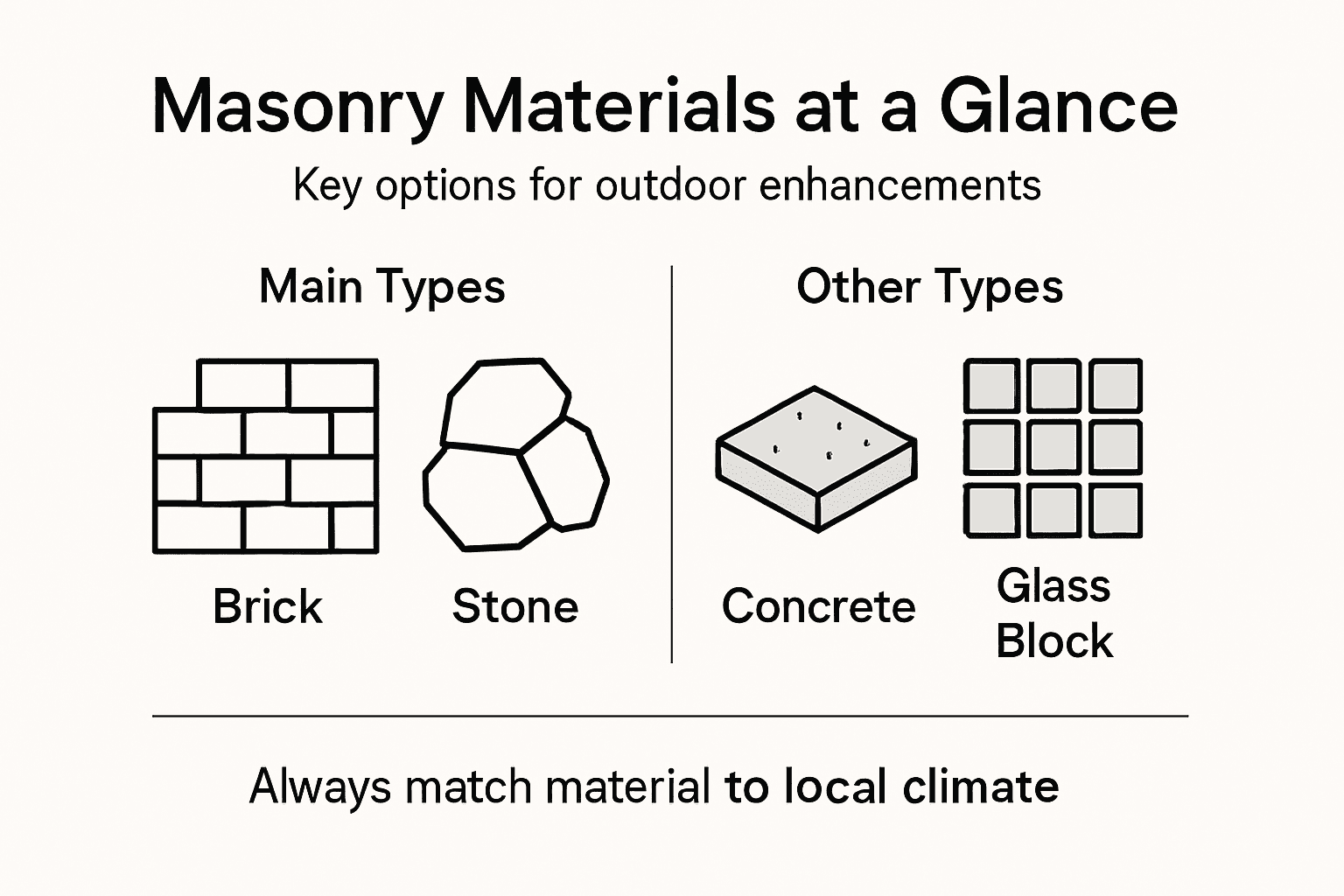
Key Types: Brick, Stone, Concrete, and More
When it comes to selecting masonry materials for your Northern Virginia outdoor space, you’re really choosing between four main categories that each bring different strengths to the table. Understanding what sets them apart helps you pick the right solution for your patio, walkway, wall, or foundation project. Let’s break down each option and what makes it suitable for different applications.
Brick masonry remains the go-to choice for homeowners who value classic aesthetics with modern performance. Bricks deliver energy efficiency and fire resistance that keep your outdoor structures protected through Virginia’s temperature fluctuations. They come in various colors and textures, which means you can achieve anything from a traditional colonial look to contemporary designs. Brick weathers gracefully over time, developing character rather than deteriorating. The downside? Installation takes longer than some alternatives, and costs reflect that craftsmanship.
Stone masonry represents the premium choice for homeowners seeking timeless beauty that lasts generations. Natural stone brings unmatched visual appeal and exceptional robustness to any outdoor space. Historic properties throughout Northern Virginia showcase stone work that’s held up for centuries. You’ll find stone used in decorative applications, high-end patios, and statement walls that become focal points in your landscape. The trade-off comes in price and the need for specialized installation expertise. Each stone is unique, which creates visual richness but requires careful planning during design.
Concrete masonry offers the practical middle ground that modern homeowners appreciate. Concrete blocks are strong, cost-effective, and work beautifully for foundations, structural walls, and industrial-grade applications. When you’re working with contractors on stamped concrete or custom concrete designs, you’re leveraging the versatility that concrete provides. It accepts stains, stamps, and decorative finishes that mimic expensive materials at a fraction of the cost. Concrete requires less specialized labor than brick or stone, which translates to faster installation and lower overhead costs.
Beyond these three primary options, you might encounter glass blocks for specialized decorative applications or adobe in regional projects. Each material has distinct maintenance considerations worth researching before you commit. Brick needs occasional repointing and cleaning. Stone requires periodic sealing. Concrete benefits from regular sealing to prevent staining and weathering.
Pro tip: Get samples of each material you’re considering and place them in your actual outdoor space during different times of day—how brick looks in morning light differs from afternoon shadows, and seeing real-world color interactions with your home’s existing architecture prevents disappointment after installation.
Distinct Features of Common Masonry Materials
Each masonry material brings its own personality and performance profile to your outdoor project. The differences go beyond just how they look. They affect installation timelines, long-term maintenance demands, cost considerations, and how well they’ll perform in Northern Virginia’s climate. Knowing these distinctions upfront saves you from surprises after the project wraps up.
Brick stands out for its thermal mass properties, which means it absorbs and releases heat slowly. This keeps spaces slightly cooler in summer and warmer in winter, a benefit that becomes noticeable in outdoor living areas. Bricks resist moisture absorption better than many alternatives, which matters during Virginia’s wet springs and humid summers. Their compression strength is excellent, handling weight and pressure with ease. The visual appeal comes from consistent color and texture options, though you’ll see slight variations that give installed brick a natural, handcrafted appearance. Maintenance involves occasional cleaning and repointing mortar joints every 20 to 30 years.
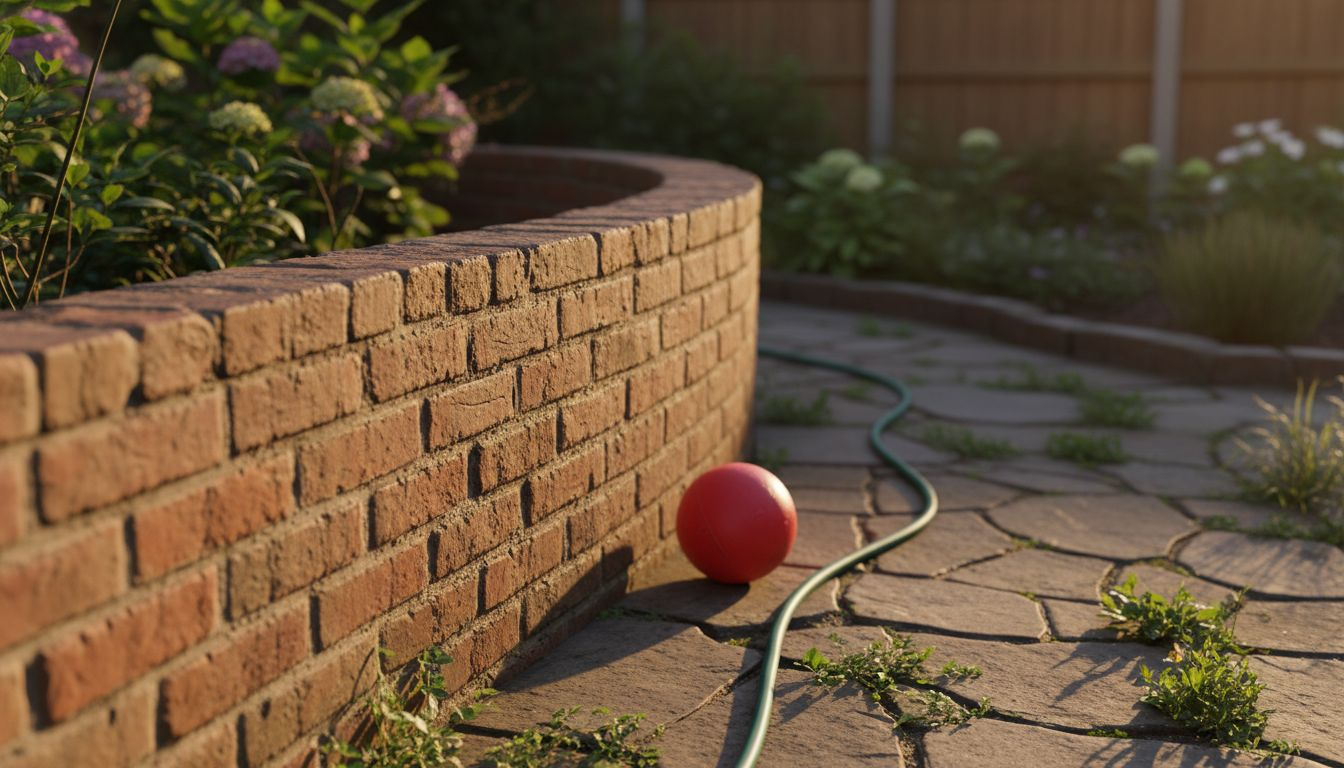
Stone offers unmatched durability that often outlasts the buildings around it. Natural stone has superior compression strength and weather resistance, withstanding freeze-thaw cycles that Virginia experiences. Each piece is unique, creating visual richness that manufactured materials cannot replicate. Stone requires periodic sealing to prevent staining and weathering, especially softer varieties like limestone or sandstone. The density varies by stone type. Granite stays virtually maintenance-free for decades, while slate needs more attention. When you incorporate unique concrete stamp patterns into your design vision, natural stone provides a premium counterpoint that elevates entire outdoor spaces through sheer visual presence.
Concrete blocks deliver impressive compression strength at a fraction of brick or stone cost. They accept stains, decorative finishes, and structural modifications that other materials resist. Concrete cures hard quickly, allowing faster construction timelines compared to traditional masonry methods. The downside involves potential cracking in extreme temperature swings if not properly installed with control joints. Concrete requires regular sealing to prevent water penetration, staining, and surface deterioration. Its appearance depends heavily on finishing choices. Plain gray blocks look industrial, while stamped or stained finishes create custom aesthetics.
Glass blocks provide translucency for specialized applications where light transmission matters. They work beautifully in decorative accent walls, creating focal points that catch and scatter light. Glass resists weathering and staining better than porous materials. However, they lack structural capacity for load-bearing walls.
Pro tip: Test your material choice in wet conditions by spraying water on samples and observing absorption rates—some materials that look beautiful when dry reveal water staining issues that become apparent only after rain, so checking this prevents regrets months into ownership.
Popular Applications for Outdoor Living Spaces
Masonry materials transform how you use your outdoor spaces. Rather than just looking nice, they create functional zones that extend your home’s living area into the yard. Northern Virginia homeowners are discovering that well-chosen masonry applications add real value to their properties while dramatically improving how families actually use their outdoor environments year-round.
Patios and Walkways represent the most popular masonry application. A well-constructed patio becomes an outdoor room where you entertain, dine, and relax with family. Stamped concrete, brick, or natural stone create visual interest while providing durable surfaces that handle foot traffic and weather. Walkways connect different areas of your yard, directing movement while adding structure to your landscape design. Trendy surface design techniques allow you to create patterns and finishes that complement your home’s architecture. These applications demand materials with excellent slip resistance and weather durability.
Retaining Walls serve both functional and aesthetic purposes. They prevent soil erosion on sloped properties, a critical consideration in Northern Virginia’s terrain. A well-designed retaining wall becomes a landscape feature that adds dimension and visual appeal. Brick, stone, and concrete blocks each work beautifully for this purpose, with stone providing premium aesthetics and concrete blocks offering cost-effective strength. Retaining walls create level areas for planting or outdoor entertaining, essentially giving you usable space that didn’t exist before.
Outdoor Fireplaces and Fire Pits showcase masonry’s versatility for gathering spaces. Brick or stone fireplaces become focal points that draw people together. These structures require materials with exceptional fire resistance and thermal properties, making traditional masonry ideal. A well-built outdoor fireplace extends your entertaining season into cooler months, increasing how much you actually use your yard.
Garden Beds and Planters benefit from masonry’s durability and visual appeal. Brick or stone borders define garden spaces while containing soil and adding geometric interest. Stacked stone planters create dimension in flat yards. These applications showcase how masonry works in smaller scales to enhance overall outdoor design.
Columns, Archways, and Decorative Accents add architectural character to outdoor spaces. These elements draw the eye and create visual hierarchy in your landscape. Stone columns flanking an entrance create a welcoming presence, while decorative brick patterns add personality to garden walls.
Pro tip: Consider the primary use of each outdoor area before selecting materials—high-traffic patios need different durability standards than decorative accent walls, and matching material choices to actual usage patterns prevents premature wear and keeps your installation looking fresh for decades.
This table summarizes which material attributes matter for popular outdoor uses:
Application | Important Properties | Top Material Choice |
Patio/Walkways | Slip resistance, durability | Brick or stamped concrete |
Retaining Walls | Strength, weather resistance | Stone or concrete block |
Fireplace/Fire Pit | Fire and thermal resistance | Brick or natural stone |
Garden Borders | Appearance, shape flexibility | Brick or stone |
Decorative Columns | Visual impact, longevity | Stone for premium look |
Comparing Durability, Costs, and Maintenance Needs
When you’re evaluating masonry materials for your Northern Virginia outdoor space, the initial price tag tells only part of the story. You need to think about what you’ll actually spend over 10, 20, or 30 years when you factor in maintenance, repairs, and eventual replacement. A material that costs less upfront might drain your wallet through constant upkeep, while a pricier option could prove economical because it practically takes care of itself.
Brick offers exceptional durability when properly installed. Well-built brick structures last 100+ years, a testament to brick’s proven track record. The initial cost ranges from moderate to high depending on brick quality and installation complexity. Maintenance involves occasional cleaning and repointing mortar joints roughly every 25 to 30 years, which requires professional expertise and adds up over decades. Budget approximately 10 to 15 percent of your original installation cost for repointing when the time comes. Brick resists weathering gracefully, developing patina rather than deteriorating.
Natural Stone commands premium pricing upfront. Granite, for instance, costs significantly more than brick or concrete. The payoff comes in longevity. High-quality stone lasts indefinitely, often outlasting the structures it adorns. Granite requires minimal maintenance beyond occasional sealing every 3 to 5 years. Softer stones like limestone demand more frequent attention and periodic resealing. Over a 30-year span, stone’s low maintenance costs can offset its higher initial investment, making it genuinely economical for permanent installations.
Concrete delivers the most cost-effective entry point. Stamped concrete costs substantially less than brick or natural stone initially. The trade-off involves more frequent maintenance. Concrete needs resealing every 2 to 3 years to prevent staining, water penetration, and surface deterioration. Cracking becomes more likely than with brick or stone, particularly if installation didn’t include proper control joints. Over time, these maintenance demands accumulate. However, for budget-conscious homeowners, concrete provides excellent value when you’re willing to invest in regular care. Concrete typically lasts 25 to 40 years before major repairs become necessary.
Here’s a concise comparison of masonry materials to help with your selection:
Material | Best for | Typical Upfront Cost | Ongoing Maintenance |
Brick | Traditional patios, walkways, walls | Moderate to high | Cleaning, repointing every 25 years |
Natural Stone | Premium accents, statement walls | High | Sealing every 3–5 years |
Concrete | Budget patios, foundation walls | Low to moderate | Resealing every 2–3 years |
Glass Block | Decorative features, accent walls | Moderate to high | Minimal, occasional cleaning |
Durability Comparison at a Glance
Brick: 100+ year lifespan, moderate maintenance costs, excellent weather resistance
Stone: 50+ to indefinite lifespan, minimal maintenance, premium initial investment
Concrete: 25 to 40 year lifespan, frequent maintenance required, budget-friendly start
Glass Blocks: 50+ year lifespan, virtually maintenance-free, specialized applications only
The real question isn’t which material costs least today. It’s which material aligns with your timeline and maintenance commitment. If you plan to stay in your Northern Virginia home for decades, investing in brick or stone pays dividends. If you’re looking for short-term improvement and don’t mind regular maintenance, concrete makes economic sense. When selecting materials for custom concrete designs or traditional masonry, match your choice to your actual long-term plans.
Pro tip: Request a detailed maintenance schedule from your contractor before making final material decisions—knowing exactly what upkeep concrete requires versus stone helps you accurately calculate true lifetime costs and choose the material that fits your real maintenance habits and budget.
Mistakes to Avoid When Selecting Materials
Choosing masonry materials without a clear strategy leads to frustration, wasted money, and installations that disappoint within years. Northern Virginia homeowners often make predictable mistakes that could have been prevented with better planning. Understanding these pitfalls helps you sidestep costly errors before they derail your project.
The biggest mistake is selecting materials based solely on appearance without considering your climate and maintenance capacity. That gorgeous natural stone you saw in a magazine might require annual sealing in your area, but you have no interest in maintaining it. Conversely, choosing concrete because it’s cheap ignores that you’ll need to reseal it every few years regardless. Match your material selection to what you’re actually willing to maintain. A material that demands constant attention becomes a regret if you prefer hands-off outdoor spaces.
Ignoring climate-specific requirements causes serious problems. Northern Virginia experiences freeze-thaw cycles that brutalize certain materials. Porous masonry units absorb moisture that expands when frozen, causing spalling and deterioration. Wrong mortar types suited for outdoor exposure will fail prematurely, compromising the entire installation. Always verify that your chosen materials and mortar are specifically rated for your climate zone. Ask your contractor which products they recommend for the freeze-thaw conditions you actually experience.
Failing to account for soil conditions and drainage represents another common oversight. Retaining walls and foundations sit against earth that shifts and holds moisture. Materials that work beautifully on exposed patios fail when pressed against wet soil. Ground contact requires different material selections and waterproofing approaches than above-ground applications. Before finalizing material choices, discuss with your contractor how each area of your project interacts with soil, water, and temperature swings.
Underestimating installation complexity creates disappointment when costs balloon. Some materials demand specialized labor that costs more than the materials themselves. Intricate stone patterns or complex brick work require craftspeople who command premium pricing. Concrete stamping requires expertise to execute properly. Getting multiple quotes from qualified contractors prevents sticker shock and ensures you understand true project costs.
Selecting materials without considering aesthetic compatibility with your home’s architecture wastes the investment. That trendy paver material might clash with your colonial-era brick home. A sleek stamped concrete patio looks out of place on a rustic stone cottage. Walk your property at different times of day. Imagine your chosen materials against your home’s existing exterior. Does everything work together harmoniously, or will it look like disconnected elements?
Pro tip: Request material samples and leave them in your yard for at least one week, checking them in morning sun, afternoon light, and after rain to see how they actually look in your specific conditions before committing to thousands of dollars in materials.
Transform Your Outdoor Space with Expert Masonry and Concrete Solutions
Choosing the right masonry material for your Northern Virginia home can feel overwhelming. The article highlights common challenges like balancing durability with aesthetics and managing long-term maintenance in variable climate conditions. Whether you are deciding between brick’s classic charm, stone’s timeless strength, or the budget-friendly versatility of stamped concrete, your outdoor project deserves craftsmanship that matches your vision and lifestyle.
At BNTS Construction, we specialize in masonry work, including custom patios, foundations, and both stamped and regular concrete installations tailored to your specific needs. We understand how important it is to select materials that not only look great but perform reliably through changing seasons. Our team guides you through material choices, installation expertise, and maintenance tips ensuring your investment stands the test of time.
Explore our custom concrete and masonry services and bring your outdoor living space to life with durable designs and stunning finishes.
Ready to enhance your yard with expert masonry or decorative concrete? Contact us today to discuss your project. Let us help you avoid costly mistakes and create an outdoor space that reflects lasting quality and your unique style. Visit BNTS Construction now to get started.
Frequently Asked Questions
What are the main types of masonry materials used in outdoor spaces?
Masonry materials commonly used for outdoor spaces include brick, natural stone, and concrete blocks. Each offers unique benefits suited for different applications, such as patios, walkways, and walls.
How do masonry materials differ in terms of durability?
Brick and natural stone are known for their exceptional durability, often lasting 100 years or more when properly installed. Concrete blocks provide a strong and cost-effective option, typically lasting 25 to 40 years, but may require more frequent maintenance compared to brick or stone.
What maintenance do different masonry materials require?
Brick requires occasional cleaning and repointing of mortar joints every 25 to 30 years. Natural stone typically needs resealing every 3 to 5 years, while concrete needs resealing every 2 to 3 years to prevent staining and weathering.
Can masonry materials be used for decorative features in outdoor spaces?
Yes, masonry materials can serve both functional and decorative purposes. They can be used for decorative walls, garden beds, planters, and accent features that enhance the visual appeal of outdoor spaces.
Recommended
Comments