
Concrete Resurfacing: Restore Outdoor Spaces Affordably
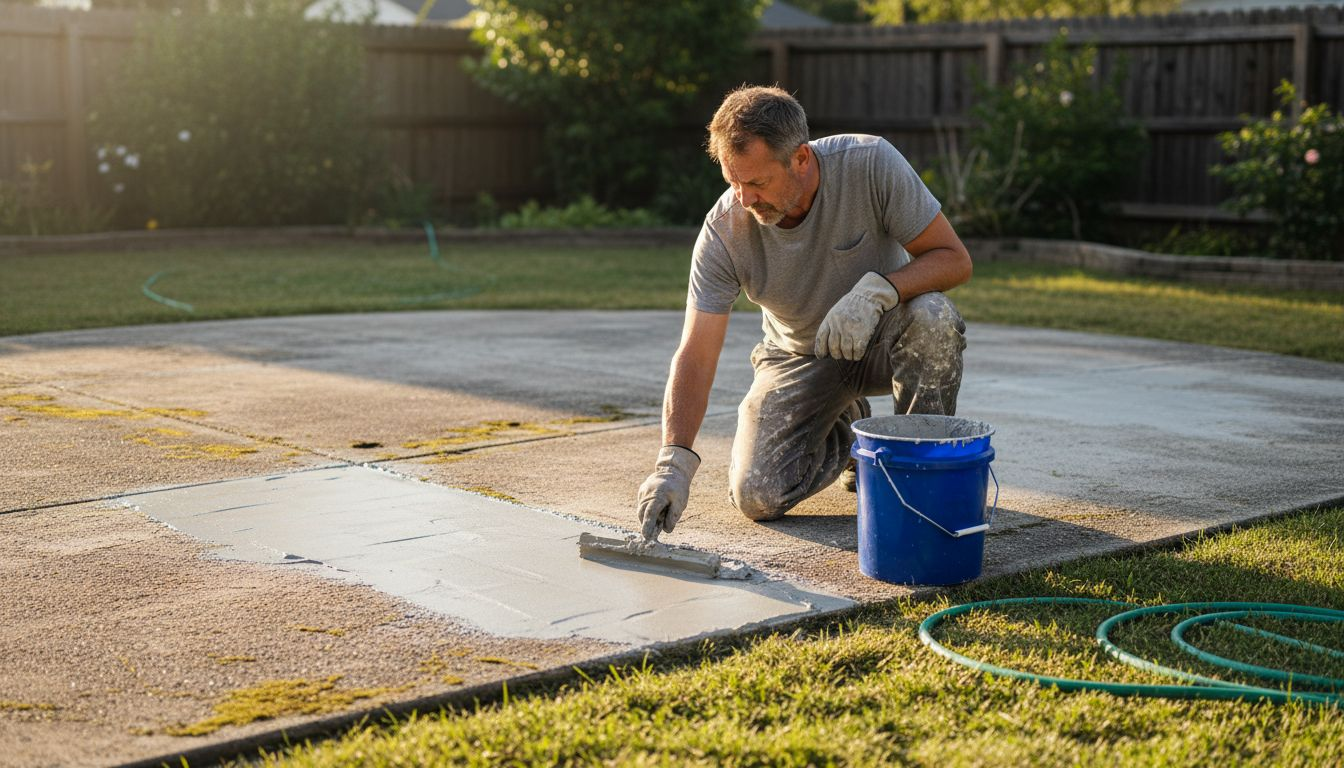
Worn patios and dull walkways can leave Northern Virginia yards feeling tired instead of inviting. Many homeowners want solutions that refresh concrete surfaces without breaking the bank or starting from scratch. Concrete resurfacing offers a cost-effective way to revitalize outdoor areas with durable, customizable finishes that boost curb appeal and fit a modern lifestyle. This guide highlights how homeowners can transform concrete and enjoy both practicality and creative design choices.
Table of Contents
Key Takeaways
Point | Details |
Cost-Effective Solution | Concrete resurfacing costs between $3-$20 per square foot, offering an affordable alternative to replacement. |
Enhanced Aesthetic Appeal | The process can restore up to 80% of a surface’s original appearance while allowing for decorative options. |
Critical Preparation Phase | Proper surface preparation is essential for successful resurfacing, accounting for nearly 70% of the project’s success. |
Professional Assessment Importance | Engaging specialists for evaluation prevents common pitfalls and enhances long-term durability. |
Concrete resurfacing explained: Core concepts
Concrete resurfacing is a transformative solution for Northern Virginia homeowners looking to breathe new life into worn concrete surfaces without the hefty cost of complete replacement. Concrete resurfacing involves applying a specialized coating over existing concrete slabs, creating a fresh, durable surface that masks imperfections and extends the material’s functional lifespan.
At its core, concrete resurfacing works through a precise application process that chemically bonds a thin polymer-modified overlay to the original concrete surface. This technique is particularly effective for addressing aesthetic and minor structural issues without undertaking a full demolition and reconstruction project. The process offers homeowners several critical advantages:
Restores surface appearance and smoothness
Hides minor cracks, discoloration, and surface blemishes
Significantly more cost-effective than total concrete replacement
Provides enhanced durability and protection
Allows for decorative customization options
The success of concrete resurfacing depends entirely on the existing concrete’s foundational integrity. Professionals carefully evaluate the base slab to ensure it can support the new overlay, checking for severe structural damage, deep fractures, or significant settling that might compromise the resurfacing process. This meticulous assessment helps prevent future failures and ensures a long-lasting, aesthetically pleasing result.
Pro tip: Before scheduling a concrete resurfacing project, request a comprehensive structural assessment to confirm your existing concrete can successfully support the new overlay.
Types of resurfacing for outdoor areas
Northern Virginia homeowners have several versatile options for concrete resurfacing that can dramatically transform outdoor living spaces. Stamped concrete techniques offer a particularly innovative approach to revitalizing worn surfaces, allowing homeowners to achieve decorative patterns that mimic natural stone, brick, or custom design elements.
The primary types of concrete resurfacing for outdoor areas include:
Overlay Resurfacing: A thin cement-based layer applied to existing concrete surfaces
Stamped Concrete Overlay: Creates decorative patterns and textures
Spray-Down Resurfacing: Provides a textured, slip-resistant finish
Epoxy Coating: Offers a smooth, high-gloss surface with enhanced durability
Microtopping: Ultra-thin decorative layer for minimal surface elevation
Each resurfacing method offers unique benefits tailored to different aesthetic and functional requirements. Spray-down techniques work exceptionally well for pool decks and patios, providing slip resistance and heat reflection. Stamped overlays are ideal for homeowners seeking to replicate high-end materials like slate or cobblestone without the associated expense and installation complexity.
Professional concrete resurfacing can increase outdoor space value by up to 30% while extending the functional lifespan of existing concrete surfaces.
Choosing the right resurfacing technique depends on several factors, including the existing concrete’s condition, desired aesthetic, budget, and intended use of the outdoor area. Professionals recommend a comprehensive evaluation of the current surface to determine the most appropriate resurfacing strategy.
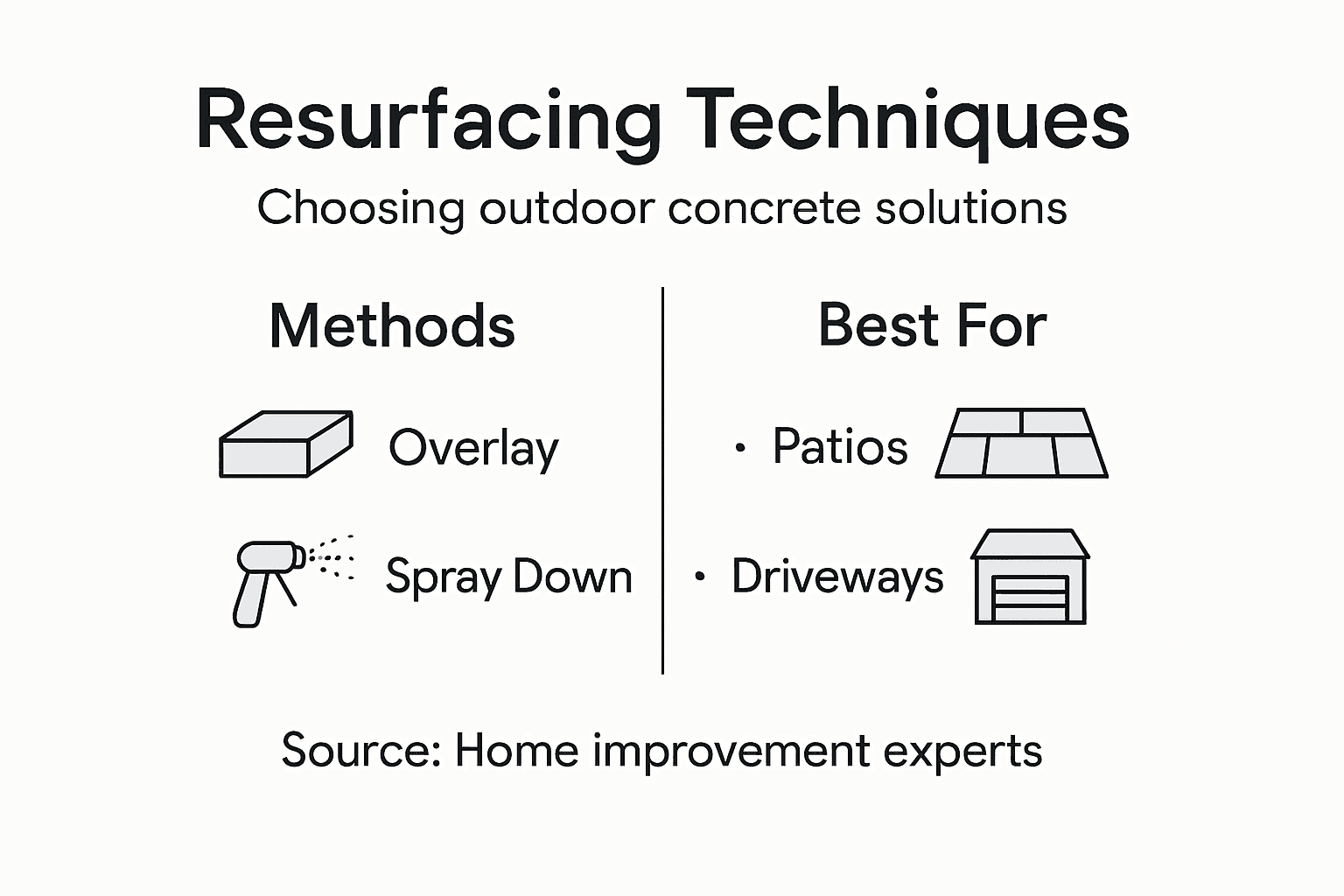
Here’s how popular outdoor resurfacing methods compare on practical criteria:
Method | Slip Resistance | Maintenance Level | Best For |
Overlay Resurfacing | Moderate | Low | Driveways, walkways |
Stamped Concrete | Variable (by pattern) | Medium | Patios, decorative areas |
Spray-Down Resurfacing | High | Low | Pool decks, entryways |
Epoxy Coating | Low unless textured | Very Low | Garages, utility spaces |
Microtopping | Moderate | Medium | Modern patio surfaces |
Pro tip: Consult a professional who can assess your specific outdoor concrete conditions and recommend the most suitable resurfacing technique for your unique space and requirements.
How resurfacing works step by step
Concrete resurfacing is a precise process that transforms damaged outdoor surfaces into renewed, attractive spaces. Concrete resurfacing follows a meticulous step-by-step approach designed to ensure maximum durability and aesthetic appeal for Northern Virginia homeowners.
The comprehensive concrete resurfacing process involves several critical stages:
Surface Inspection: Thoroughly evaluate existing concrete for structural integrity
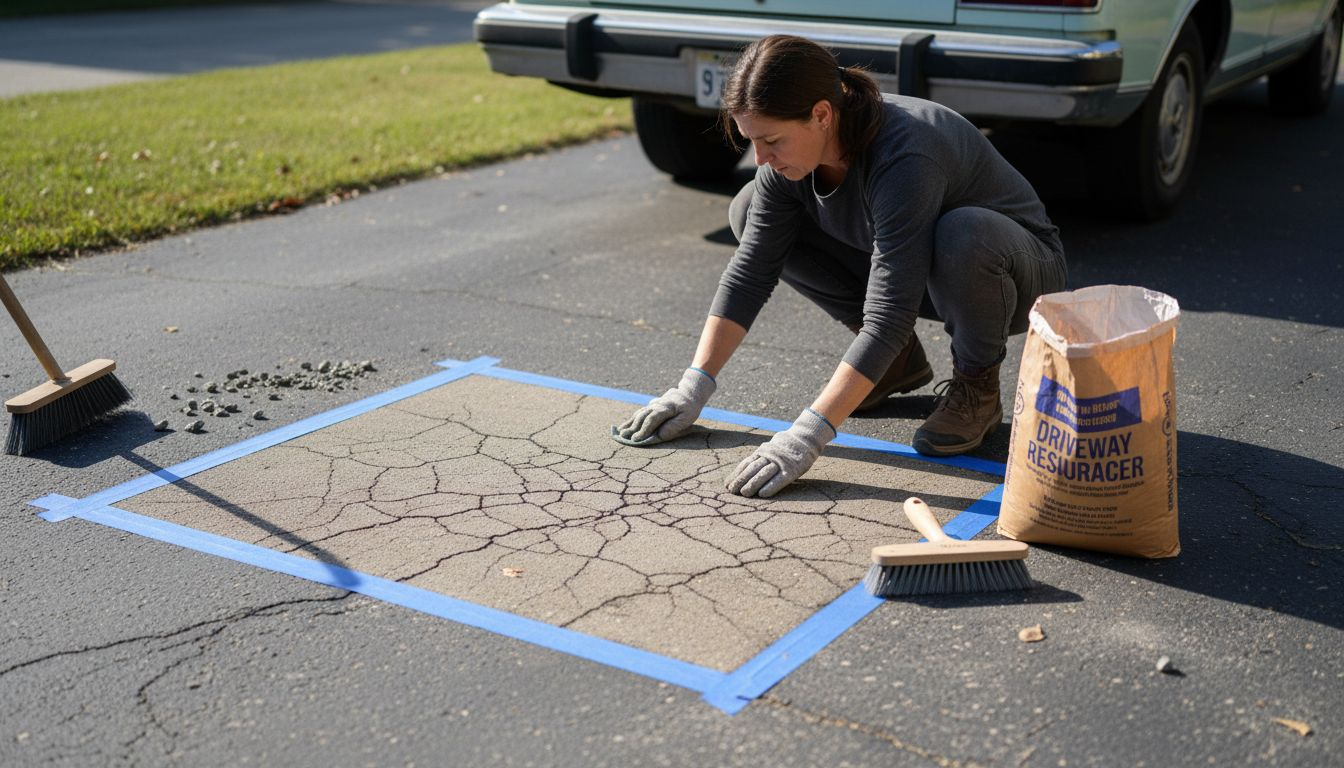
Cleaning: Power wash and remove all dirt, debris, and loose materials
Repair: Fill cracks and address minor surface imperfections
Profiling: Mechanically prepare surface to ensure proper material adhesion
Priming: Apply bonding agent to create optimal surface conditions
Overlay Application: Spread resurfacing material evenly
Finishing: Create desired texture or pattern
Curing: Allow adequate time for material to set and harden
Professional preparation is the cornerstone of successful concrete resurfacing. Homeowners must understand that surface preparation accounts for nearly 70% of the project’s ultimate success. Mechanical profiling creates microscopic texture that allows the new overlay to bond securely with the existing concrete surface, preventing future delamination or cracking.
Proper surface preparation can extend the lifespan of your resurfaced concrete by up to 15 years, making it a critical investment in your property’s aesthetic and functional value.
Each step requires precision and attention to detail. Skipping or rushing through any stage can compromise the entire resurfacing project, leading to premature failure and additional repair costs. Professional concrete specialists use specialized tools and techniques to ensure each stage meets exacting standards.
Pro tip: Invest in professional assessment before attempting concrete resurfacing, as improper preparation can result in costly mistakes and unsatisfactory results.
Decorative and functional resurfacing options
Northern Virginia homeowners have an exciting array of concrete resurfacing options that blend aesthetic appeal with practical functionality. Stamped concrete techniques offer homeowners unprecedented opportunities to transform ordinary outdoor spaces into stunning, personalized environments.
Decorative resurfacing options provide multiple benefits and design possibilities:
Stamped Concrete: Replicates natural stone, brick, or custom patterns
Acid Staining: Creates unique, marbled color effects
Textured Overlays: Provides slip-resistant surfaces with visual interest
Epoxy Coatings: Offers high-gloss, durable finish with color options
Microtoppings: Creates ultra-smooth, modern surface treatments
Functional considerations play a crucial role in selecting the right resurfacing technique. Pool decks require slip-resistant surfaces, while patio areas might prioritize aesthetic appeal and durability. Each technique offers unique performance characteristics that address specific environmental and usage demands.
Professionally applied decorative resurfacing can increase property value by up to 25% while providing enhanced durability and visual appeal.
Color and texture selections allow homeowners to create truly customized outdoor spaces that reflect personal style and complement existing architectural elements. Advanced resurfacing technologies enable precise color matching, intricate pattern replication, and seamless integration with surrounding landscape design.
Pro tip: Consider your specific outdoor environment and usage requirements when selecting a resurfacing technique to ensure optimal performance and aesthetic satisfaction.
Costs, durability, and common pitfalls
Understanding the financial and performance implications of concrete resurfacing is crucial for Northern Virginia homeowners seeking cost-effective outdoor improvements. Life cycle cost analysis reveals critical insights into the long-term value of professional concrete restoration.
Typical cost ranges for concrete resurfacing vary based on several key factors:
Basic Overlay: $3-$7 per square foot
Stamped/Decorative Overlay: $8-$20 per square foot
Epoxy Coating: $6-$15 per square foot
Complex Design Work: $20-$30 per square foot
Full Surface Preparation: Additional $2-$5 per square foot
Durability depends critically on proper preparation and material selection. Professional-grade resurfacing can extend concrete surface life by 10-15 years when applied correctly. Homeowners must be vigilant about potential pitfalls that can compromise project success.
Improper surface preparation accounts for nearly 80% of premature concrete resurfacing failures, making professional assessment essential.
Common mistakes that compromise resurfacing projects include inadequate surface cleaning, ignoring underlying structural issues, using incorrect material mixtures, and rushing the curing process. Each of these errors can lead to cracking, delamination, and costly repairs down the line.
Below is a concise summary of common resurfacing pitfalls and their potential long-term impact:
Mistake | Common Result | Cost Consequence |
Poor surface cleaning | Premature failure | Frequent repairs needed |
Ignoring cracks | Underlay instability | Higher replacement costs |
Wrong material choice | Early delamination | Redo entire overlay |
Insufficient curing time | Cracking or peeling | Repeat labor expenses |
Pro tip: Invest in a professional diagnostic assessment before resurfacing to identify and address potential underlying concrete structural issues that could compromise your project’s long-term success.
Comparisons with replacement and other repairs
Northern Virginia homeowners face critical decisions when addressing concrete deterioration, with multiple repair strategies offering distinct advantages and limitations. Surface restoration techniques provide nuanced alternatives to complete concrete replacement that can save significant time and money.
Comparing concrete repair approaches reveals important considerations:
Concrete Resurfacing:
Cost: $3-$20 per square foot
Lifespan: 10-15 years
Aesthetic Improvement: High
Structural Repair: Limited
Complete Replacement:
Cost: $8-$35 per square foot
Lifespan: 25-30 years
Aesthetic Improvement: Complete
Structural Repair: Comprehensive
Patching/Spot Repairs:
Cost: $500-$3,000 total
Lifespan: 3-7 years
Aesthetic Improvement: Minimal
Structural Repair: Targeted
Resurfacing emerges as a strategic middle ground, offering substantial aesthetic and functional improvements without the extensive disruption and expense of total concrete replacement. The technique works exceptionally well for surfaces with minor to moderate damage, providing a cost-effective solution for homeowners seeking visual and performance enhancements.
Professionally executed concrete resurfacing can restore up to 80% of a surface’s original appearance and functionality at just 40% of replacement costs.
The choice between resurfacing, replacement, and targeted repairs depends on multiple factors, including existing concrete condition, budget constraints, aesthetic goals, and long-term property maintenance strategies. Homeowners should prioritize professional assessment to determine the most appropriate intervention.
Pro tip: Obtain multiple professional evaluations and detailed cost comparisons before committing to any concrete repair strategy to ensure you select the most cost-effective and durable solution.
Transform Your Outdoor Concrete with Expert Resurfacing Solutions
If you are facing worn or damaged concrete surfaces that need a fresh, durable makeover without the high cost of full replacement then professional concrete resurfacing is your ideal answer. The challenges of preparing, repairing, and applying the right overlay can feel overwhelming but at BNTS Construction we specialize in stamped concrete, regular concrete, masonry work, and are expanding into epoxy and decorative concrete coatings — offering you expert craftsmanship and customized options to restore both beauty and functionality to your patios, foundations, and outdoor spaces.
Don’t let cracks, discoloration, or surface damage reduce your home’s curb appeal or usability. Take advantage of our comprehensive concrete assessment and resurfacing expertise to ensure lasting quality and aesthetic appeal. Visit BNTS Construction now to explore how our Stamped Concrete solutions can renew your outdoor areas affordably and effectively. Act today to protect your investment and elevate your outdoor living experience with trusted professionals!
Frequently Asked Questions
What is concrete resurfacing?
Concrete resurfacing is the process of applying a specialized coating over existing concrete surfaces to restore their appearance and extend their lifespan.
How long does concrete resurfacing last?
Professionally executed concrete resurfacing can extend the life of concrete surfaces by 10-15 years, depending on the preparation and materials used.
What types of finishes are available for concrete resurfacing?
Common finishes include overlay resurfacing, stamped concrete, spray-down resurfacing, epoxy coating, and microtopping, each offering unique aesthetic and functional benefits.
What are the main benefits of concrete resurfacing compared to complete replacement?
Concrete resurfacing is typically more cost-effective, can often be completed faster, and offers substantial aesthetic improvements without the extensive disruption of full replacement.
Recommended
Comments