
Stamped Concrete: Transforming Outdoor Spaces Beautifully
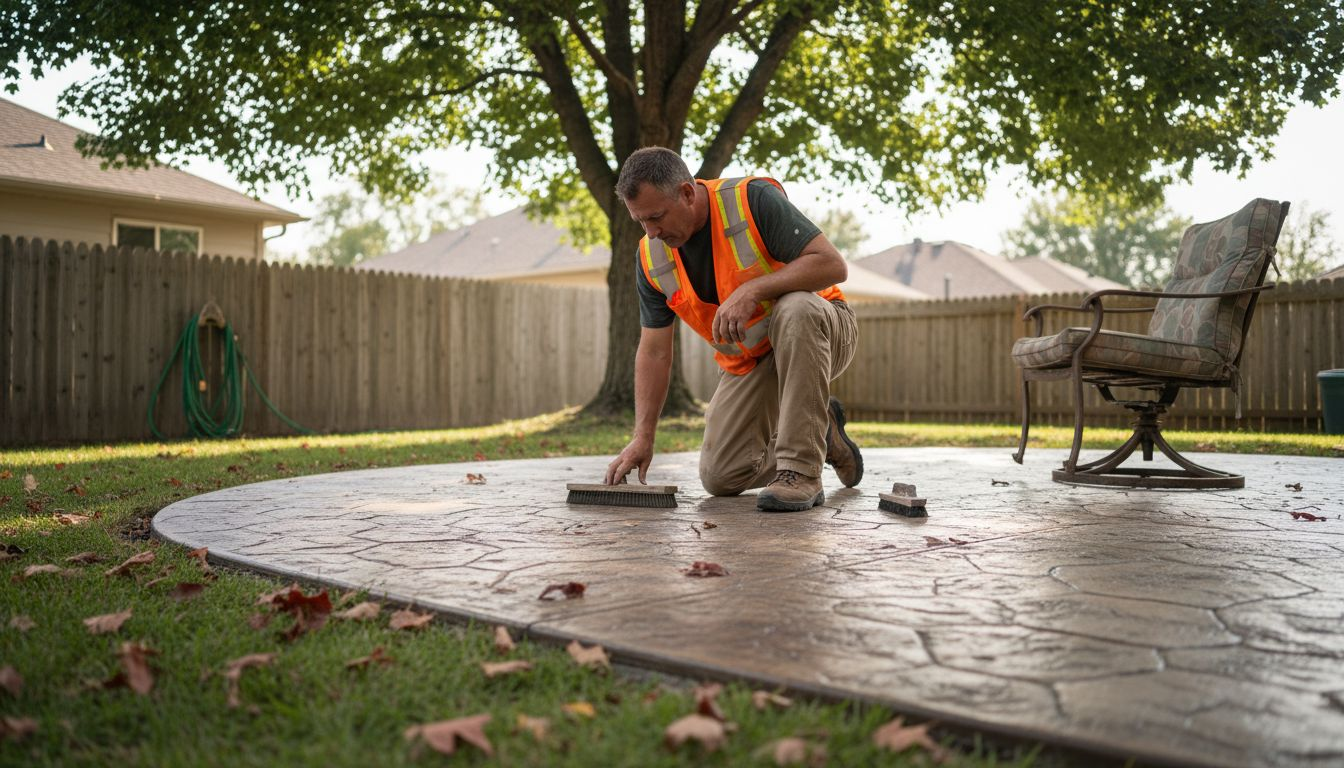
Many Northern Virginia homeowners dream of upgrading their patios or walkways without facing sky-high costs or overwhelming upkeep. Choosing decorative stamped concrete brings the look of luxury stone or brick within reach while staying practical for busy families. Understanding the facts about stamped concrete—its impressive durability, realistic finishes, and simple care—helps you avoid common myths and make confident decisions for a long-lasting, beautiful outdoor space.
Table of Contents
Key Takeaways
Point | Details |
Understanding Stamped Concrete | Stamped concrete offers an appealing alternative to natural materials, providing durability and aesthetic value. |
Common Misconceptions | Many believe stamped concrete is fragile or high-maintenance, but it performs comparably to traditional concrete when installed correctly. |
Installation Importance | Quality installation hinges on preparation, timing, and sealing, which are vital for longevity and performance. |
Regular Maintenance | Resealing every 2-3 years is essential to protect against moisture and prevent cracks, ensuring a long lifespan. |
Defining Stamped Concrete and Common Misconceptions
Stamped concrete is concrete that has been imprinted, patterned, textured, or embossed to resemble materials like brick, slate, flagstone, stone, tile, wood, or various decorative patterns. For Northern Virginia homeowners, this technique offers an affordable way to achieve the look of expensive natural materials without the price tag or maintenance headaches that come with genuine stone or brick.
The process works by pressing molds into fresh concrete before it fully hardens, creating surface textures and patterns that replicate real-world materials. Modern stamping techniques emerged in the 1950s and have evolved dramatically since then, giving homeowners access to incredibly detailed and realistic finishes. Whether you want your patio to look like aged Pennsylvania flagstone or hand-laid brick from a historic Virginia estate, today’s stamping technology can deliver the aesthetic you’re after.
Why Homeowners Get Stamped Concrete Wrong
The biggest misconception? People assume stamped concrete is fragile, high-maintenance, and won’t last as long as regular concrete. This couldn’t be further from the truth. When installed and maintained properly, stamped concrete performs just as well as traditional concrete surfaces, and often looks better for years to come.
Other common myths about stamped concrete include:
It’s too slippery when wet — Surface texture actually improves grip compared to smooth concrete
The pattern will fade quickly — Quality sealers protect the color and design for many years
It’s more expensive long-term — Cost-effectiveness compared to natural materials makes it a smart investment when you factor in durability and minimal upkeep
It cracks more easily — Proper preparation and curing prevent cracking; the stamping process itself doesn’t weaken the concrete
You can’t repair stamped concrete — Repairs are absolutely possible, though matching existing patterns requires a skilled contractor
What Actually Determines Quality
The performance difference comes down to three factors: preparation, installation, and ongoing care. A contractor who rushes the base preparation or doesn’t cure the concrete properly will end up with a surface that underperforms.
Proper stamping requires:
A solid, well-compacted base layer
Concrete mixed to the right consistency
Precise timing — the concrete must be at exactly the right stage of hardness when stamped
High-quality sealant applied after installation
Regular resealing every 2-3 years in Northern Virginia’s climate
When stamped concrete is installed by experienced professionals and maintained with basic care, it becomes one of the most durable and attractive outdoor surfaces available.
This is why choosing the right contractor matters enormously. A rushed job by an inexperienced team creates the problems homeowners worry about. A thoughtful installation by someone who understands concrete behavior produces a surface that looks fantastic and lasts for decades.
Your Northern Virginia home deserves an outdoor space that reflects your investment. Stamped concrete delivers real value when you work with professionals who understand both the art and the science behind the technique.
Pro tip: Ask any contractor about their curing process and sealing schedule before hiring them — proper curing determines 80% of your concrete’s long-term performance.
Popular Patterns, Textures, and Color Options
One of the biggest advantages of stamped concrete is the sheer variety of looks you can achieve. Unlike regular concrete, which sits plain and gray, stamped concrete lets you replicate expensive natural materials or create custom designs that match your home’s character. For Northern Virginia homeowners, this flexibility means you can choose patterns and colors that complement everything from colonial brick homes to modern farmhouse aesthetics.
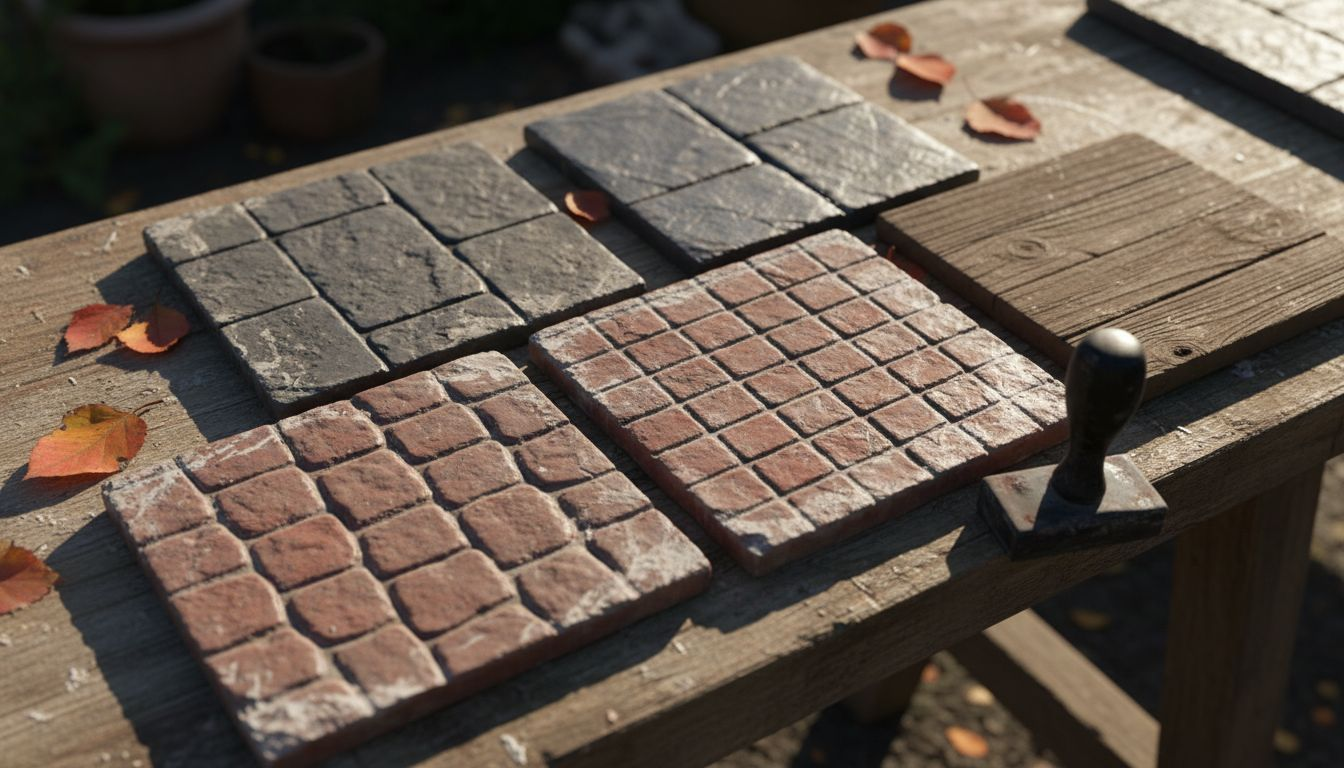
The pattern you select sets the entire tone for your outdoor space. Ashlar stone creates a squared, dimensional look with clean lines that feel contemporary and structured. Random stone patterns offer an organic, natural appearance by varying stone sizes and shapes, making your patio look like it was laid by hand centuries ago. Flagstone patterns deliver that elegant, timeless slate appearance that works with nearly any architectural style. Cobblestone designs evoke European charm with their rounded, patterned appearance. Each pattern tells a different story about your home and your design preferences.
Beyond patterns, different textures enhance the visual depth and realism of your stamped concrete. Some textures are seamless and smooth to the touch, while patterned textures add surface dimension that mimics the natural variations found in real stone or weathered wood. The texture you choose affects not just appearance but also how the surface feels underfoot and how it performs in Northern Virginia’s freeze-thaw cycles.
Color Brings Your Vision to Life
Pattern and texture are only half the story. Color is where stamped concrete truly transforms from nice to stunning. You have several methods to achieve the exact shade and depth you want:
Integral color mixed directly into the concrete creates a consistent, long-lasting hue that won’t fade or wear away
Antiquing release powders applied during the stamping process create color variation and depth, making new concrete look aged and weathered
Sealers with tint can be applied to adjust or enhance color after installation
Two-tone finishes combine multiple colors to create contrast and visual interest
When choosing colors, consider your home’s exterior palette. Warm earth tones like terracotta, tan, and rust complement traditional brick homes. Cool grays and charcoal work beautifully with modern designs. Bronze or copper tones add warmth to colonial-style properties. The right color choice can increase your home’s curb appeal dramatically.
The combination of pattern, texture, and color creates a customized outdoor surface that looks like high-end natural stone but costs a fraction of the price.
Getting the Details Right
Not all pattern and color combinations work equally well in every setting. A busy cobblestone pattern might overwhelm a small patio, while a large-scale ashlar stone could look stark on a residential walkway. Texture choices matter too—a heavily textured surface adds character but requires more careful maintenance in winter weather.
The best approach is visualizing your finished space. Many experienced contractors can show you samples of completed projects in the Northern Virginia area, so you see how specific patterns and colors look in real sunlight and weathering. This prevents surprises after installation and ensures you’ll love your patio for decades.
Your concrete surface will be one of the most visible features of your outdoor space. Taking time to select patterns, textures, and colors that match your home’s style and your personal taste ensures your investment becomes a genuine asset you’ll enjoy using and showing off.
To help visualize your design choices, see how popular stamped concrete patterns and textures compare:
Pattern/Texture | Typical Visual Effect | Best Used For | Maintenance Impact |
Ashlar Stone | Modern, squared look | Patios, walkways | Easy to clean, withstands wear |
Random Stone | Natural, varied stone shapes | Large patios, driveways | Organic look, moderate upkeep |
Flagstone | Timeless slate appearance | Entryways, pool decks | Elegant finish, regular sealing |
Cobblestone | Vintage, rounded stone pattern | Small patios, paths | Extra care in joints, high charm |
Smooth Texture | Sleek, seamless finish | High-traffic areas | Lower maintenance, less grip |
Pro tip: Request to see finished stamped concrete samples in various Northern Virginia lighting conditions before committing to your pattern and color choice—sunlight and shadows dramatically change how they appear on your property.
Stamped Concrete Installation Step by Step
Stamped concrete installation is a precise process that transforms your outdoor space from bare ground to a finished surface. The success of your final result depends on getting each phase right, from initial site preparation through final sealing. Understanding what goes into the process helps you work more effectively with your contractor and recognize quality workmanship when you see it.
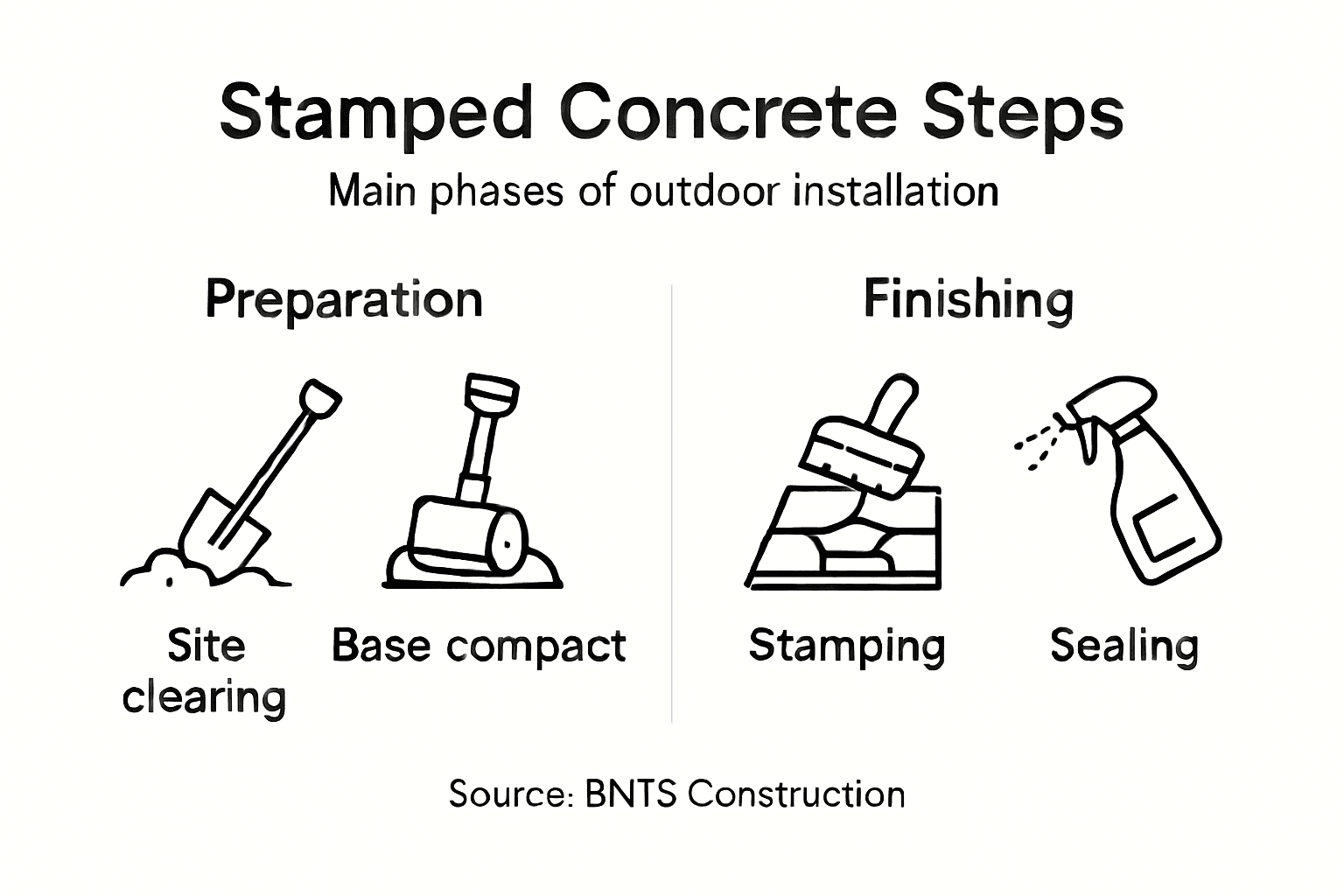
The journey starts long before the concrete arrives on your property. Site preparation sets the foundation for everything that follows. Your contractor will grade the area to ensure proper water drainage, then compact the base soil firmly to prevent settling later. Forms are installed to define the concrete borders and depth, and reinforcement materials are placed to strengthen the slab against cracking. This groundwork takes time, but skipping it creates problems that show up months or years later.
Once the base is ready, concrete is mixed and poured into the prepared area. Your contractor uses floats and trowels to smooth and finish the surface, creating the ideal texture for accepting stamp impressions. This is where timing becomes critical—the concrete must reach exactly the right firmness. Too soft and the stamps sink too deep; too hard and the impressions won’t capture properly.
The Stamping and Coloring Process
With the surface prepped and at the right consistency, coloring is applied via integral pigments or surface hardeners to create the desired hue. These colorants are either mixed into the concrete itself or applied to the surface before stamping begins. The timing matters because surface-applied colors need to be worked in while the concrete is still workable.
Now comes the most visible part of the process: stamping. Your contractor positions stamp molds onto the concrete and applies pressure to create the pattern impressions. This happens in overlapping sections to ensure consistent coverage and pattern flow across the entire surface. The pressure, angle, and sequence of stamping all affect the final appearance. A skilled contractor knows exactly how much force to apply and when to lift each stamp to capture crisp, realistic impressions.
The stamping process typically follows this sequence:
Apply release agent to the stamps to prevent concrete from sticking
Position the first stamp in a corner or starting point
Apply downward pressure using body weight or a pneumatic press
Carefully lift the stamp straight up to avoid smudging
Overlap the next stamp by 10-15% to ensure pattern continuity
Continue across the entire surface in a planned sequence
Return to early sections to touch up or re-stamp any missed areas
After stamping is complete, the concrete cures. This is non-negotiable time where the concrete gains strength. Proper curing in Northern Virginia’s climate typically takes 7 to 10 days, depending on temperature and humidity. During this period, the surface is kept moist and protected from foot traffic.
The Final Protection Phase
Once curing is complete, a protective sealer is applied to enhance durability and bring out the colors and patterns you chose. Sealing stamped concrete protects against moisture, UV damage, and staining while making future maintenance much easier.
The difference between a stamped concrete installation that lasts 20 years and one that fails in five years often comes down to how thoroughly the preparation, curing, and sealing phases were executed.
Quality installation requires patience and attention at every stage. Rushing site prep, missing the timing window for stamping, or skipping proper curing creates the durability problems that give stamped concrete a bad reputation. When contractors follow best practices throughout the entire process, your patio becomes an investment that improves your home’s appeal and functionality for decades.
Pro tip: Ask your contractor to provide a written curing schedule before installation begins, so you understand exactly when you can use your new patio and what weather conditions might affect the timeline.
Maintenance and Longevity Expectations
Stamped concrete can last 25 to 30 years or more when properly installed and maintained. That impressive lifespan doesn’t happen by accident. It requires understanding what threatens your surface and taking preventive action before problems develop. For Northern Virginia homeowners, this means accounting for seasonal challenges like freeze-thaw cycles and managing moisture exposure year-round.
The first year after installation sets the tone for everything that follows. Your newly stamped patio needs time to cure fully and develop its maximum strength. Avoid heavy foot traffic and standing water during the initial curing period. Once curing is complete, the real maintenance routine begins. Stamped concrete durability depends on concrete strength, proper installation, and protection measures that work together to resist the elements. Skipping any of these elements creates weak points where damage accelerates.
Regular sealing is the single most important maintenance task. A quality sealer protects against moisture penetration, UV damage, and staining. In Northern Virginia’s climate, you should reseal your stamped concrete every 2 to 3 years. This isn’t a one-time investment but an ongoing commitment that directly extends your patio’s lifespan. Without sealing, water penetrates the concrete surface, freezes in winter, expands, and creates cracks. That’s when expensive repairs become necessary.
Seasonal Challenges and How to Handle Them
Northern Virginia’s weather presents specific maintenance challenges. Winter freeze-thaw cycles are particularly hard on concrete. Water enters microscopic pores, freezes, expands, and gradually breaks apart the surface. The best defense is keeping your patio sealed and managing water drainage so moisture doesn’t pool on the surface.
Here’s what to focus on throughout the year:
Spring: Clean off winter debris, inspect for salt damage or cracks, and apply sealer if needed
Summer: Sweep regularly to remove dirt and debris that hold moisture, avoid using harsh chemicals
Fall: Clear leaves and organic material that trap moisture and promote algae growth
Winter: Use sand or kitty litter for traction instead of salt, which damages concrete
Salt is your stamped concrete’s enemy. Road salt from driveways or deicing salts applied directly to the patio accelerate deterioration. If you must use salt-based products, rinse thoroughly with water afterward to prevent residue buildup.
What to Expect Over Time
Even with excellent maintenance, your stamped concrete will show age. Surface wear, minor color variation, and subtle cracks are normal. These cosmetic changes don’t affect functionality. However, significant cracks or spalling indicate underlying problems that need professional assessment.
Consistent sealing and proper drainage are the two factors that most strongly determine whether your stamped concrete reaches 30 years or fails in 10.
Cracks wider than a quarter-inch, especially if they’re growing, signal moisture problems or structural issues. Spalling—where surface pieces flake off—usually results from salt damage or inadequate sealing. Both warrant professional inspection to determine if repair or replacement is necessary.
Minor surface stains from leaves, rust, or algae are easily managed with gentle cleaning. Use a pressure washer on low setting, avoiding high-pressure spray that can damage the surface. For stubborn stains, specialized concrete cleaners designed for sealed surfaces work well without compromising your sealer.
Planning for Long-Term Success
Think of sealing as an investment that prevents much larger expenses later. A $300 sealing job every three years costs far less than dealing with structural damage or full replacement. Similarly, addressing small cracks immediately prevents them from becoming large, expensive problems.
Documenting your maintenance schedule helps track when sealing is due and identifies patterns. Keep notes on weather events, repairs made, and any unusual changes you notice. This record helps you and future contractors understand your patio’s history and needs.
Pro tip: Photograph your stamped concrete immediately after installation and every year during maintenance—this visual record helps you catch damage early and track how well your patio is aging.
Comparing Stamped Concrete to Other Surfaces
When planning an outdoor patio, you’re not limited to stamped concrete. Natural stone, pavers, wood decking, and regular concrete all offer distinct advantages and trade-offs. For Northern Virginia homeowners, the choice often comes down to balancing initial cost, long-term maintenance, aesthetic preferences, and climate suitability. Understanding how stamped concrete stacks up against alternatives helps you make a confident decision that matches your budget and lifestyle.
Stamped Concrete vs. Natural Stone
Natural stone like flagstone or slate delivers undeniable beauty and prestige. Each piece is unique, creating an authentic, high-end appearance. However, that beauty comes with significant costs. Natural stone typically runs $15 to $30 per square foot installed, compared to stamped concrete at $8 to $12 per square foot. Beyond installation, natural stone requires regular sealing, repairs of cracked pieces, and occasional replacement of broken stones.
Stamped concrete replicates the look of natural stone while being more budget-friendly and consistent in appearance. You get the aesthetic without the price tag or the headache of maintaining individual stone pieces. That said, natural stone does age more gracefully in some eyes—the weathering looks intentional rather than like surface deterioration.
Stamped Concrete vs. Pavers
Permeable pavers offer excellent drainage and are easier to repair than poured surfaces. Individual pavers can be replaced if damaged, whereas a damaged stamped concrete section requires patching. Pavers also work well in Northern Virginia’s freeze-thaw climate because water drains through them instead of pooling on the surface.
The trade-offs: Pavers cost more initially, typically $12 to $20 per square foot installed. They require more maintenance, with weeds growing between joints and sand washout during heavy rain. You’ll need to reapply jointing sand periodically and reset settled pavers. Stamped concrete, by contrast, is monolithic—no joints means fewer maintenance points and a cleaner finished appearance.
Stamped Concrete vs. Wood Decking
Wood decks offer warmth and natural beauty that many homeowners love. They also create a distinct visual separation from the house, which some prefer for design reasons. However, wood requires extensive maintenance. Annual staining or sealing is necessary, and you’ll eventually face board replacement as wood deteriorates.
Wood also develops safety issues over time. Rotting boards become hazardous, and pressure-treated wood can splinter. Northern Virginia’s humidity accelerates wood deterioration compared to drier climates. Stamped concrete, by comparison, requires less hands-on maintenance and provides a safer, more durable surface that lasts decades with proper care.
Stamped Concrete vs. Regular Concrete
Plain concrete costs less upfront—approximately $4 to $8 per square foot. For budget-conscious homeowners, this is appealing. However, regular concrete looks institutional and bland. You also don’t gain any advantage in maintenance or longevity. Regular concrete still needs sealing, still cracks, and still requires the same freeze-thaw protection as stamped concrete.
When you choose stamped concrete over regular concrete, you’re paying a modest premium for dramatically improved curb appeal with no sacrifice in durability or maintenance effort.
The cost difference between regular and stamped concrete is typically $3 to $5 per square foot. For a 300-square-foot patio, that’s roughly $900 to $1,500 more. That investment transforms your outdoor space from plain gray to an attractive surface that enhances your home’s value and your enjoyment of outdoor living.
Here’s a concise comparison of common outdoor surface options for Northern Virginia homes:
Surface Type | Appearance & Customization | Maintenance Needs | Typical Cost per sq. ft. |
Stamped Concrete | Versatile patterns, realistic colors | Reseal every 2-3 yrs, easy cleaning | $8–$12 |
Natural Stone | Unique pieces, premium look | Replace broken stones, routine sealing | $15–$30 |
Pavers | Modular, customizable layouts | Reset settled pavers, sand renewal | $12–$20 |
Wood Decking | Traditional, warm wood tones | Annual staining, replace boards | $15–$25 |
Regular Concrete | Plain, institutional gray | Reseal, patch cracks occasionally | $4–$8 |
The Real Cost of Ownership
Initial installation price tells only part of the story. Consider the complete picture over 20 to 30 years. Natural stone requires expensive repairs and replacements. Pavers need jointing sand replenishment and occasional resetting. Wood demands annual maintenance and eventual board replacement. Regular concrete offers no aesthetic benefit despite similar maintenance needs.
Stamped concrete balances beauty, durability, and maintenance requirements in a way that makes it an intelligent choice for most Northern Virginia homeowners. You get a surface that looks expensive and sophisticated while being easier to maintain than stone, pavers, or wood. For the investment, you’re getting longevity, aesthetic appeal, and reasonable upkeep demands.
Pro tip: Request quotes from contractors for all surface options you’re considering, but calculate the true cost by factoring in expected maintenance expenses over 25 years—stamped concrete often emerges as the most economical choice when you account for long-term upkeep.
Common Mistakes and How to Avoid Them
Stamped concrete installations fail not because stamped concrete is inherently problematic, but because contractors cut corners or skip critical steps. Many of the durability and appearance issues homeowners worry about stem from preventable mistakes made during installation or early maintenance. Understanding these pitfalls helps you ask the right questions when hiring a contractor and catch problems before they become expensive.
The most damaging mistakes happen before concrete is even poured. Inadequate ground preparation is the silent killer of stamped concrete projects. If the base isn’t properly graded, compacted, and leveled, the concrete settles unevenly. This creates cracks, uneven surfaces, and poor drainage. Water pools in low spots, leading to freeze-thaw damage in Northern Virginia winters. A contractor rushing through site prep saves a few hours but costs you years of trouble. Always verify that your contractor is investing adequate time in base preparation before pouring begins.
The concrete mix itself matters enormously. Using too much water makes concrete weaker and more prone to cracking. Insufficient water makes it difficult to work with and creates weak spots. Common installation mistakes include incorrect concrete mix weakening the structure and improper timing of stamping causing poor pattern definition. Professional contractors follow strict mixing ratios and test concrete consistency carefully. This isn’t something to cut costs on—a cheap concrete supplier often means substandard materials.
Timing and Technique Errors
Stamping at the wrong moment creates poor pattern definition or causes stamps to sink too deeply. The concrete must be at precisely the right firmness—firm enough to hold impressions but soft enough to accept them clearly. This window is narrow, especially in Northern Virginia’s variable weather. A contractor juggling multiple projects might miss the optimal timing on your job.
Release agents prevent concrete from sticking to stamps, but excessive use creates color issues and leaves residue. Insufficient release agent causes stamps to stick, pulling up the surface. Getting this balance right requires experience and attention. It’s not complicated, but it matters.
Expansion joints are often overlooked but absolutely necessary. Failure to install expansion joints results in cracks as the concrete expands and contracts with temperature changes. Without these relief points, pressure builds and the surface fractures. This is a low-cost addition that prevents high-cost problems.
Sealing and Maintenance Failures
Skipping or delaying the initial sealing application invites problems. New stamped concrete is porous and vulnerable. Water penetrates the surface before a sealer protects it, leading to accelerated deterioration. Professional installation includes sealing as part of the package. If your contractor isn’t including sealing, ask why.
Here are the critical mistakes to watch for:
Skipping base preparation to save time or money
Using substandard concrete from budget suppliers
Stamping at the wrong time due to poor scheduling
Over or under-applying release agent affecting finish quality
Omitting expansion joints that prevent cracking
Delaying initial sealing allowing water penetration
Poor drainage planning causing water to pool
Not protecting curing concrete from foot traffic
The most expensive mistake isn’t hiring a contractor who charges more—it’s hiring one who charges less but skips the steps that ensure durability.
Protecting Your Investment
Before hiring anyone, ask detailed questions about their process. How long do they spend on site preparation? What concrete supplier do they use, and can they provide specifications? How do they determine the right stamping timing? Do they include sealing in their estimate? What’s their warranty?
Get references and visit completed projects. Ask homeowners about their experience with the contractor. Did the work get done on schedule? Has the surface held up well? Were there any issues after installation, and how were they handled?
Don’t be seduced by the lowest bid. A contractor quoting significantly less than competitors is likely cutting corners somewhere. The savings disappear when you’re dealing with settling, cracking, or poor color definition three years later.
Pro tip: Request your contractor provide a detailed written scope of work specifying base preparation methods, concrete specifications, sealing timeline, and warranty coverage—this document protects you and ensures the contractor follows through on every critical step.
Enhance Your Outdoor Space with Expert Stamped Concrete Solutions
Transforming your patio or walkway into a stunning outdoor living area requires more than just good design. The article highlights common challenges like improper installation, poor base preparation, and inadequate sealing that can cut short the beauty and durability of stamped concrete. If cracking, fading colors, or maintenance worries have held you back, you deserve a solution that guarantees long-lasting performance paired with impressive style.
At BNTS Construction, we specialize in expert stamped concrete installation designed specifically for Northern Virginia’s climate. Our team focuses on the critical steps the article emphasizes: thorough base prep, precise stamping timing, and premium sealing for maximum protection. We also offer complementary services such as regular concrete work and custom patios to create cohesive outdoor spaces that increase your home’s curb appeal.
Ready to avoid the common pitfalls and enjoy a beautiful, durable stamped concrete surface for decades? Contact us today at BNTS Construction and experience the difference of quality craftsmanship combined with personalized service. Invest in your home’s outdoor beauty now and see why thousands in Northern Virginia trust us with their concrete needs.
Frequently Asked Questions
What is stamped concrete?
Stamped concrete is concrete that has been imprinted, patterned, textured, or embossed to resemble materials like brick, slate, or wood. It offers a decorative alternative to plain concrete at a more affordable price.
How long does stamped concrete last?
When properly installed and maintained, stamped concrete can last 25 to 30 years or more, making it a durable option for outdoor spaces.
What are the maintenance requirements for stamped concrete?
Regular maintenance includes resealing every 2-3 years to protect against moisture and UV damage. Cleaning with gentle methods, like a pressure washer on low setting, helps to prevent staining and deterioration.
Can I repair stamped concrete if it gets damaged?
Yes, repairs are possible for stamped concrete. However, matching existing patterns requires a skilled contractor to ensure aesthetic continuity and effectiveness.
Recommended
Comments