
Types of Concrete Foundations: Impact on Home Value
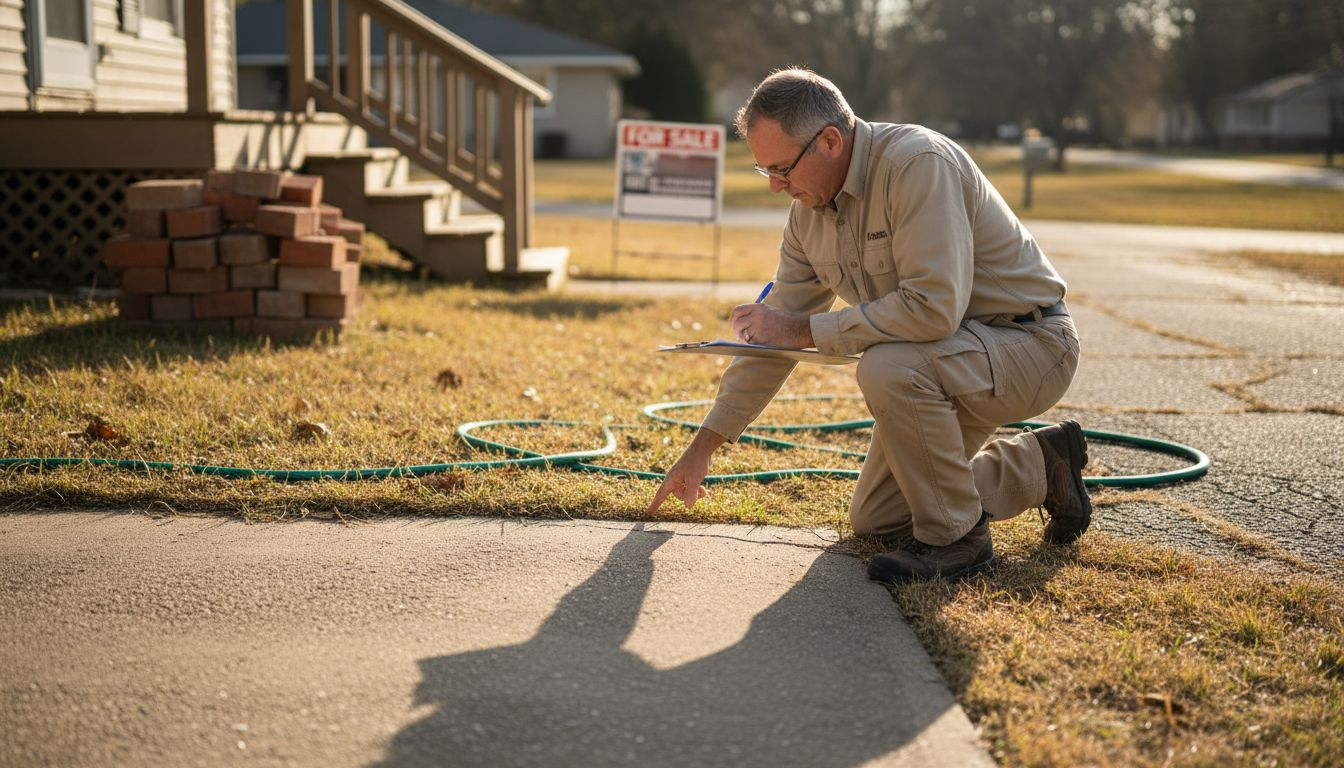
Choosing the right concrete foundation is more than just a construction choice for homeowners in Northern Virginia. It shapes how well your home withstands seasonal climate swings, protects against shifting soils, and even influences the value buyers see when it comes time to sell. Understanding foundation types and their engineering features helps you avoid common mistakes and ensures your property is built for both beauty and lasting stability—from the outdoor patio to the very last corner of your living space.
Table of Contents
Key Takeaways
Point | Details |
Foundation Types Matter | Different foundation types, such as shallow and deep foundations, should be chosen based on soil conditions and project requirements to ensure structural integrity. |
Soil Analysis is Essential | Conducting a thorough soil analysis before foundation design can prevent costly mistakes and ensure optimal foundation performance. |
Proper Drainage Planning | Comprehensive drainage solutions are critical in Northern Virginia’s climate to avoid water accumulation that can lead to foundation issues. |
Quality Over Cost | Investing in quality contractors who understand local conditions is crucial, as cheaper options may lead to significant long-term repair costs. |
Concrete Foundations Defined and Debunked
When most homeowners in Northern Virginia think about their foundation, they imagine a thick slab of gray concrete poured into the ground. The reality is far more complex and layered than that simple picture suggests. A concrete foundation isn’t just a single pour of material; it’s a carefully engineered system designed to transfer the entire weight of your home safely into the earth below while resisting moisture, frost heave, and soil movement. Understanding what’s actually happening beneath your home reveals why so many myths about concrete foundations persist and why getting the right foundation type matters for both structural integrity and property value.
Let’s start by clearing up some misconceptions. Many people believe all concrete foundations are created equal—just pour concrete and you’re done. That couldn’t be further from the truth. The reality involves complex arrangement of reinforcement strategies, soil analysis, drainage design, and structural engineering principles that vary significantly based on your specific property and climate. Northern Virginia’s freeze-thaw cycles create unique challenges that require specialized foundation approaches. Additionally, many homeowners assume their foundation will last forever without maintenance or that cracks are purely cosmetic. Some cracks do require attention, while others are normal settlement patterns. The difference matters tremendously. Foundation types like spread footings, piles, and micro piles each have distinct applications depending on soil conditions and load requirements, and each affects your home’s resale value differently.
Here’s what actually determines foundation performance. The foundation must accomplish three critical jobs simultaneously: support your home’s weight reliably, manage water intrusion, and accommodate ground movement from frost, settling, and seasonal changes. Reinforced concrete achieves this through a combination of the concrete itself and embedded steel reinforcement that works together as a composite material. The concrete resists compression (being squeezed), while the steel handles tension (being pulled). Without both components working in harmony, your foundation fails. In Northern Virginia’s clay-heavy soils, you’re also dealing with soil that expands when wet and contracts when dry, creating additional stresses that many homeowners don’t anticipate. The depth of your foundation matters too—frost lines in this region extend approximately 30 inches below grade, which is why shallow foundations won’t work year-round without supplemental measures. When choosing the right contractor for your foundation repair, ensure they understand regional soil conditions and climate factors specific to your property location.
The impact on your home’s value extends far beyond structural safety. Buyers and appraisers scrutinize foundation type, condition, and appropriateness for the region. A properly engineered foundation demonstrates that the home was built with foresight and quality standards. Conversely, foundation problems become deal-breakers in real estate transactions, often requiring expensive remediation before sale completion. The type of foundation you choose—whether a traditional stem wall with footer, a slab-on-grade, or a basement—affects energy efficiency, usable space, maintenance requirements, and ultimately buyer appeal. A foundation appropriate for Northern Virginia’s specific soil and climate conditions signals to potential buyers that the home won’t suffer from common regional problems like frost heave damage or moisture infiltration from seasonal water tables. This confidence translates directly into higher property valuations and faster sales when the time comes to move.
Below is a summary of how different foundation issues impact home value and sale prospects:
Foundation Issue | Effect on Appraisal | Buyer Confidence |
No issues, well-documented | Higher valuation, premium pricing | Very high; fast sales |
Minor cracks, no structural impact | Minor reduction, manageable | Moderate; some concern |
Extensive cracks or settling | Significant reduction; steep discounts | Low; may deter most buyers |
Evidence of previous poor repairs | Substantial reduction; requires negotiation | Very low; high skepticism |
Fully remediated with documentation | Appraisal rebounds partially | Higher if repairs are certified |
Pro tip: _Request a detailed soil analysis and frost depth verification for your property before finalizing your foundation design; this single step prevents costly retrofits and ensures your foundation choice maximizes both structural integrity and long-term property value in Northern Virginia’s unique climate.
Major Types of Concrete Foundations Compared
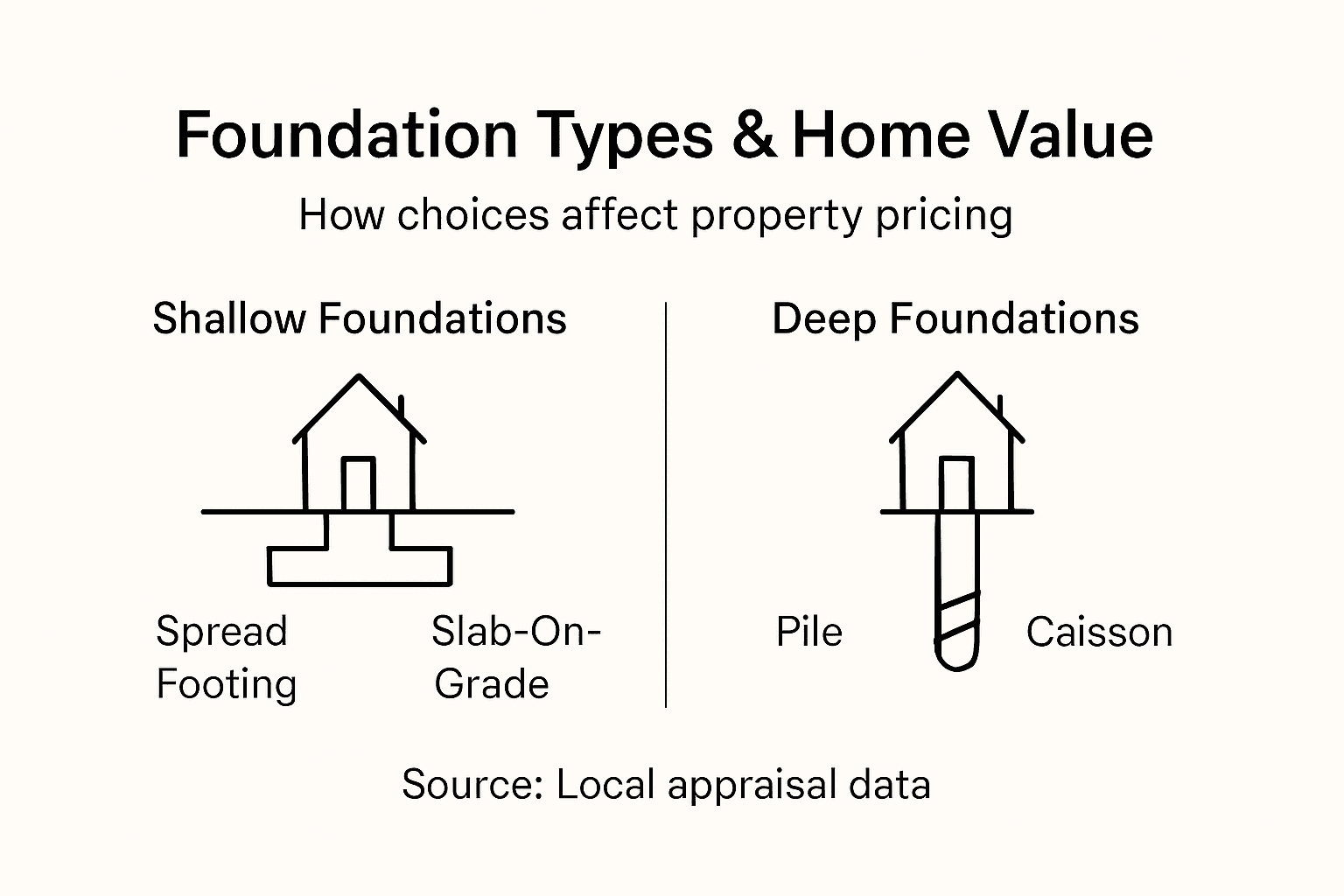
Northern Virginia homeowners face a critical decision when planning new construction or additions: which foundation type will work best for their specific property? The choice isn’t about picking the cheapest option or copying what the neighbor did. Your foundation type directly impacts construction costs, long-term maintenance expenses, structural durability, and ultimately your home’s resale value. The most common types fall into two broad categories: shallow foundations and deep foundations. Understanding the differences between them, along with their specific advantages and drawbacks in Northern Virginia’s climate and soil conditions, helps you make an informed decision that protects your investment for decades.
Shallow Foundations: The Traditional Approach
Shallow foundations rest on stable soil relatively close to the surface. The most common type is the spread footing with stem wall, which sits on a concrete footer that extends below the frost line. This foundation type works well in Northern Virginia for homes built on adequately compacted soil without excessive groundwater issues. The concrete footer distributes your home’s weight across a wider area, reducing pressure on any single point of soil. Above that sits a concrete stem wall that rises to grade level and supports the house structure above. Another shallow option is the slab-on-grade foundation, where the entire structure sits on a single concrete slab poured directly on the ground. This type offers advantages for finished basements since there’s no basement space, though it limits your ability to access utilities later without cutting through concrete. Slabs work particularly well for addition projects where excavating a basement isn’t practical. The primary drawback to shallow foundations appears in areas with high water tables or poor drainage, where water accumulates beneath the slab or around the stem wall, causing deterioration and structural movement.
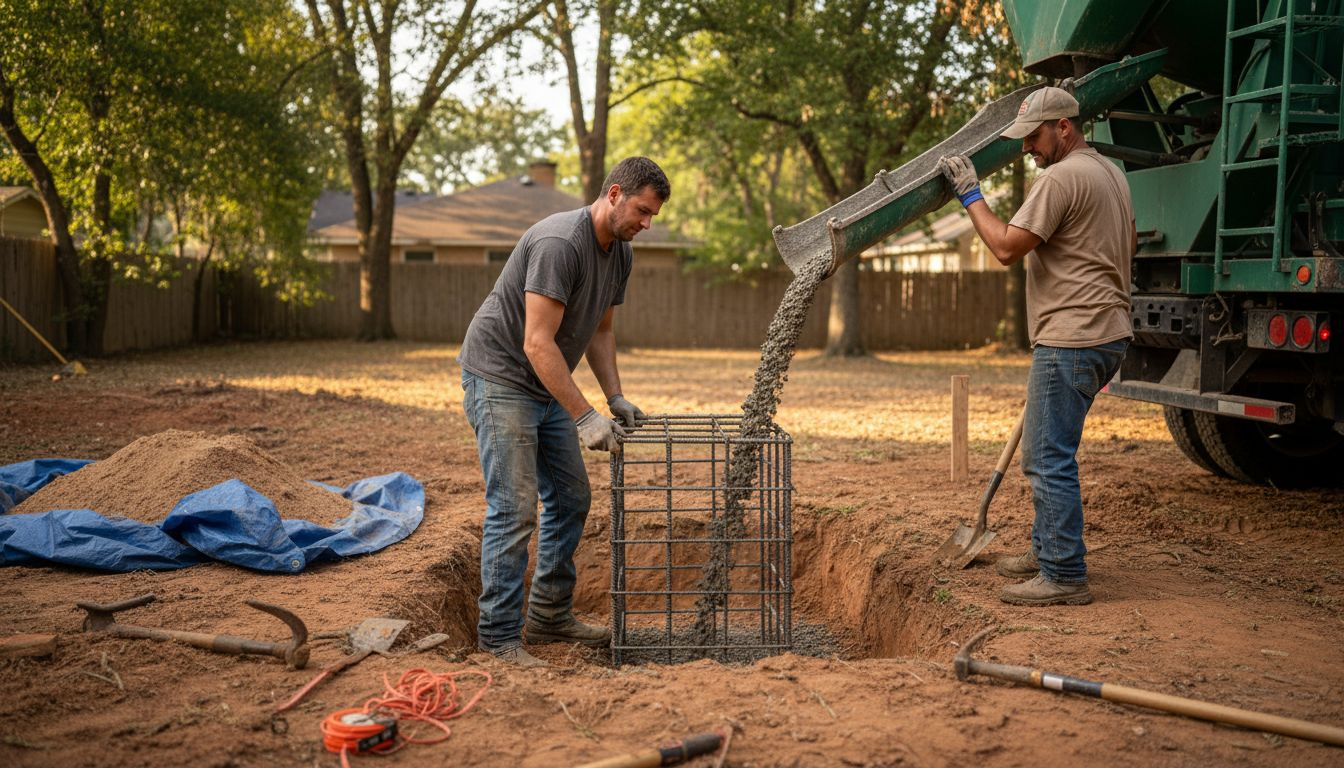
Deep Foundations: When Shallow Won’t Work
Deep foundations extend far below the surface through soil layers until reaching stable bearing capacity. Deep foundation systems including piles and drilled shafts become necessary when soil conditions are poor, groundwater is high, or when your home’s weight requires additional support strength. Driven piles, which are essentially large steel or concrete columns hammered into the ground, transfer building loads through weak soil layers to stronger material below. Auger-cast piles use a hollow-stem auger to bore into the ground, then concrete is pumped through the auger as it’s withdrawn, creating a solid concrete pile in place. Drilled shafts work similarly but create larger diameter holes suitable for heavier loads. Micro-piles, the smallest option, install quickly in tight spaces and work well for underpinning existing foundations or supporting additions where space is limited. Deep foundations cost significantly more than shallow foundations, but they’re necessary investments when site conditions demand them. In Northern Virginia, you might encounter situations requiring deep foundations due to clay layers at unusual depths, elevated water tables from seasonal changes, or when adding substantial weight to existing structures.
Comparative Table: Foundation Types at a Glance
Foundation Type | Depth Range | Best Soil Conditions | Installation Speed | Cost Level | Maintenance Needs |
Spread Footing with Stem Wall | 3-4 feet | Stable, well-drained | Moderate | Low | Minimal |
Slab-on-Grade | Minimal depth | Stable, low water table | Fast | Low | Moderate |
Driven Piles | 30-60 feet | Poor shallow soil | Moderate | High | Low |
Auger-Cast Piles | 40-80 feet | Mixed soil layers | Slow | High | Low |
Drilled Shafts | 50-100 feet | Very poor soil | Slow | Very High | Low |
Micro-Piles | 20-40 feet | Space-constrained sites | Fast | Moderate | Low |
The choice between these types depends on several interconnected factors. First, conduct a soil analysis to understand what you’re building on. Clay, sand, silt, and rock each behave differently under load and moisture stress. Second, investigate your site’s water table and drainage patterns, especially important in Northern Virginia where seasonal water movement is significant. Third, consider the structure’s weight and load requirements. A single-story home needs different support than a two-story addition. Finally, evaluate your budget constraints and long-term maintenance tolerance. Shallow foundations cost less upfront but may require ongoing drainage maintenance. Deep foundations cost more initially but typically require minimal long-term attention once installed properly.
When planning a foundation for new construction or major additions, understanding how custom concrete solutions increase property value means selecting the right foundation type from the start. Buyers appreciate homes built on engineered foundations appropriate for their location and soil conditions, recognizing this as a sign of quality construction and reduced future problems. A foundation selected based on careful site analysis and regional expertise demonstrates to future appraisers and inspectors that the home was built thoughtfully, not carelessly.
Pro tip: Have a geotechnical engineer perform a formal soil analysis before finalizing your foundation design; this professional assessment costs between $800 and $2,000 but identifies site conditions that prevent costly mistakes and ensures your chosen foundation type will perform reliably for decades in Northern Virginia’s specific climate and soil conditions.
Key Features and Functions of Each Type
Every foundation type performs the same basic job: support your home and manage environmental forces. But how each type accomplishes this mission differs dramatically. The specific engineering features built into each foundation type determine whether it will perform flawlessly for 100 years or develop problems within a decade. Understanding these key functional differences helps explain why certain foundations work better in Northern Virginia’s unique climate and soil conditions, and why choosing the wrong type for your site creates expensive problems down the road.
Spread Footings and Stem Walls: Load Distribution Through Width
Spread footings work on a simple principle: distribute concentrated loads across a larger soil area. Your home’s weight concentrates at points where support columns or walls rest on the structure above. A spread footing spreads that concentrated force outward and downward, reducing pressure on any single point of soil. Imagine the difference between standing on one foot versus standing on both feet; your weight feels less intense distributed across both feet. The concrete footer must be wide enough and deep enough to handle the loads above while sitting in stable soil. The footer extends below the frost line (approximately 30 inches in Northern Virginia) to prevent frost heave, where frozen ground expands upward and damages the foundation. Above the footer sits a concrete stem wall that rises to grade level, creating the bearing surface for the house structure. The stem wall also provides a moisture barrier and creates usable space in the structure above. Load transfer mechanisms in spread footings depend on the width of the footer and the bearing capacity of the soil beneath it. A soil that can handle 3,000 pounds per square foot requires a different footer width than soil that can handle only 1,500 pounds per square foot. This is why soil analysis matters before design begins.
Slab-On-Grade Foundations: Integrated Load Distribution
Slab-on-grade foundations take a different approach. The entire concrete slab functions as one massive footing, distributing loads across the entire footprint of the structure. Instead of concentrated point loads at specific locations, the slab spreads weight uniformly across its entire area. This works well when soil beneath the slab is stable and consistent, but becomes problematic when soil conditions vary or water pressure builds beneath the slab. The slab itself must be reinforced with steel mesh or rebar to handle structural loads and resist bending stresses. The slab also serves as the finished floor surface, eliminating the need for separate flooring materials. This integration of foundation and floor saves money on materials and labor but reduces flexibility for future modifications. You cannot easily access utilities buried under the slab or add basement space later without significant disruption. In Northern Virginia, slab-on-grade foundations work best in areas with low water tables and stable soil, making them ideal for additions where basement space isn’t needed or desired.
Deep Foundations: Force Transfer Through Depth
Deep foundations operate on an entirely different principle. Rather than relying on horizontal soil area to support loads, deep foundations transfer loads vertically through weak soil layers until reaching stable bearing material. A driven pile essentially punches through poor soil until the tip reaches stable rock or dense material. The pile then transfers all structural load through its length to that stable layer below. Auger-cast piles and drilled shafts work similarly, boring through unstable material and transferring loads to stable foundation below. The key advantage appears when surface soil is weak or unstable. Northern Virginia frequently encounters clay layers at unusual depths or seasonal water tables that destabilize shallow foundations. In these situations, deep foundations bypass the problem entirely by reaching through to stable material. Bearing capacity and settlement control mechanisms in deep foundations depend on pile length, diameter, and the properties of the stable material at the pile tip. A longer pile can handle more load. A larger diameter pile distributes pressure across a bigger tip area. Understanding site geology determines pile specifications.
Mat Foundations: Comprehensive Load Distribution
Mat foundations (also called raft foundations) function like massive slabs reinforced to handle varying soil conditions and loads. A mat extends under the entire structure, functioning as a unified structural system. Unlike simple slabs, mat foundations incorporate significant reinforcement to resist bending and distribute loads to soil areas where soil conditions vary. Mats work well for structures requiring extensive basements or for sites with highly variable soil conditions. The comprehensive reinforcement and thickness required makes mats more expensive than simple slabs but cheaper than extensive deep foundations in many situations.
Feature Comparison by Foundation Type
Spread Footings: Transfer loads through footer width; works in stable soil; limited to frost-line depth; moderate cost; allows basement construction
Slab-On-Grade: Distributes loads across entire slab area; fast installation; limited basement options; susceptible to water pressure; low initial cost
Driven Piles: Transfers loads through depth to stable material; handles poor soil; high cost; minimal site disturbance; excellent load capacity
Auger-Cast Piles: Similar to driven piles; allows control of placement depth; slower installation; better in dense soil; moderate to high cost
Drilled Shafts: Largest capacity deep foundation; handles heaviest loads; slowest installation; most expensive option; essential for poor soil conditions
Each foundation type excels in specific situations. Your job is matching the foundation type to your site conditions and project requirements. A foundation appropriate for your property demonstrates foresight to future buyers and appraisers, signaling that construction was done thoughtfully rather than cheaply. This attention to proper foundation engineering directly impacts how much your home will sell for and how quickly it will sell when the time comes.
Pro tip: During your geotechnical analysis, ask the engineer not just what type of foundation your soil requires, but why that type performs better than alternatives at your specific location; this knowledge helps you understand the investment and communicate its value to future buyers during the sale process.
Applications in Outdoor Living Spaces
Your home’s foundation work doesn’t stop at the structural elements supporting your walls and roof. The concrete systems that form your home’s foundation principles extend directly into outdoor living spaces, where patios, decks, walkways, and entertainment areas need their own engineered support systems. Northern Virginia homeowners increasingly view outdoor spaces as extensions of their homes, investing substantially in patios and gathering areas that dramatically improve both lifestyle and property value. These outdoor installations require the same careful engineering and material selection as your home’s main foundation. The concrete solutions you choose for outdoor spaces directly impact their longevity, appearance, and the overall value they add to your property.
Patios and Entertainment Areas: Foundation Systems for Outdoor Living
A patio is more than just a slab of concrete where you place furniture. It’s a structural system designed to handle foot traffic, furniture weight, outdoor appliances like grills and hot tubs, and the constant stress from Northern Virginia’s freeze-thaw cycles. A properly engineered patio foundation sits on a stable base layer of compacted gravel and sand, preventing water accumulation and settling. Above that base sits reinforced concrete that resists bending and cracking from temperature swings and soil movement. Durable concrete applications in outdoor installations demonstrate that properly designed patios withstand decades of use without significant deterioration when engineered correctly from the start. The concrete thickness varies depending on intended use. A simple walking surface requires 4 inches of concrete, but a patio supporting a hot tub might need 6 inches or more. The base preparation is equally critical. Poor drainage beneath a patio leads to water accumulation, frost heave in winter, and eventually concrete failure. This is why site grading and base preparation often costs more than the concrete itself.
When you add entertainment elements like a outdoor kitchen island, fire pit surround, or built-in seating, those elements need their own engineered foundations integrated into the patio system. A heavy outdoor kitchen might require thickened concrete in that specific area to handle concentrated loads. A fire pit surround needs proper drainage to prevent water from pooling and freezing. These details separate a patio that lasts five years from one that lasts forty years. The visible finished surface, whether trendy surface design techniques create attractive outdoor spaces, matters for aesthetics, but the invisible foundation work determines functionality and longevity. Stamped concrete, colored concrete, and decorative finishes all rest on identical foundation principles. A beautiful patio with poor foundation engineering fails despite its attractive appearance.
Walkways, Steps, and Transitions Between Levels
Walkways connecting your home to patios, garages, and landscaping features need careful foundation work that many homeowners overlook. A simple concrete walkway still requires proper base preparation and drainage. Steps and transitions between elevation levels introduce structural stresses that require reinforcement and proper engineering. Northern Virginia’s clay soils and seasonal moisture changes create particular challenges. A poorly engineered step system settles unevenly, creating tripping hazards and water damage. Proper step foundations require individual footings at the base of each step, or integrated foundation systems under the entire stair assembly. The concrete must resist the repeated impact of foot traffic while managing freeze-thaw stresses. Slope and drainage matter critically. Steps that trap water underneath develop frost heave problems that eventually crack and shift the treads.
Deck and Elevated Structure Foundations
While many Northern Virginia decks use wooden or composite decking surfaces, the foundation system supporting that deck uses the same principles as concrete foundations. Posts supporting a deck must rest on frost-protected footings that extend below the frost line. These footings anchor the deck to stable earth below, preventing settling and movement. Some high-end deck projects now use concrete piers and post bases, integrating the deck foundation system with the home’s overall foundation strategy. This provides superior stability and longevity compared to traditional post-on-grade systems. The professional hardscaping services that transform backyards increasingly incorporate engineered concrete solutions for outdoor structures. A deck system properly engineered as part of your home’s overall foundation strategy provides years of safe, stable use.
How Outdoor Foundation Work Impacts Property Value
Buyers evaluating homes in Northern Virginia pay attention to outdoor living spaces. A well-designed patio with professional construction suggests quality throughout the home. Conversely, cracked patios, settled walkways, and sloping decks signal poor maintenance or cheap construction to potential buyers. When appraisers evaluate outdoor improvements, they consider not just the finished surface but the engineering underneath. A high-value patio backed by documentation of proper foundation engineering, base preparation, and drainage systems commands higher appraisal values than an identical-looking patio installed without proper preparation. You can’t see good foundation work, but its absence becomes obvious through premature failure and repair costs. An investment in proper outdoor concrete foundation systems pays dividends at sale time through higher appraisals and increased buyer confidence.
Pro tip: Document your outdoor concrete installation process with photos showing base preparation and reinforcement before the concrete is poured; this documentation proves proper engineering was completed and significantly strengthens your home’s appraisal value when you sell.
Risks, Costs, and Common Mistakes
Foundation problems represent some of the most expensive and disruptive issues that can affect a Northern Virginia home. A foundation that fails doesn’t just need repair; it threatens structural integrity, reduces property value dramatically, and can make a home nearly impossible to sell without expensive remediation. The financial stakes are enormous. A foundation repair project can cost anywhere from $10,000 for minor underpinning work to over $100,000 for comprehensive deep foundation installation. Understanding the risks and common mistakes that lead to these expensive problems helps you avoid them entirely. Most foundation failures aren’t inevitable natural occurrences. They result from preventable mistakes made during design, construction, or maintenance phases.
Common Construction Mistakes That Create Long-Term Problems
The most frequent foundation failures stem from poor construction practices rather than design flaws. Improper concrete mix design and inadequate curing rank among the top causes of premature concrete deterioration. A concrete mix that looks fine when wet may contain too much water, too little cement, or improper aggregate sizing. When this substandard concrete cures, it becomes porous and weak, susceptible to water infiltration and freeze-thaw damage. Inadequate curing makes this problem worse. Concrete needs specific moisture and temperature conditions to develop strength properly. Concrete poured in winter without proper protection, or dried too quickly in summer heat, develops cracks and weak points from the start. By the time these problems become visible, five to ten years may have passed, making it difficult to identify the original construction defect.
Insufficient base preparation ranks as another critical mistake. Many builders rush through site grading and base layer compaction to save time and money. A poorly compacted base allows settling, creating uneven concrete surfaces and structural stress. Inadequate drainage planning causes water to accumulate beneath foundations, leading to frost heave, soil expansion, and eventual failure. Northern Virginia’s clay-heavy soils amplify drainage problems. If water can’t escape from beneath a foundation, seasonal freeze-thaw cycles create enormous upward pressure that cracks and displaces concrete. Proper base preparation might add 10 to 15 percent to initial project costs, but prevents repairs that cost 10 to 15 times more later. Poor workmanship in reinforcement placement creates another risk. Steel rebar must sit at specific depths within concrete to provide proper reinforcement. When rebar sits too close to the surface, it corrodes from salt and moisture exposure. When it sits too deep or is omitted entirely, the concrete lacks structural strength where it’s needed most.
Cost Implications and Budget Challenges
Foundation construction budgets often suffer from inaccurate cost estimation and unforeseen expenses. Cost estimation errors and resource mismanagement during construction frequently force difficult choices between cutting corners and exceeding budget. A contractor might discover unexpected soil conditions during excavation that require foundation design changes. Groundwater appears at shallower depths than anticipated, necessitating drainage systems not included in the original bid. A buried utility line blocks the planned foundation location. Each of these scenarios costs thousands of dollars in changes and delays. Homeowners who didn’t budget for contingencies face pressure to accept cost-cutting measures that compromise quality.
The financial impact of choosing the lowest bid cannot be overstated. A foundation contractor bidding 15 to 20 percent below market rates must cut corners somewhere. Perhaps they use lower-quality concrete, skip proper curing time, or reduce reinforcement. A few thousand dollars saved on construction costs often leads to $50,000 to $100,000 in repairs within a decade. Foundation repair becomes exponentially more expensive than foundation construction. Repairing a settled foundation requires stabilization, underpinning, or complete foundation replacement. These repairs must be done without demolishing the structure above, multiplying complexity and cost. Moisture damage from foundation problems extends into walls, causing mold and structural rot that requires remediation.
Risk Mitigation and Property Value Protection
The financial consequences extend beyond repair costs. Foundation problems reduce property value immediately and permanently. An appraisal on a home with foundation issues drops 15 to 30 percent below comparable homes without foundation problems. Buyers recognize foundation issues as red flags indicating potential hidden problems throughout the home. Many lenders refuse to finance homes with known foundation defects until repairs are completed. This severely limits your buyer pool and forces significant price reductions. A foundation that was built correctly from the start protects your investment, maintains property value, and ensures you can sell your home when needed without major repairs or price concessions.
Common Mistakes to Avoid
Hiring based solely on lowest price: Budget 10 to 15 percent more for quality contractors who stand behind their work with guarantees
Skipping soil analysis: A $1,000 soil test prevents $50,000 in design mistakes and inappropriate foundation types
Rushing base preparation: Proper site grading and compaction cannot be rushed without consequences
Inadequate drainage planning: Budget for comprehensive drainage solutions appropriate for Northern Virginia’s climate
Cutting corners on reinforcement: Steel rebar and proper placement are not areas where cost savings make sense
Choosing untested contractors: Verify contractor experience with foundation work in Northern Virginia’s specific soil and climate conditions
The pattern is clear: spending properly on foundation work upfront costs less than fixing foundation failures later. Every dollar invested in proper foundation design, quality materials, skilled craftsmanship, and thorough inspection protects your home’s structural integrity and your property value.
Pro tip: Require your foundation contractor to provide photographs and documentation of base preparation, reinforcement placement, and concrete curing before accepting the finished foundation; this documentation proves proper construction was completed and becomes valuable evidence if future issues arise.
Choosing the Right Foundation for Your Project
Selecting the right foundation type for your Northern Virginia property isn’t about picking what worked for your neighbor or choosing the cheapest option available. It’s about matching your specific site conditions, project requirements, and financial goals to the foundation system that will perform optimally for decades. The wrong choice creates problems that haunt you for the life of the home. The right choice becomes invisible, simply doing its job reliably while your home’s value appreciates. The decision process requires careful analysis of multiple factors, professional expertise, and honest evaluation of your project’s scope and budget.
Step One: Understand Your Site Through Soil Analysis
Before any foundation decision makes sense, you must understand what you’re building on. A professional geotechnical engineer performs soil boring and analysis to determine soil type, bearing capacity, water table depth, and seasonal water movement patterns. This isn’t optional or nice-to-have. It’s the foundation of every smart decision that follows. The engineer tests soil samples to determine how much weight each square foot can support, whether soil shrinks and swells with moisture changes, and whether drainage issues exist. They identify clay layers, rock depths, and buried utilities. They recommend appropriate foundation types for your specific conditions. Site investigation techniques and analysis methods guide engineers in evaluating soil-specific factors that determine which foundation types are viable for your property. A soil analysis costs $800 to $2,000 but prevents foundation selection mistakes that cost $50,000 to $100,000 to fix later.
Step Two: Evaluate Your Project Requirements
Your foundation type must match what you’re building. A simple single-story addition requires different support than a two-story primary home. Outdoor patios have different requirements than interior basements. Your intended use determines load requirements, which determines foundation depth, width, and type. A home with a full finished basement requires a different foundation approach than a crawlspace or slab-on-grade structure. Consider your long-term plans. If you might add a second story later, choose a foundation that supports that potential expansion. If you plan to install a hot tub or outdoor kitchen, the foundation supporting those features needs appropriate engineering. Evaluating site-specific factors and building use helps match foundation characteristics with actual project needs. Your contractor and engineer should understand your complete vision, not just the current phase of construction.
Step Three: Balance Cost, Performance, and Longevity
Three factors compete in every foundation decision: initial cost, performance quality, and long-term durability. Shallow foundations like spread footings cost less upfront but may require ongoing maintenance in Northern Virginia’s climate. Deep foundations cost significantly more initially but provide superior performance in poor soil conditions and require minimal long-term attention. The question isn’t which costs the least, but which delivers the best value over your home’s lifetime. A foundation that lasts 100 years with minimal maintenance provides better value than one that lasts 20 years and requires expensive repairs. Consider property value impact. Buyers and appraisers recognize proper foundation engineering as a sign of quality construction. A foundation chosen based on careful analysis and installed by skilled professionals commands higher appraisals than an identical-looking foundation installed cheaply.
Step Four: Select Your Contractor Carefully
Your foundation choice only matters if it’s installed correctly. A cheap contractor with poor quality control will ruin an excellent design. Interview multiple contractors with specific foundation experience in Northern Virginia. Verify they understand your soil type and climate challenges. Ask how they address drainage, how they ensure proper concrete curing, how they verify reinforcement placement. Require written documentation of their quality control procedures. A quality contractor costs 10 to 15 percent more than the lowest bidder but delivers a foundation that protects your investment for generations.
Decision Matrix: Foundation Selection Factors
Use this framework to organize your thinking:
Here’s a concise guide to foundation type selection in Northern Virginia:
Key Factor | Most Affected Foundation Type | Why It Matters |
High Water Table | Deep foundations | Prevents moisture-induced shifting |
Poor Soil Quality | Piles or drilled shafts | Ensures stable support depth |
Need for Basement | Spread footing with stem walls | Allows for below-grade living space |
Tight Construction Timeline | Slab-on-grade | Rapid installation, fewer steps |
Future Expansion Plans | Mat or spread footing | Supports heavier, flexible loads |
Soil Bearing Capacity: Determines depth requirements and load distribution method
Water Table Depth: Shallow water tables require special drainage or deep foundations
Soil Stability: Expansive clay or loose sand affects foundation selection
Project Scope: Single-story versus multi-story; basement versus crawlspace
Intended Use: Residential, commercial, or mixed-use affects load requirements
Budget Parameters: Initial costs versus long-term maintenance investment
Property Value Goals: Foundation engineering impacts appraisals and buyer appeal
Climate Challenges: Frost lines, freeze-thaw cycles, and seasonal water patterns
Timeline Requirements: Some foundation types install faster than others
Future Flexibility: Will you expand or modify the structure later?
Your geotechnical engineer and experienced foundation contractor should walk through these factors with you, explaining how your specific site and project requirements point toward one foundation type over alternatives. Trust their expertise. They’ve seen the consequences of wrong choices. They understand what works and what fails in Northern Virginia’s unique conditions. They’ll recommend the foundation type that optimizes performance, longevity, and value for your specific situation.
Pro tip: Before meeting with your geotechnical engineer, gather information about your neighborhood’s soil type and any foundation issues neighbors have experienced; this local knowledge combined with professional analysis helps you make the most informed decision possible.
Elevate Your Home’s Value with Expert Concrete Foundation Solutions
Understanding the right type of concrete foundation is essential to safeguarding your Northern Virginia property’s structural integrity and market value. This article highlights key challenges like soil conditions, frost depth, and load distribution that directly impact foundation performance and long-term durability. If you want to avoid costly repairs and ensure your foundation supports your investment, smart design and skilled craftsmanship are critical.
At BNTS Construction, we specialize in precisely engineered foundations tailored to your unique soil and climate needs. From traditional footings to custom concrete solutions, our expertise helps prevent common problems such as cracking, settling, and moisture intrusion. Stamped concrete and regular concrete services enhance both the structural base and outdoor living spaces, adding lasting appeal and value to your home.
Don’t risk your property’s future with a generic approach. Take control now by partnering with professionals who understand Northern Virginia’s foundation challenges inside and out. Visit BNTS Construction today to schedule a consultation and get a foundation designed for strength, longevity, and increased resale value.
Frequently Asked Questions
What are the main types of concrete foundations?
The main types of concrete foundations include shallow foundations, such as spread footings and slab-on-grade, and deep foundations, such as driven piles, auger-cast piles, and drilled shafts. Each type serves different needs based on soil conditions and structural requirements.
How does the type of concrete foundation impact my home’s value?
The type of concrete foundation can significantly impact your home’s value. A well-engineered foundation suitable for local conditions demonstrates quality construction, which appeals to buyers and can lead to higher appraisals.
What factors should I consider when choosing a concrete foundation?
When choosing a concrete foundation, consider factors such as soil type, water table depth, load requirements, climate challenges, and your long-term plans for the property. A proper foundation choice can prevent future issues and enhance property value.
How often should I maintain my concrete foundation?
While concrete foundations require less maintenance than some other types, regular inspections are important. Look for cracks or signs of settling and address drainage issues promptly to prevent moisture accumulation that could compromise the foundation’s integrity.
Recommended
Comments