
What Is Concrete Paving and Why It Matters
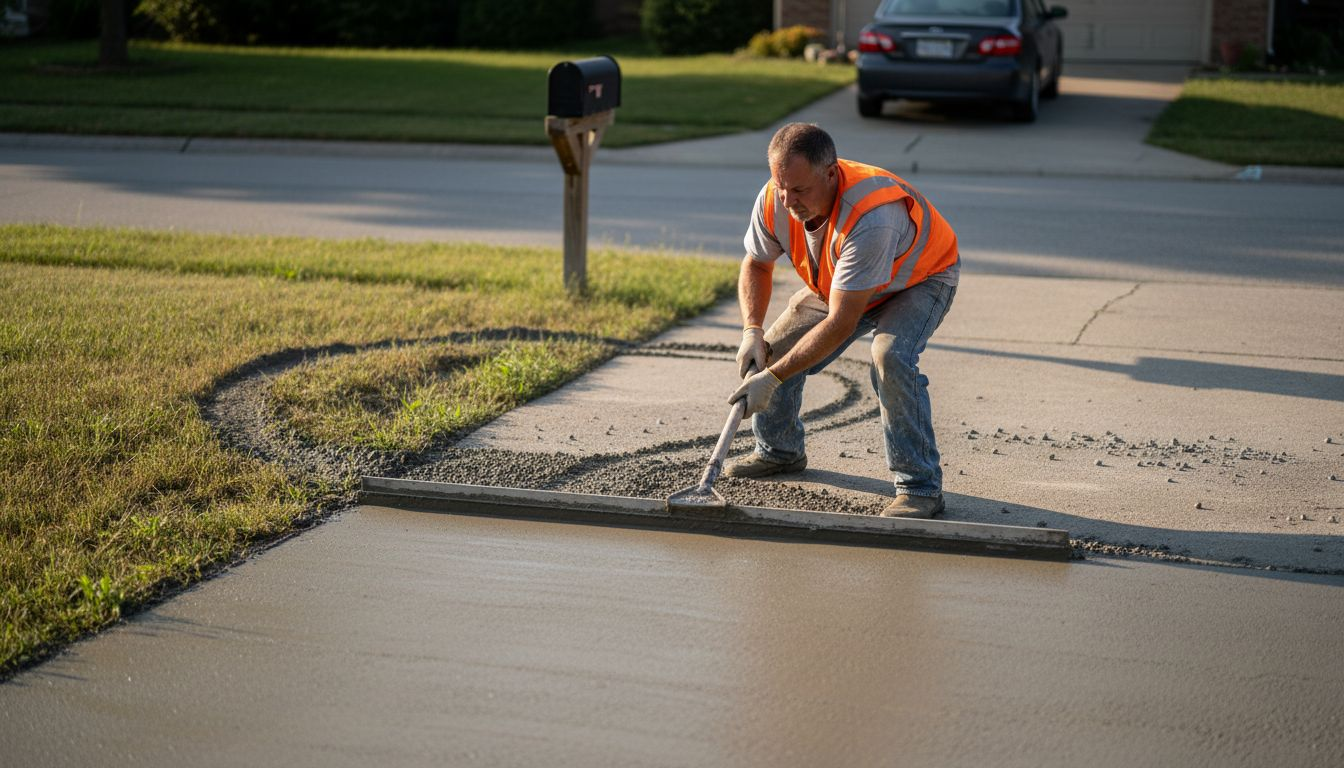
Choosing the right paving solution for your Northern Virginia home can quickly become confusing with so many myths about strength, cost, and maintenance. Outdoor projects in this region need materials that can handle shifting ground and changing temperatures without constant repairs. By understanding the unique properties of engineered concrete paving, you can confidently create a beautiful, durable surface that stands the test of time and complements your masonry or foundation enhancements.
Table of Contents
Key Takeaways
Point | Details |
Understanding Concrete Paving | Concrete paving is a nuanced construction technique offering engineered strength and adaptability that enhances outdoor environments. |
Types of Concrete Paving | Homeowners should evaluate various concrete paving types based on their specific aesthetic and functional needs for optimal performance. |
Installation Importance | Professional installation involves meticulous planning and execution, with steps like site assessment and controlled curing critical to long-lasting surfaces. |
Cost-Benefit Analysis | Although initial costs may be higher, the long-term durability and lower maintenance of concrete paving often make it a superior economic choice. |
Concrete Paving Defined and Common Myths
Concrete paving represents a sophisticated construction technique where concrete is systematically applied to create durable, engineered surfaces for residential and commercial spaces. Unlike traditional paving methods, concrete paving offers engineered strength that transforms outdoor environments with remarkable resilience.
Understanding concrete paving requires dispelling several persistent myths that often mislead homeowners and construction professionals. Contrary to popular belief, concrete paving is not a one-size-fits-all solution but a nuanced approach with multiple strategic applications.
Key characteristics of concrete paving include:
Engineered structural integrity
Superior durability compared to traditional surfaces
Adaptability to various environmental conditions
Customizable aesthetic options
Long-term cost-effectiveness
One critical misconception involves the installation process. Concrete paving involves a specialized curing method that differs significantly from simply allowing concrete to dry. The curing process actively strengthens the material, creating a more robust surface that can withstand substantial environmental stress.
Professional concrete paving professionals understand that ground movement, temperature fluctuations, and load-bearing requirements dramatically influence the final product’s performance. Homeowners seeking optimal results must collaborate closely with experienced contractors who can navigate these complex engineering considerations.
Pro tip: Always request detailed site analysis and engineering specifications before committing to a concrete paving project to ensure maximum longevity and performance.
Major Types of Concrete Paving for Homes
Homeowners have several sophisticated options when considering concrete paving, each designed to meet specific aesthetic and functional requirements. Concrete pavements offer diverse residential applications ranging from driveways to decorative outdoor spaces, with unique characteristics tailored to different environmental needs.
The primary types of concrete paving for residential use include:
Conventional Cast-in-Place Concrete: Traditional method offering robust, uniform surfaces
Roller-Compacted Concrete: High-density pavement with exceptional load-bearing capacity
Pervious Concrete: Environmentally friendly option allowing water drainage
Continuously Reinforced Concrete Pavement (CRCP): Enhanced structural integrity through continuous steel reinforcement
Each concrete paving type presents distinctive advantages. Residential concrete designs vary in reinforcement methods and can be customized to address specific performance requirements such as durability, aesthetic appeal, and environmental adaptability.
Concrete paving selection involves carefully evaluating factors like local climate, soil conditions, expected traffic load, and desired visual outcome. Professional contractors can help homeowners navigate these complex considerations, ensuring optimal material selection and installation techniques.
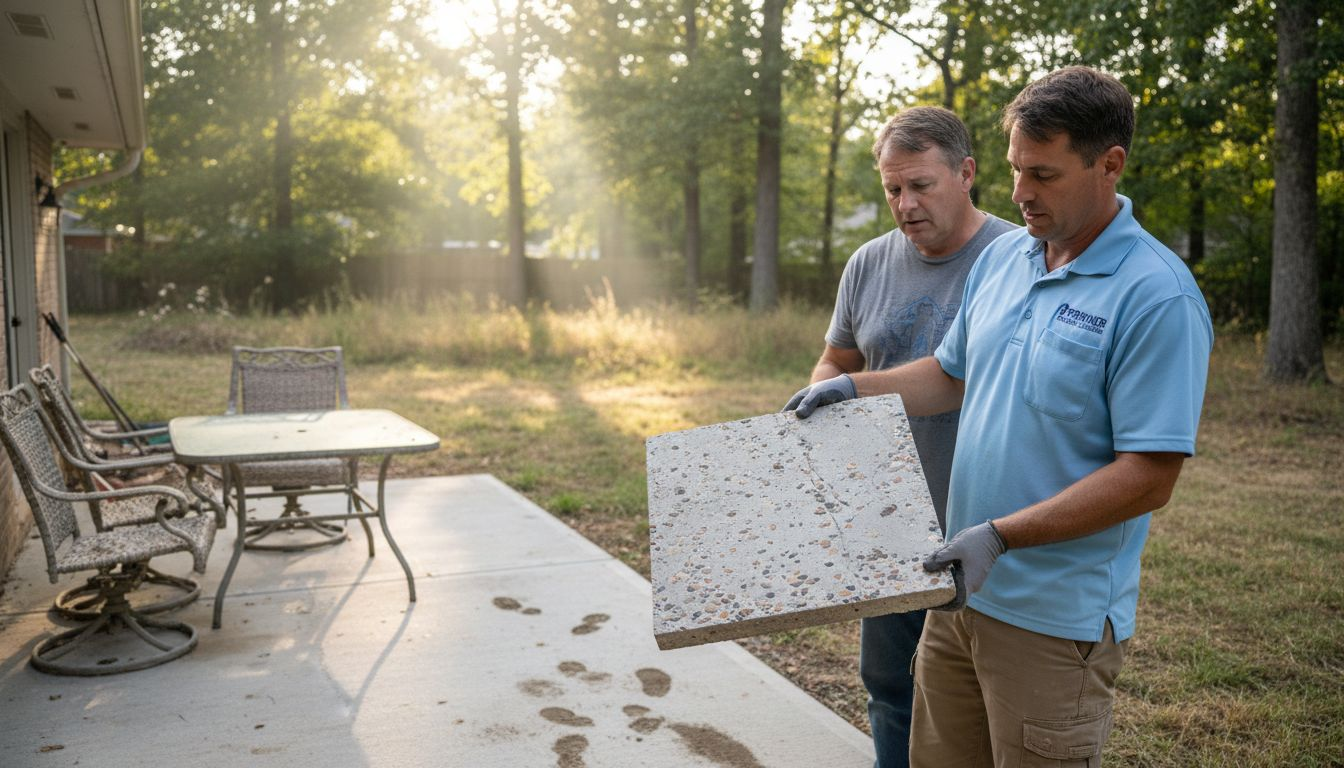
Understanding the nuanced differences between concrete paving types empowers homeowners to make informed decisions that balance long-term performance with immediate aesthetic goals. Thoughtful selection can significantly enhance property value and outdoor living experiences.
Here’s a concise comparison of major residential concrete paving types and their best-fit applications:
Paving Type | Ideal Use | Structural Benefit | Visual Appeal |
Cast-in-Place | Driveways and sidewalks | Uniform strength, stable base | Smooth, customizable finish |
Roller-Compacted | Heavy vehicle areas | High density supports loads | Limited decorative options |
Pervious Concrete | Eco-friendly patios | Water drainage, eco compliance | Subtle, natural appearance |
CRCP | Long driveways, high traffic | Reinforced for crack resistance | Consistent, engineered look |
Pro tip: Consult with a professional concrete specialist to conduct a comprehensive site analysis before selecting your specific concrete paving type to ensure maximum performance and longevity.
Key Features: Durability, Design, and Function
Concrete paving represents a sophisticated engineering solution that combines exceptional durability, versatile design potential, and remarkable functional performance. Concrete’s inherent strength offers superior pavement characteristics that consistently outperform alternative materials across residential applications.
Key durability features include:
Resistance to environmental degradation
Exceptional load-bearing capacity
Minimal maintenance requirements
Long-term structural integrity
Enhanced crack resistance
Design versatility emerges through multiple critical factors. Advanced concrete engineering allows tailored structural configurations that can be customized to meet specific aesthetic and functional requirements. Homeowners can select from various finish styles, colors, and textures that transform ordinary surfaces into stunning architectural elements.
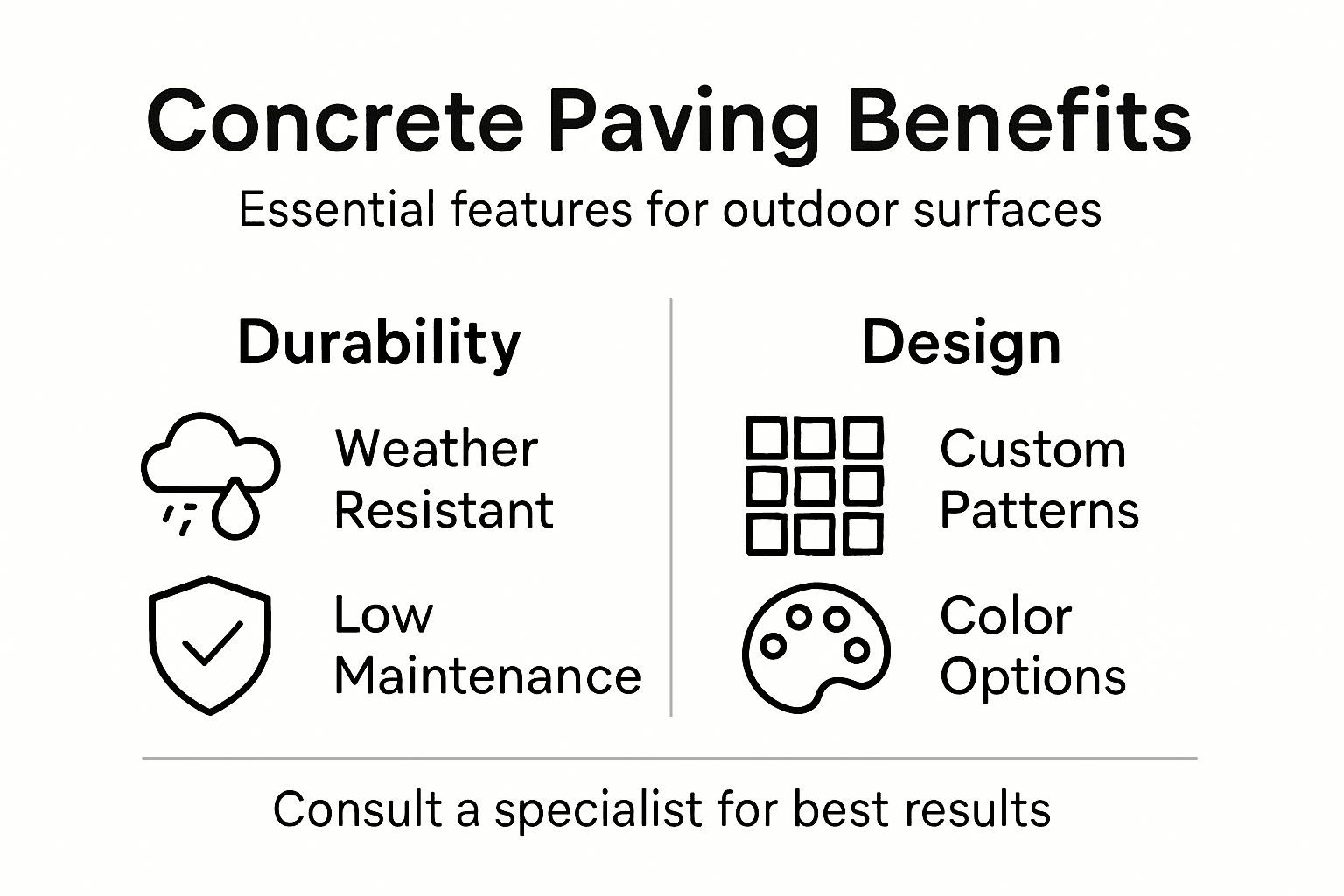
Functional performance distinguishes concrete paving as a premier choice for outdoor spaces. The material’s engineered composition provides superior weight distribution, reduces surface stress, and maintains structural stability under diverse environmental conditions. Professional installation techniques further enhance the concrete’s inherent capabilities, ensuring optimal performance throughout the pavement’s lifecycle.
Understanding these intricate features empowers homeowners to make informed decisions that balance visual appeal with long-term practical considerations. Concrete paving represents more than just a surface - it’s a strategic investment in property value and aesthetic quality.
Pro tip: Request detailed material specifications and performance ratings from your concrete specialist to ensure your chosen paving solution matches your specific environmental and aesthetic requirements.
Stamped Concrete and Decorative Options Explained
Stamped concrete transforms ordinary surfaces into extraordinary architectural statements, offering homeowners unprecedented design flexibility and aesthetic potential. Decorative concrete options create versatile design possibilities that seamlessly blend functionality with visual appeal.
Stamped concrete design techniques include:
Intricate stone-like patterns
Wood-grain texture imitations
Elegant geometric designs
Natural slate and cobblestone replicas
Custom color integration
The decorative process involves specialized techniques where concrete is carefully impressed with textured mats or stamps before fully hardening, creating detailed surface impressions that mimic high-end materials. These techniques allow homeowners to achieve sophisticated looks without the expense of natural stone, brick, or intricate tilework.
Color and texture options dramatically expand concrete’s aesthetic potential. Integral coloring methods can be mixed directly into concrete before pouring, while surface treatments like acid staining, color hardeners, and release agents provide nuanced visual depth and character. Professional installers can create nearly unlimited design variations that complement a home’s architectural style and landscape.
Understanding these decorative techniques empowers homeowners to view concrete not just as a functional surface, but as a dynamic design element capable of transforming outdoor living spaces with remarkable creativity and precision.
Pro tip: Request color and texture samples from your concrete specialist to visualize how different stamped concrete designs will interact with your specific architectural environment.
Installation Process: Steps, Timing, and Best Practices
Concrete paving installation requires meticulous planning and precise execution to ensure long-lasting, high-performance surfaces. Concrete installation involves comprehensive site preparation that goes far beyond simple pouring and smoothing techniques.
The primary steps of concrete paving installation include:
Comprehensive site assessment
Ground excavation and grading
Subgrade preparation and compaction
Precise form setting
Concrete mixing and placement
Surface finishing
Controlled curing process
Joint cutting and sealing
Professional concrete installation demands careful attention to environmental conditions and technical details. Temperature, humidity, and moisture levels dramatically influence concrete’s strength development and overall performance. Experienced contractors understand that each stage requires specific techniques to prevent potential structural compromises.
Timing represents a critical factor in successful concrete paving. The curing period is a delicate process where concrete transforms from a liquid mixture to a solid, durable surface. Professional installers typically recommend a minimum 7-day curing period, during which the concrete gradually develops its maximum structural strength and resistance to environmental stressors.
Understanding these intricate installation dynamics helps homeowners appreciate the complexity behind what appears to be a straightforward construction process. Each step contributes to creating a robust, long-lasting surface that can withstand years of use and environmental challenges.
Pro tip: Schedule your concrete paving installation during mild weather conditions to optimize curing and minimize potential temperature-related complications.
Comparing Costs, Maintenance, and Common Pitfalls
Concrete paving represents a strategic investment that requires careful financial and maintenance considerations. Concrete pavement costs involve complex long-term calculations beyond initial installation expenses, balancing upfront investment against future performance.
Key cost and maintenance factors include:
Higher initial installation costs
Lower long-term maintenance expenses
Extended service life compared to alternative materials
Predictable repair and restoration requirements
Minimal annual maintenance investments
Most homeowners significantly underestimate the nuanced financial dynamics of concrete paving. While initial installation costs typically exceed alternative materials, concrete’s exceptional durability translates to substantially reduced maintenance expenses over decades of use. Professional concrete performance analysis reveals critical long-term economic advantages that make it a superior investment for residential properties.
Common pitfalls in concrete paving often stem from overlooked technical details during installation. Critical errors like inadequate subgrade preparation, improper moisture control, and insufficient joint placement can dramatically compromise a concrete surface’s structural integrity and lifespan. Experienced contractors understand that preventative measures during installation are far more cost-effective than extensive repairs.
A quick reference to identify key concrete paving installation pitfalls and strategies to prevent them:
Common Pitfall | Long-Term Impact | Prevention Method |
Poor subgrade prep | Cracking, early failure | Professional ground assessment |
Improper curing | Weak surface, scaling | Controlled temperature, moisture |
Incorrect joint placement | Increased cracking | Experienced contractor supervision |
Homeowners should view concrete paving as a sophisticated engineering solution requiring professional expertise, not merely a surface treatment. Careful planning, precise installation, and strategic maintenance transform concrete from a simple construction material into a long-lasting, value-adding property investment.
Pro tip: Budget for professional installation and periodic professional inspections to maximize your concrete paving’s performance and longevity.
Elevate Your Property with Expert Concrete Paving Solutions
The article “What Is Concrete Paving and Why It Matters” highlights common challenges like ensuring durability, masterful installation, and choosing the right decorative options to match your vision. If you want to avoid pitfalls such as improper curing or inadequate subgrade preparation, it is crucial to trust experienced professionals who understand these specialized processes. At BNTS Construction, we specialize in a wide range of concrete services including Stamped Concrete, custom patios, foundations, and masonry work crafted to meet your unique needs.
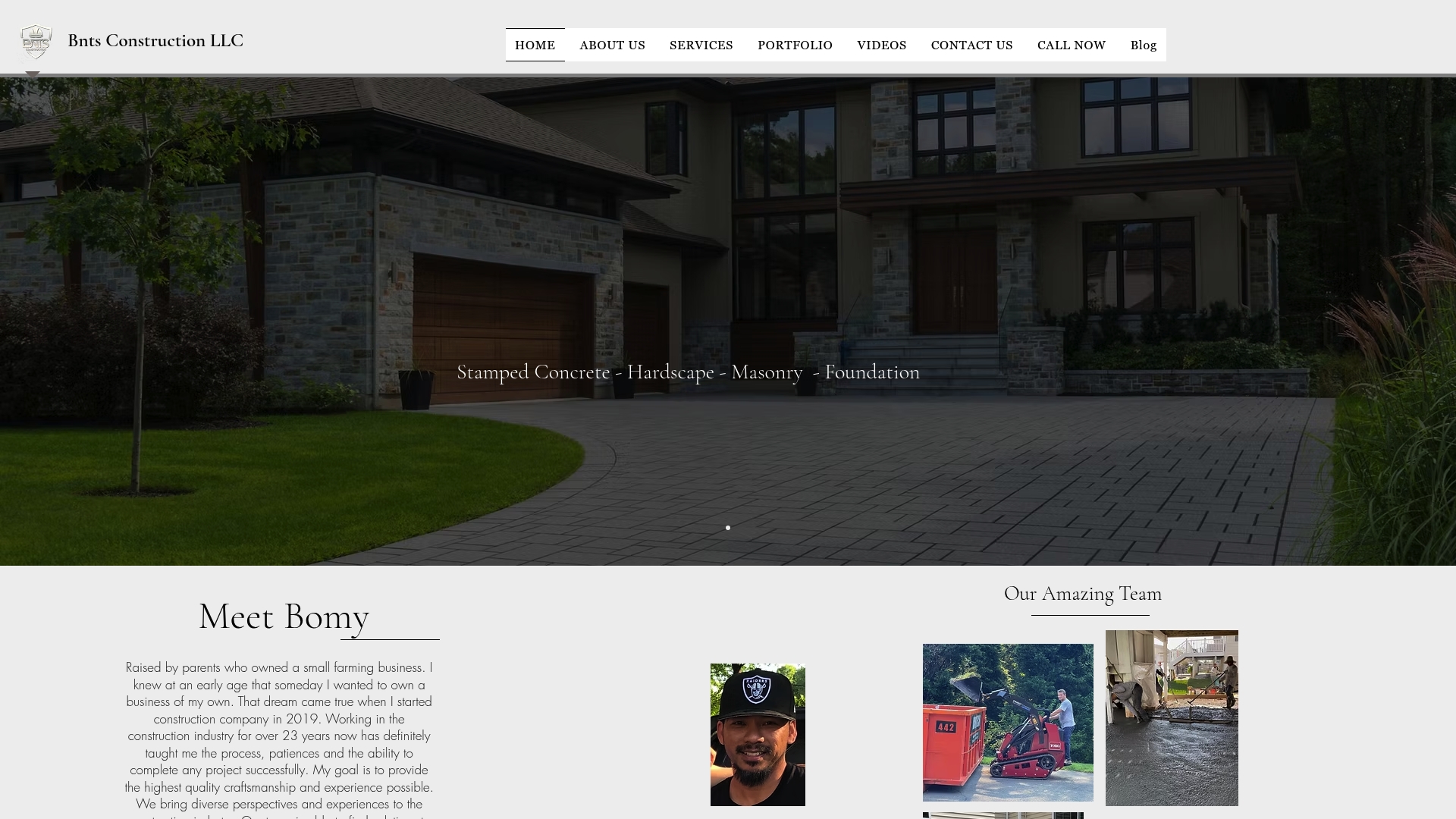
Don’t let uncertainty hold you back from creating beautiful, long-lasting outdoor spaces. Discover how our expert team can transform your property with high-quality concrete paving tailored to your goals. Visit our website to explore how our services can deliver lasting strength and stunning design. Take the next step today by requesting a consultation to ensure your concrete paving investment stands the test of time.
Explore our services here: Stamped Concrete, Custom Patios, and learn more on our Landing Page.
Frequently Asked Questions
What are the key benefits of using concrete paving?
Concrete paving offers several advantages, including engineered structural integrity, superior durability, adaptability to various environmental conditions, customizable aesthetic options, and long-term cost-effectiveness.
How does the installation process of concrete paving differ from other materials?
The installation of concrete paving involves specialized methods such as thorough site assessment, ground excavation, precise form setting, and a controlled curing process that enhances its strength, unlike simpler methods used for other materials.
What are the different types of concrete paving available for residential use?
The major types of concrete paving include conventional cast-in-place concrete, roller-compacted concrete, pervious concrete, and continuously reinforced concrete pavement (CRCP), each designed for specific aesthetic and functional applications.
How can homeowners ensure the longevity of their concrete paving?
To ensure the longevity of concrete paving, homeowners should conduct detailed site analyses, collaborate with professional contractors for proper installation, budget for periodic maintenance, and carry out regular inspections to address any potential issues early.
Recommended
Comments