
What Is a Concrete Slab and Its Role Outdoors
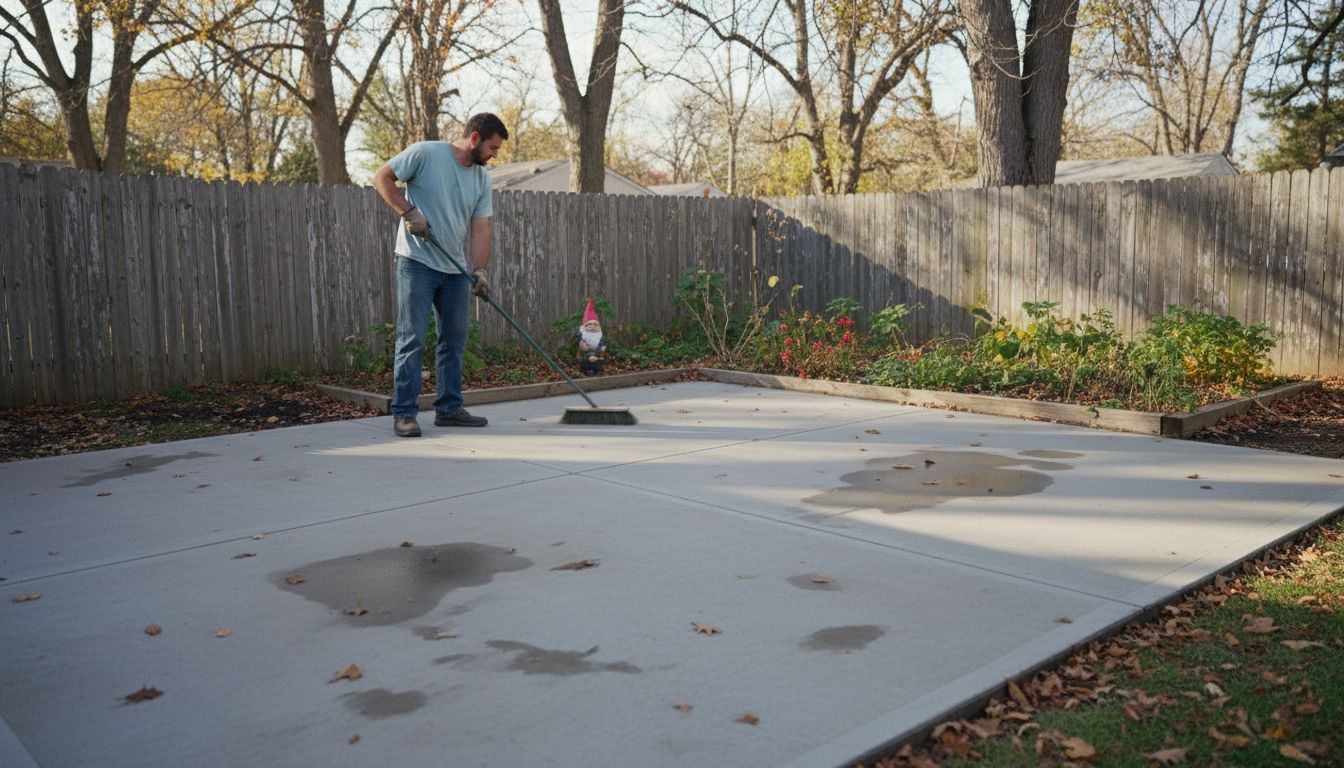
Choosing the right foundation can feel overwhelming when planning outdoor renovations in Northern Virginia. Homeowners want outdoor spaces that look beautiful and stand up to changing weather year after year. A concrete slab offers a sturdy, level surface that supports patios, walkways, and decorative features, while also providing lasting stability and easy maintenance. This guide helps you better understand concrete slabs so you can create inviting and resilient outdoor living spaces tailored to your vision.
Table of Contents
Key Takeaways
Point | Details |
Concrete Slabs Are Essential Foundations | They provide stability and versatility for outdoor and structural projects in homes, particularly in Northern Virginia. |
Proper Selection Is Crucial | Factors like soil conditions, drainage, and climate should guide the choice of slab type for optimal performance and durability. |
Construction Process Is Key | Careful planning and execution, including reinforcement and site preparation, are vital for ensuring a long-lasting concrete slab. |
Weighing Pros and Cons Is Necessary | While concrete slabs offer benefits like low maintenance and cost-effectiveness, potential drawbacks such as cracking and moisture vulnerability must be considered. |
Defining a Concrete Slab for Homeowners
A concrete slab is a fundamental structural component that serves as a critical foundation for outdoor spaces and building structures. Structural concrete elements represent versatile horizontal surfaces engineered to support substantial weight and provide stable ground connections for residential and commercial environments.
At its core, a concrete slab consists of a flat, horizontal layer of cast concrete designed to create robust, level surfaces. These structural pieces can be constructed using different installation methods, each tailored to specific environmental and functional requirements. The primary types of concrete slabs include:
Ground-bearing slabs: Directly resting on subsoil
Suspended slabs: Spanning between structural supports like walls or columns
Reinforced slabs: Incorporating steel mesh or bars for increased strength
Concrete slabs offer multiple critical functions beyond basic structural support. Concrete structural components provide essential benefits such as:
Load distribution across supporting elements
Sound and thermal insulation
Fire resistance
Creating level walking and working surfaces
Establishing foundations for buildings and outdoor spaces
Homeowners in Northern Virginia frequently utilize concrete slabs for patios, driveways, walkways, and foundational structures. The material’s durability, adaptability, and cost-effectiveness make it an excellent choice for outdoor renovation projects.
Pro tip: Always consult professional concrete specialists to determine the most appropriate slab design and reinforcement strategy for your specific property and environmental conditions.
Types of Concrete Slabs for Outdoor Projects
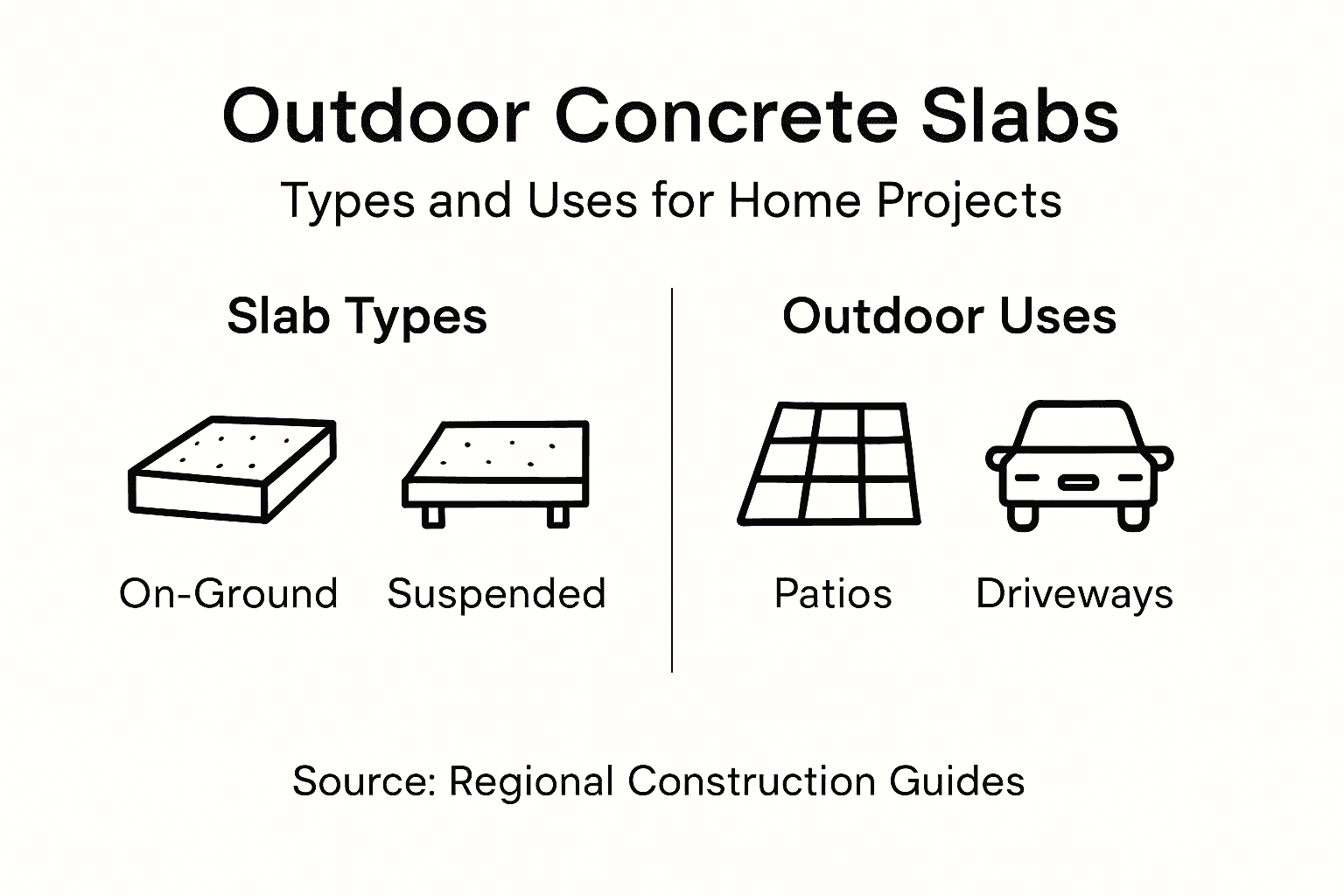
Concrete slabs for outdoor projects come in multiple specialized designs, each engineered to meet specific functional and aesthetic requirements. Concrete slab construction offers homeowners versatile options for creating durable and attractive outdoor spaces that can withstand Northern Virginia’s diverse environmental conditions.
The primary types of concrete slabs for outdoor applications include:
Slab-on-ground: Directly installed on prepared soil surfaces
Suspended slabs: Supported between structural elements
Waffle slabs: Grid-patterned designs providing enhanced structural strength
Hollow core slabs: Prefabricated options ideal for large span areas
Specialized slab designs provide unique benefits for different outdoor project requirements. Residential concrete slab types can be customized to address specific load-bearing needs, architectural preferences, and environmental challenges.
Each concrete slab type offers distinct advantages for outdoor applications. Beam and block slabs work exceptionally well for raised patios, while flat plate designs provide smooth, seamless surfaces perfect for modern landscaping. The selection depends on factors like load requirements, soil conditions, and intended usage.
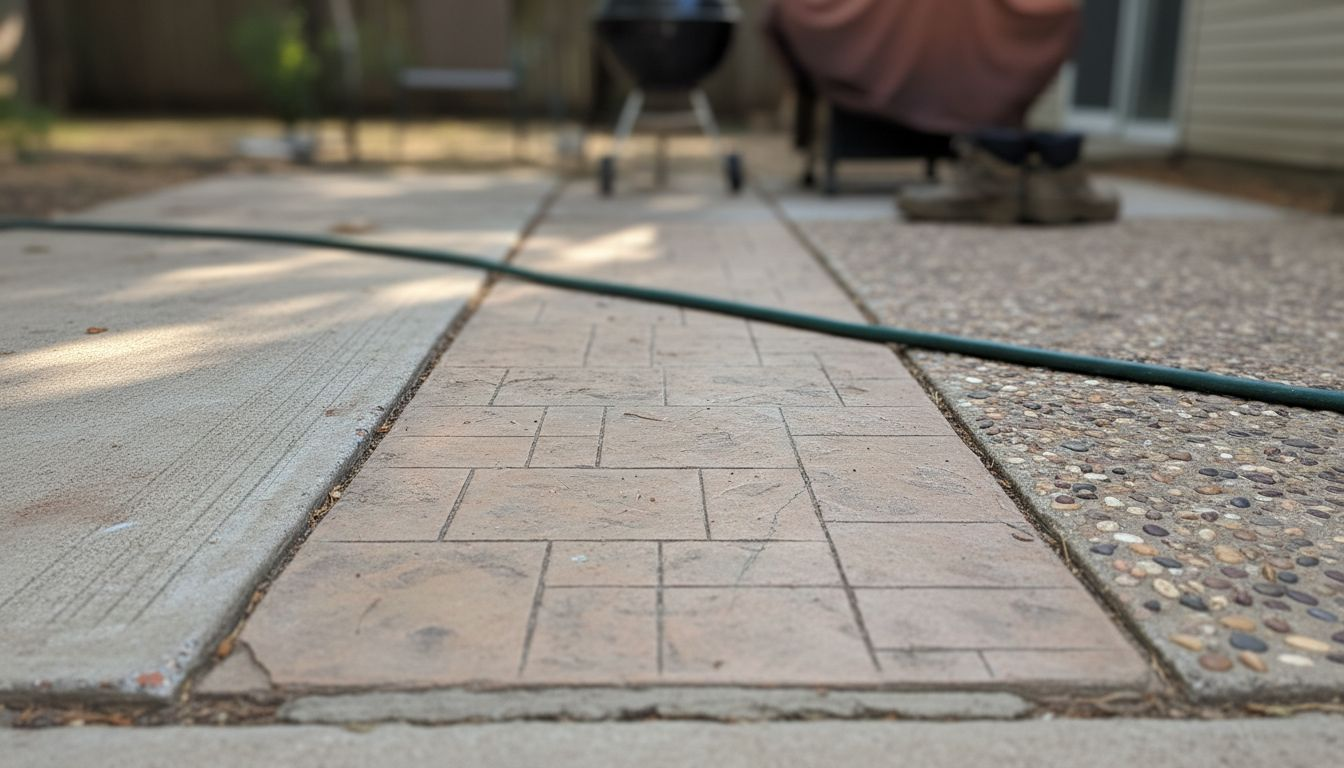
In Northern Virginia’s variable climate, choosing the right concrete slab becomes crucial for long-term durability and performance. Factors like soil stability, drainage, and potential temperature fluctuations play significant roles in determining the most appropriate slab design for your specific outdoor project.
Here’s a summary of key considerations when selecting a concrete slab for outdoor use:
Consideration | Examples | Why It Matters |
Soil Conditions | Clay, sand, rocky | Affects stability and design |
Drainage Requirements | Slope, water table | Prevents moisture issues |
Climate Impact | Freeze-thaw, humidity | Influences durability |
Intended Use | Patio, driveway, walkway | Dictates slab thickness |
Aesthetic Preferences | Surface finish, color | Enhances property appeal |
Pro tip: Consult with local concrete specialists who understand regional soil conditions and can recommend the most suitable slab type for your specific outdoor renovation project.
Essential Features and How Slabs Are Built
Creating a durable concrete slab requires meticulous planning and precise execution. Concrete slab construction involves a comprehensive process that transforms raw materials into a robust outdoor surface capable of withstanding environmental challenges.
The essential steps for building a concrete slab include:
Site Preparation
Clearing vegetation and debris
Excavating and leveling the ground
Compacting the soil base
Formwork Installation
Creating precise boundaries
Ensuring proper dimensional accuracy
Preparing for concrete pouring
Reinforcement Setup
Installing steel mesh or rebar
Establishing load-bearing infrastructure
Preventing potential structural cracking
Concrete slab construction demands attention to critical features that ensure long-term performance. Concrete slab engineering principles emphasize the importance of precise thickness, strategic reinforcement, and effective jointing techniques to control potential cracking and enhance durability.
Northern Virginia’s diverse climate requires specialized considerations when building outdoor concrete slabs. Factors like soil composition, drainage conditions, and temperature fluctuations significantly impact the slab’s design and construction methodology. Proper moisture barriers, expansion joints, and strategic reinforcement become crucial in creating a resilient outdoor surface that can endure seasonal variations.
A well-constructed concrete slab is more than just a surface - it’s a long-term investment in your property’s functionality and aesthetic appeal.
Pro tip: Always schedule concrete slab installation during moderate temperature conditions to ensure optimal curing and prevent potential structural compromises.
Benefits and Drawbacks of Concrete Slabs
Concrete slabs represent a versatile outdoor solution with numerous advantages for Northern Virginia homeowners. Concrete slab performance characteristics demonstrate remarkable benefits that make them an attractive option for various outdoor applications.
Key benefits of concrete slabs include:
Exceptional load distribution
Uniform, flat surface creation
Superior sound and thermal insulation
Outstanding fire resistance
Structural stability and longevity
Cost-effective installation
Minimal maintenance requirements
However, concrete slabs are not without potential challenges. Concrete construction considerations reveal several drawbacks that homeowners should carefully evaluate before installation.
Potential drawbacks to consider include:
Potential for surface cracking
Higher thermal conductivity
Complex repair processes
Moisture vulnerability without proper drainage
Limited flexibility after initial installation
In Northern Virginia’s dynamic climate, understanding these pros and cons becomes crucial. The region’s temperature variations and soil conditions demand strategic planning to maximize concrete slab performance and minimize potential issues.
Successful concrete slab implementation requires balancing technical requirements with aesthetic and functional goals.
Pro tip: Consult local concrete specialists who understand regional environmental challenges to design a slab that perfectly matches your specific outdoor project needs.
Comparing Slabs With Other Foundation Solutions
Concrete slabs represent a unique foundation solution that differs significantly from traditional alternatives. Concrete slab foundation characteristics reveal distinct advantages and limitations that homeowners in Northern Virginia must carefully evaluate when planning outdoor structures.
Key comparison points between concrete slabs and alternative foundation types include:
Foundation Type Comparisons:
This table contrasts slab-on-ground, crawl space, and basement foundations for residential projects:
Foundation Type | Construction Speed | Cost Efficiency | Space Utility |
Slab-on-Ground | Fast | Most affordable | No underfloor access |
Crawl Space | Moderate | Mid-range | Limited storage/utilities |
Basement | Slowest | Highest investment | Maximum extra living/storage |
Concrete Slabs
Direct ground support
Cost-effective installation
Faster construction
Minimal maintenance
Crawl Space Foundations
Utility access underneath
Potential storage space
Higher installation complexity
More expensive
Basement Foundations
Maximum utility access
Additional living/storage space
Significantly higher construction costs
More complex engineering requirements
Comparative foundation analysis demonstrates that concrete slabs offer unique benefits for Northern Virginia’s diverse environmental conditions. They provide superior stability, reduce moisture-related issues, and minimize potential pest infiltration compared to alternative foundation methods.
Selecting the right foundation type requires carefully balancing structural requirements, budget constraints, and long-term property goals.
Northern Virginia’s variable soil conditions and climate make foundation selection particularly challenging. Concrete slabs excel in areas with stable ground, offering a streamlined solution that minimizes complex engineering requirements while providing robust structural support.
Pro tip: Consult with local geotechnical engineers to assess your specific property’s soil composition before finalizing your foundation strategy.
Enhance Your Outdoor Spaces with Expert Concrete Slab Solutions
Understanding the critical role of a concrete slab in providing stable, durable foundations outdoors is the first step toward a successful renovation. Many homeowners face challenges like soil instability, moisture issues, and structural cracking that can compromise their patios, driveways, or foundations. At B&T S Construction, we specialize in tailored concrete services including stamped and regular concrete, masonry work, and custom patios designed to withstand Northern Virginia’s unique climate conditions. Our expertise ensures your concrete slab is properly designed and reinforced to deliver lasting performance and beauty.
Don’t let the uncertainty of choosing the right slab type or construction method hold back your outdoor project. Visit us at B&T S Construction to explore our comprehensive concrete solutions and schedule a consultation. Take the first step toward a durable, attractive outdoor surface that enhances your property’s value and functionality today.
Frequently Asked Questions
What is a concrete slab?
A concrete slab is a flat, horizontal surface made of cast concrete, designed to provide a robust foundation for structures and outdoor spaces.
What are the different types of concrete slabs used outdoors?
Common types of concrete slabs for outdoor projects include slab-on-ground, suspended slabs, waffle slabs, and hollow core slabs, each tailored for specific functional and aesthetic needs.
What are the benefits of using concrete slabs for outdoor projects?
Concrete slabs offer exceptional load distribution, create level surfaces, provide sound and thermal insulation, and require minimal maintenance, making them ideal for outdoor spaces.
How are concrete slabs constructed?
Construction of concrete slabs involves site preparation, formwork installation, and reinforcement setup, all essential for ensuring durability and stability in outdoor applications.
Recommended
Comments